Blog
Banaras: A Living City Through Its Kitchens

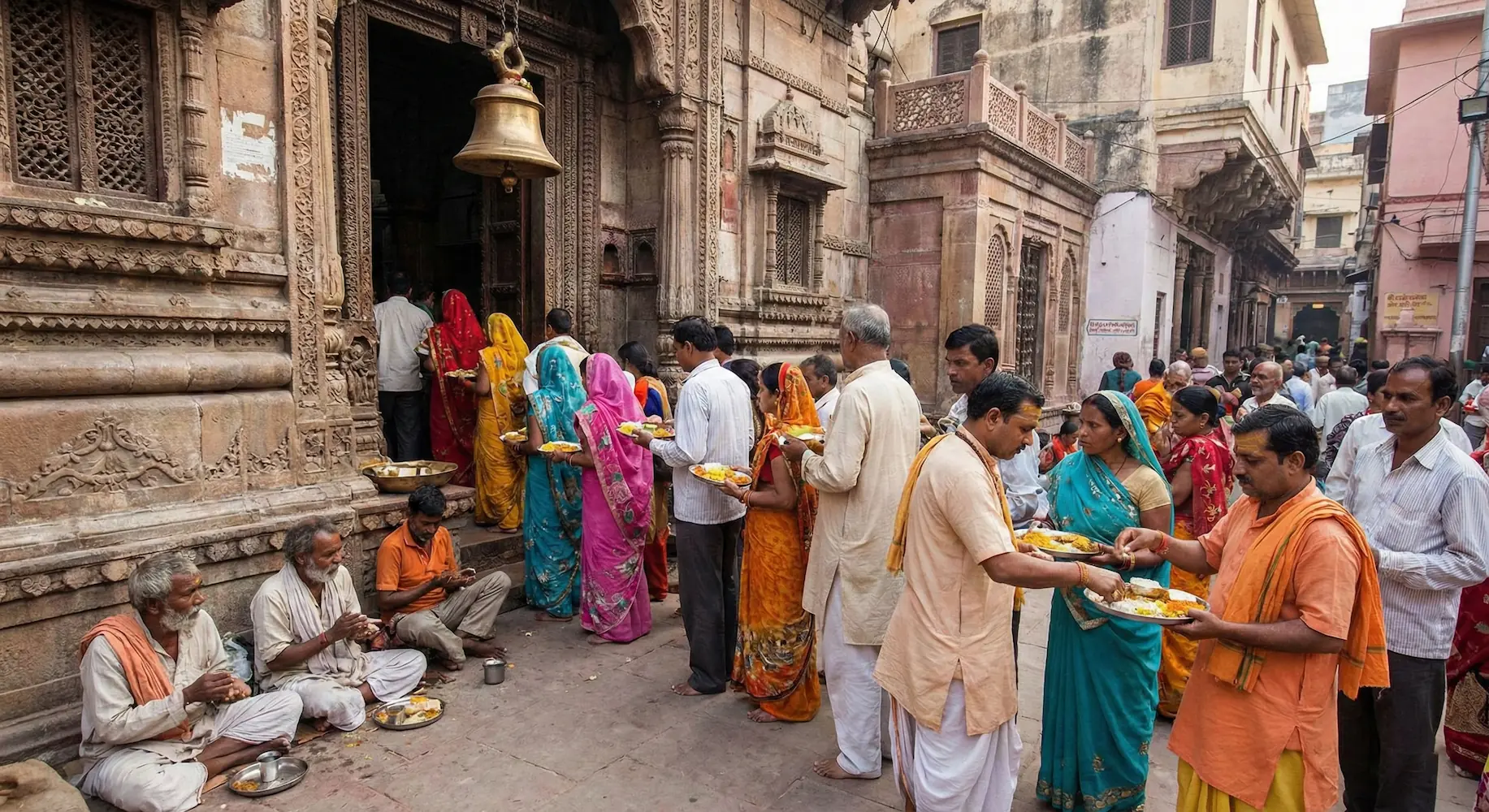
Every afternoon, the Annapurna temple beside Kashi Vishwanath serves free meals, according to Incredible India, and the temple’s own trust has run a free kitchen for devotees all year round. That one fact explains a good deal about Banaras. In this city, feeding people is treated as an act of worship, and the kitchen is as old a public institution as the ghat.
This is the central guide of our Banaras food series. It follows food from the household stove to the lane vendor to the temple and the community kitchen, and it links to the detailed posts on each. Where something is myth we say so, and where we rely on a source we name it.
The short answer
In short
Banaras treats food as sacred, public and seasonal. The home kitchen is a clean, almost shrine-like space. The goddess Annapurna, believed to feed the city, gives rise to the saying that no one sleeps hungry in Kashi, and temples and community kitchens carry that into practice. In the lanes, halwais and dairy families supply breakfast, sweets and milk. Simple, satvik, ghee-and-mustard-oil cooking ties the whole picture together, with pickles as the preserved thread through the year.
The home kitchen: a clean, ordered space
In a traditional Banaras household, the kitchen (rasoi) is more than a workroom. Many families treat the cooking area as a kind of shrine, where the hearth is regarded as the place of Agni, the fire. The cook washes before entering, shoes stay outside, and in stricter homes only the family may touch the food as it is prepared. These practices are described to us as household custom and differ from family to family.
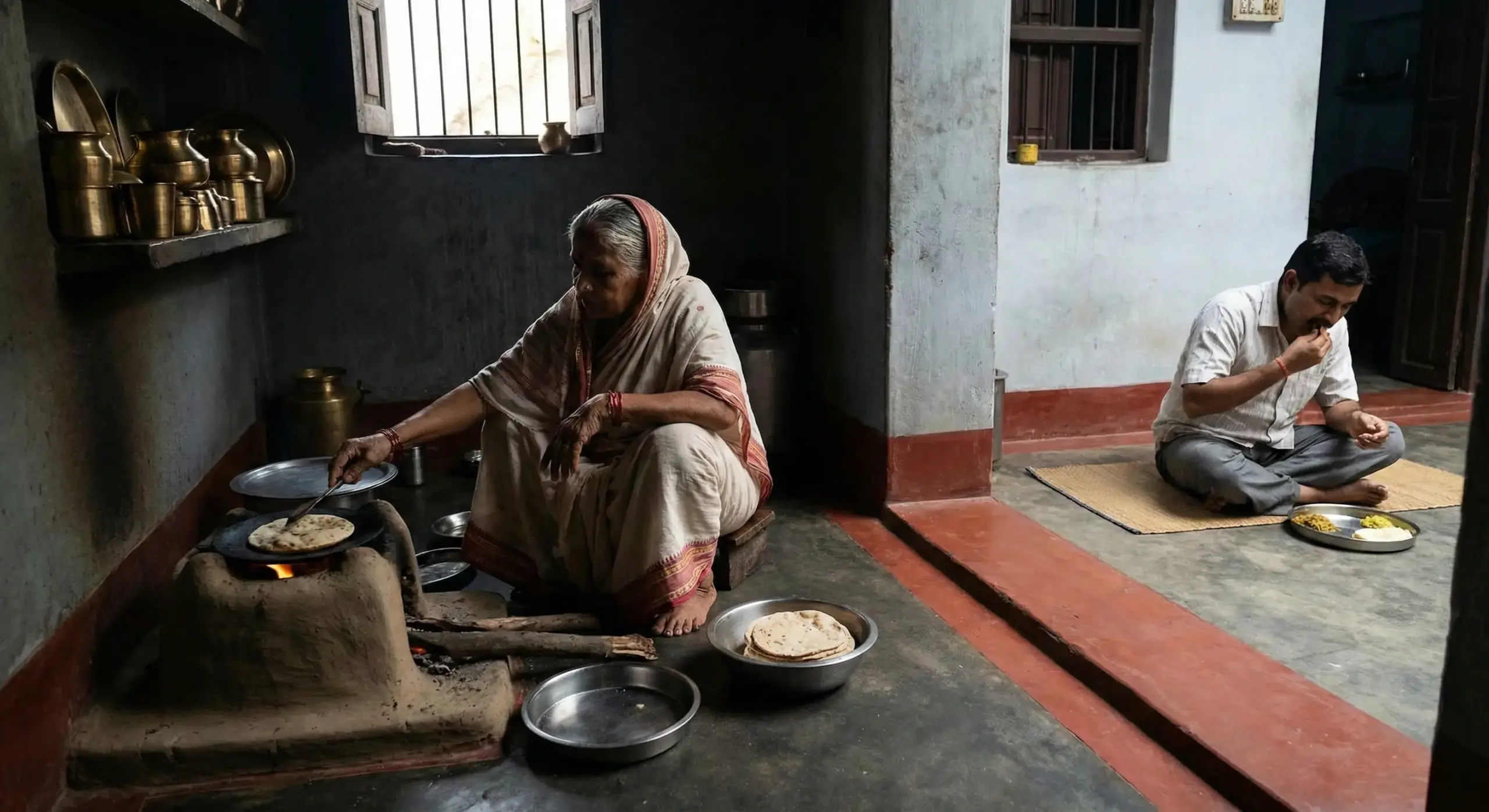
Food inside this space is sorted by a simple scheme we explain in how climate shaped Banaras food habits. Kachcha food (boiled in water) belongs to the inner household, while pucca food (fried in ghee or oil) can be shared more widely and taken out of the house. The kitchen shapes how a family eats from morning to night, which we trace in morning food habits of Banaras households and evening meals in traditional Banarasi homes.
What goes into the pot reflects the same discipline. Onion and garlic are often left out, the fats are ghee and mustard oil, and the short spice list does a great deal of work, which is the subject of why Banaras food is simple yet flavorful.
Annapurna and the city that does not let anyone go hungry
Kashi’s food story begins with a goddess. Annapurna is regarded as the goddess of food and nourishment, a form of Parvati, and the Shiva Purana extols her as “Anna Datar,” the giver of food, according to Hindu Blog. The best-known story has Shiva coming to Kashi to beg for food, and Annapurna serving him with her own hands. Temple tradition, reported by Amar Ujala, adds that during a famine she promised that no one in Kashi would go hungry.
This is mythology and temple tradition, not documented history, and we present it that way. What is documented is the temple itself. Sources agree that the Annapurna temple was built in the early 18th century by the Maratha Peshwa Baji Rao I, with 1729 the date most often given and one source giving 1725. It sits in Vishwanath Gali, a few steps from the Kashi Vishwanath temple, and the sanctum is described as holding a gold image and a brass one.
The belief has real consequences. The Annapurna temple’s trust runs a free kitchen, and Incredible India notes the temple provides annadanam, free meals, every afternoon. Varanasi Guru reports that the same trust runs old-age homes, clinics and schools. A story about a goddess has become a standing institution, which is why “no one sleeps hungry in Kashi” is a living phrase and not just a slogan. For the offerings themselves, including the 56 dishes of Annakut, see food offerings in Banaras temples.
Matha, akhara and ashram kitchens
Beyond the big temples, the city has a long tradition of community kitchens attached to mathas (monastic institutions), akharas (traditional ascetic and wrestling communities) and charitable trusts. They serve pilgrims, students, ascetics and the poor. The word for this giving is dana, and the free kitchens of Kashi are sometimes called annakshetras or annasatras.
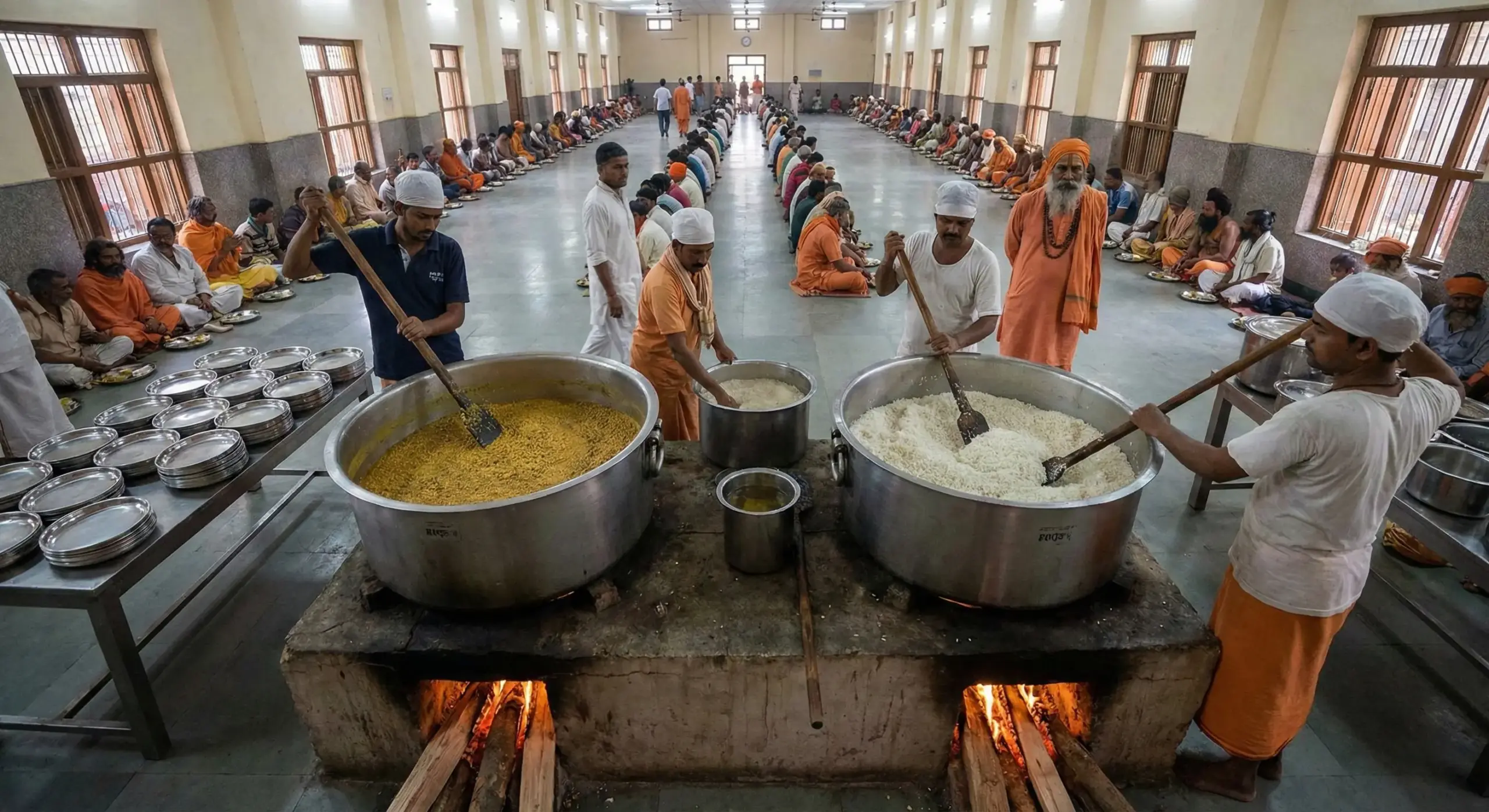
We have less documentation on the specific rules of individual mathas, so we describe the general pattern: food is simple, vegetarian and satvik, cooked in large quantities, served in rows on the floor, and given without charge. The habit of feeding the stranger shapes the city’s manners, and it explains why a visitor on the ghats rarely goes hungry.
The lane: halwais, kachori shops and chaat
Step out of the temple and the lane takes over. The public food of Banaras is made by specialist shops that do one thing and do it every day.
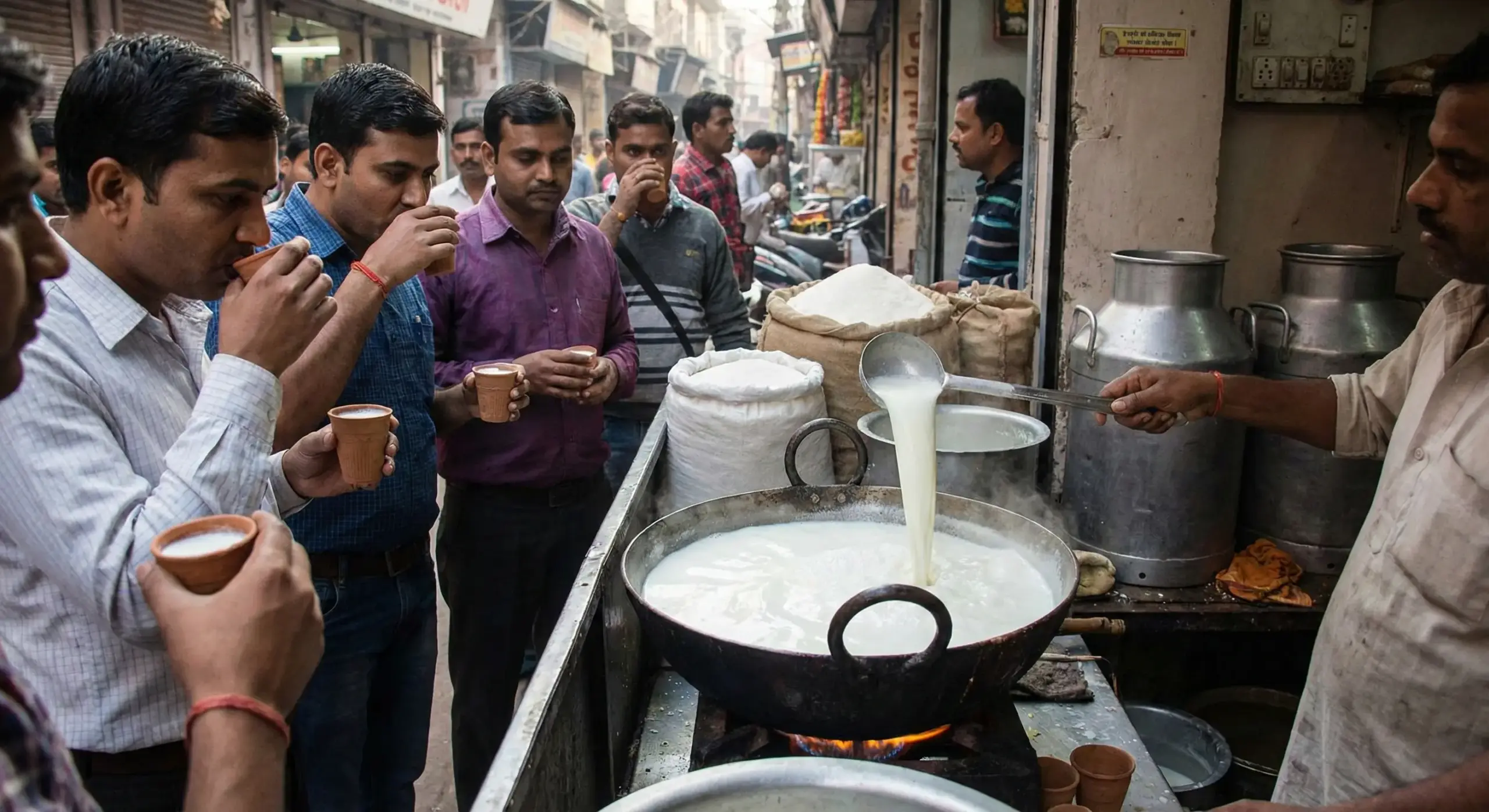
- Breakfast shops fry kachoris and jalebis before dawn in the lanes around Godowlia and Thatheri Bazaar, and the best are sold out by late morning.
- Chaat shops serve tamatar chaat, palak chaat and dahi vada. Indiaimagine notes at least one shop that makes its aloo, tamatar and palak chaat without onion or garlic, and Lonely Planet records Kashi Chat Bhandar in Godowlia as having made tamatar chaat and other treats for over seventy years.
- Sweet shops sell lal peda, rabri, malaiyo in winter and sweets for every festival.
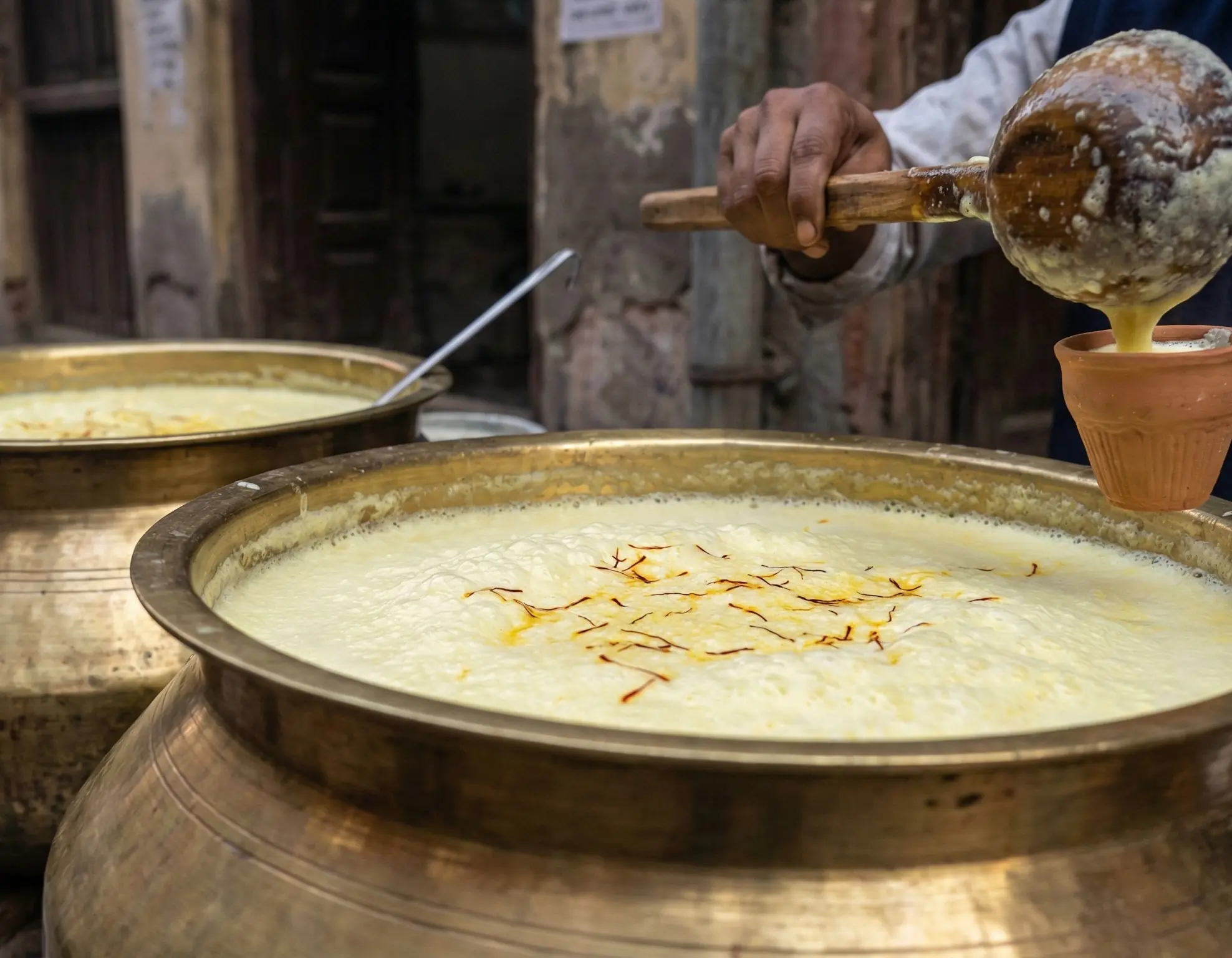
- Lassi and thandai shops serve thick lassi and chilled milk drinks in clay cups.
The result is that a household and the street share the same menu, and the halwai works as an extension of the home hearth. Families buy breakfast, festival sweets and snacks from the same counters for decades. A study of the lane is also a study of the seasons, since the same stall changes what it sells through the year, as we describe in seasonal eating practices in Kashi.
Milk, curd and the dairy families
Milk is the thread through the lane economy. The city’s milk supply has traditionally come from pastoral communities, notably Ahir and Yadav families, who keep the cattle and sell milk, curd and ghee. That supply feeds the kulhad of tea at dawn, the bowl of curd at breakfast, the rabri at the sweet shop and the warm milk at night. Ghee is the cooking fat of kachori and of festival halwa.
The clay cup (kulhad) is part of the picture. It is used once and thrown away, where it returns to the earth, which suits both a city’s purity customs and its dairy trade.
A city of many communities
Banaras has drawn pilgrims, scholars and traders from across India for centuries, and the kitchens show it. The city’s Muslim families have their own food tradition, which The Quint describes as influenced by Mughal, Awadhi, Hindu and East Bengal flavours. Baati chokha and litti chokha reflect the influence of neighbouring Bihar, and Bengali and other regional communities have contributed their own dishes. The National Virtual Library of India’s note on the city notes that influences from Bihar and Bengal especially find a reflection in Varanasi’s food.
That mix is a reminder that “Banarasi food” is not one thing. The satvik, onion-free home table, the Muslim gharana kitchens, the street chaat and the temple bhog all belong to the same city.
Food and the calendar
The Hindu calendar sets the rhythm of the kitchen. Fasts like Ekadashi and Navratri bring phalahar, festival days bring particular sweets, Makar Sankranti brings khichdi and til-gud, and Annakut brings a mountain of food to the temples. Under all of it runs the seasonal logic described in our guide to seasonal eating practices in Kashi, and underneath that the weather of the plain.
Where preservation fits in
Pickle has a place at every one of these tables. It is the sharp, salty counterpart on the family thali (see the role of pickles in the Banaras thali), a way of carrying summer’s mangoes and winter’s amla through the year, and a household signature handed down in the family. The next cluster of posts in this series follows that thread in detail, starting with mustard oil in Banaras cooking, rock salt versus refined salt and the anthropology of preservation.
Map of the Banaras food series
| Topic | Read this |
|---|---|
| Breakfast | Morning food habits |
| Dinner | Evening meals |
| Temples | Food offerings in Banaras temples |
| Flavour | Why Banaras food is simple yet flavorful |
| Seasons | Seasonal eating in Kashi |
| Pickle on the plate | Role of pickles in the thali |
| Weather | How climate shaped Banaras food habits |
Frequently asked questions
Why do people say no one sleeps hungry in Kashi?
It comes from the belief that Goddess Annapurna lives in Kashi and feeds the city. It is a tradition, backed in practice by free kitchens such as the one at the Annapurna temple.
Who built the Annapurna temple in Varanasi?
Sources agree it was built in the early 18th century by Peshwa Baji Rao I, most often dated 1729, with one source giving 1725.
Does the Annapurna temple serve free meals?
Incredible India reports that it provides annadanam, free meals, each afternoon. Check current timings before visiting.
What is the role of the halwai in Banaras?
The halwai is the sweet and snack maker whose shop supplies breakfast, festival sweets and snacks to households and visitors.
What makes Banarasi food different from the rest of Uttar Pradesh?
Writers describe it as simpler, satvik and often onion-free at home, in contrast with the richer Awadhi cuisine of Lucknow.
Is all food in Banaras vegetarian?
No. The city’s home and temple food is largely vegetarian, but Muslim families and many restaurants cook non-vegetarian dishes.
What is a kulhad?
A small unglazed clay cup used once for tea, milk, curd or lassi and then discarded.
Sources used for this post: Hindu Blog (Annapurna, “Anna Datar” and Kashi); Incredible India (Annapurna temple and annadanam); Hindutone (Annapurna temple history and Amar Ujala’s account of the legend); Varanasi Guru (temple trust and social services); The Quint (Banaras Muslim gharana food); National Virtual Library of India (Banarasi food influences); Lonely Planet and Indiaimagine (Varanasi chaat shops). Myth and tradition are labelled as such.