Blog
Sev Bhujia: How Gram Flour Becomes Threads

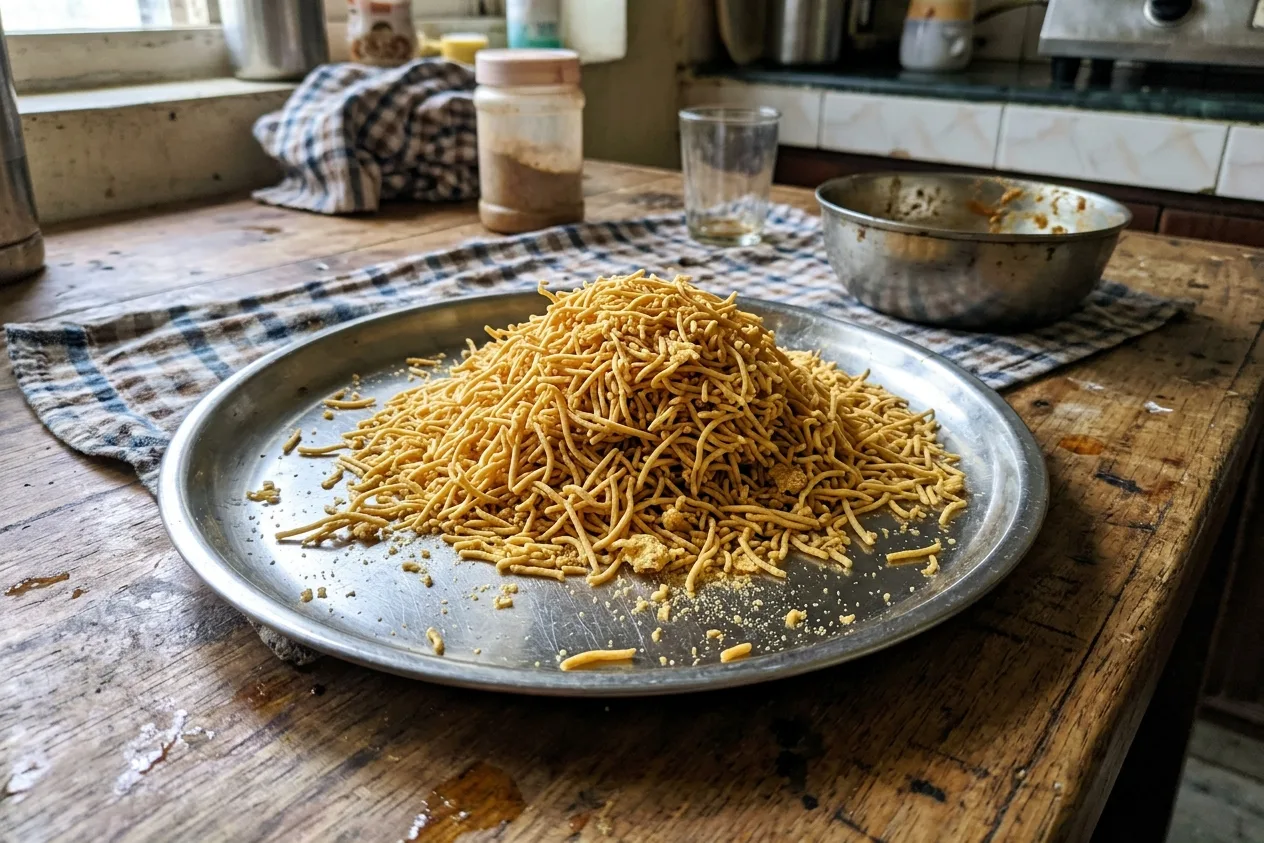
Ratlami sev received a Geographical Indication tag in 2015, and the snack it protects is about 200 years old, according to The Better India’s account of its history. It is a plate of crisp yellow threads made from nothing more than gram flour, spices, oil and water. The same threads, in plainer form, are sprinkled over chaat, bhel and poha in kitchens across the country.
This post explains how sev is made, what makes it crisp, how sev differs from bhujia, and what a few of the best known regional versions have in common and where they differ.
What is sev
In short
Sev is a fried snack of thin crisp threads made by pressing a gram flour (besan) dough through a fine mould into hot oil. Bhujia is the name used for a thicker or spicier version, and Bikaneri bhujia adds moth bean flour.
Vegetarian Recipes of India describes sev as a fried snack made from a dough of lentil flours, spices, herbs and seasonings, and notes that besan sev is one of the most popular variants and an important part of Diwali snacking. Indian Healthy Recipes says it is known as sev in Hindi, omapodi in Tamil and karapusa in Telugu, an immensely popular deep fried snack of crisp noodles, usually made with gram flour and spices.
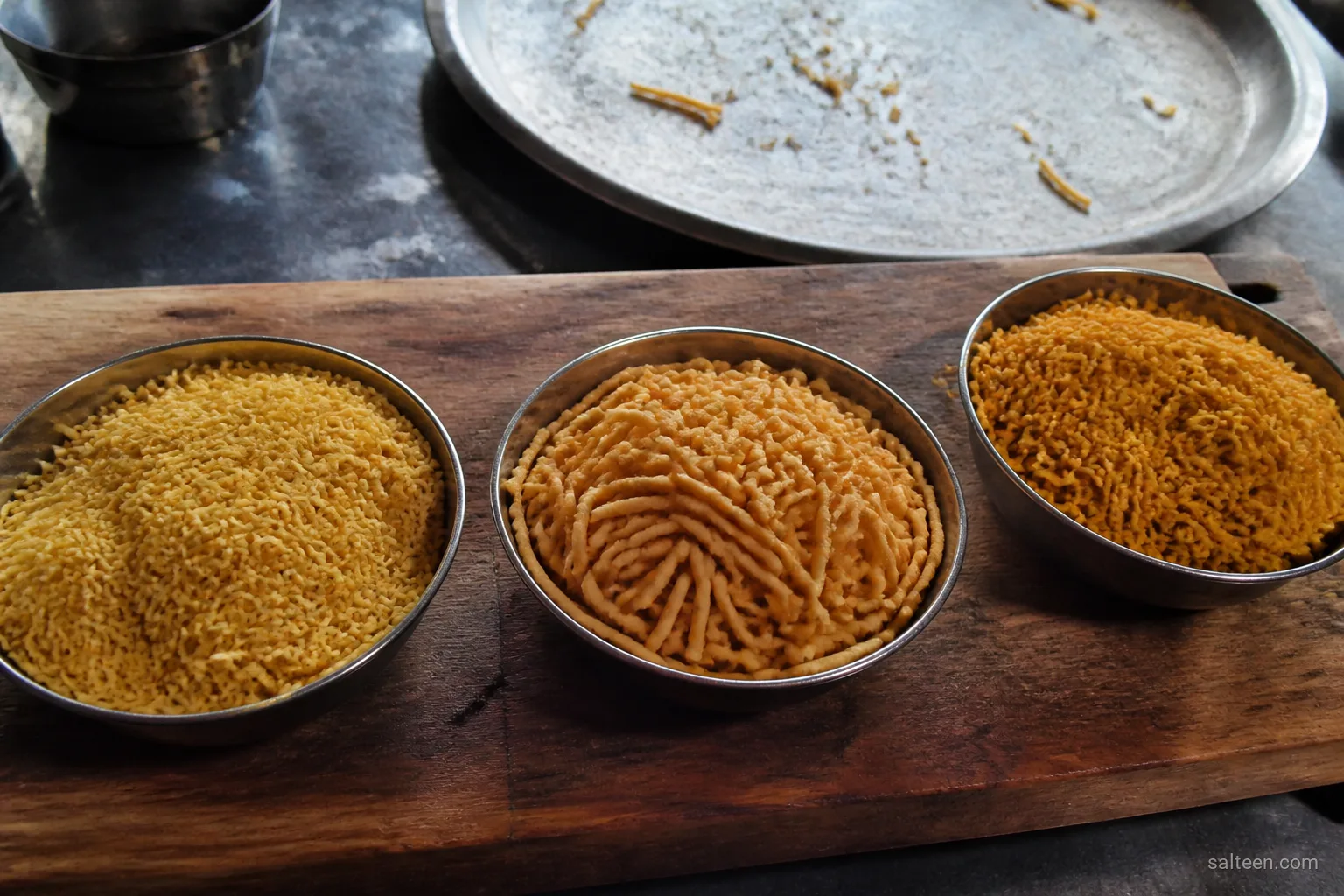
The same site lists a range of kinds found in Indian markets: karasev, plain sev, Ratlami sev, nylon sev, palak sev, bhujia sev and Indori sev. They differ in thickness, in the spice and in the flour mix.
The ingredients
A plain besan sev needs very few things.
- Gram flour (besan). Fine flour matters. A recipe writer says coarse flour will get stuck in the mould when the dough is pressed, so the flour should be fine and sieved if necessary. Slurrp’s guide to Ratlami sev recommends freshly ground, fine besan for the best texture.
- Oil. Some goes into the dough and a good deal into the pan for frying.
- Salt and spices. Turmeric and asafoetida are common in a plain sev. Ratlami sev uses a stronger blend including black pepper, cloves, cumin and dried red chilli, according to a food blogger.
- Water. Just enough to make a soft dough. One recipe says that a dough made only with besan is hard to press, so adding a little more water helps.
How the dough is made
From flour to threads
- Sift the besan so that no lumps remain.
- Add hot oil to the flour with the salt and spices, and rub it in.
- Add water a little at a time to make a soft, smooth dough.
- Fill the mould. Grease a sev maker (also called a chakli press) fitted with a fine hole disc, and pack in a portion of the dough.
- Press into hot oil, moving the hand in a slow circle so the threads fall in a loose spiral.
- Fry on medium heat for about two minutes on each side until light golden and crisp.
- Drain on paper and cool completely before storing.
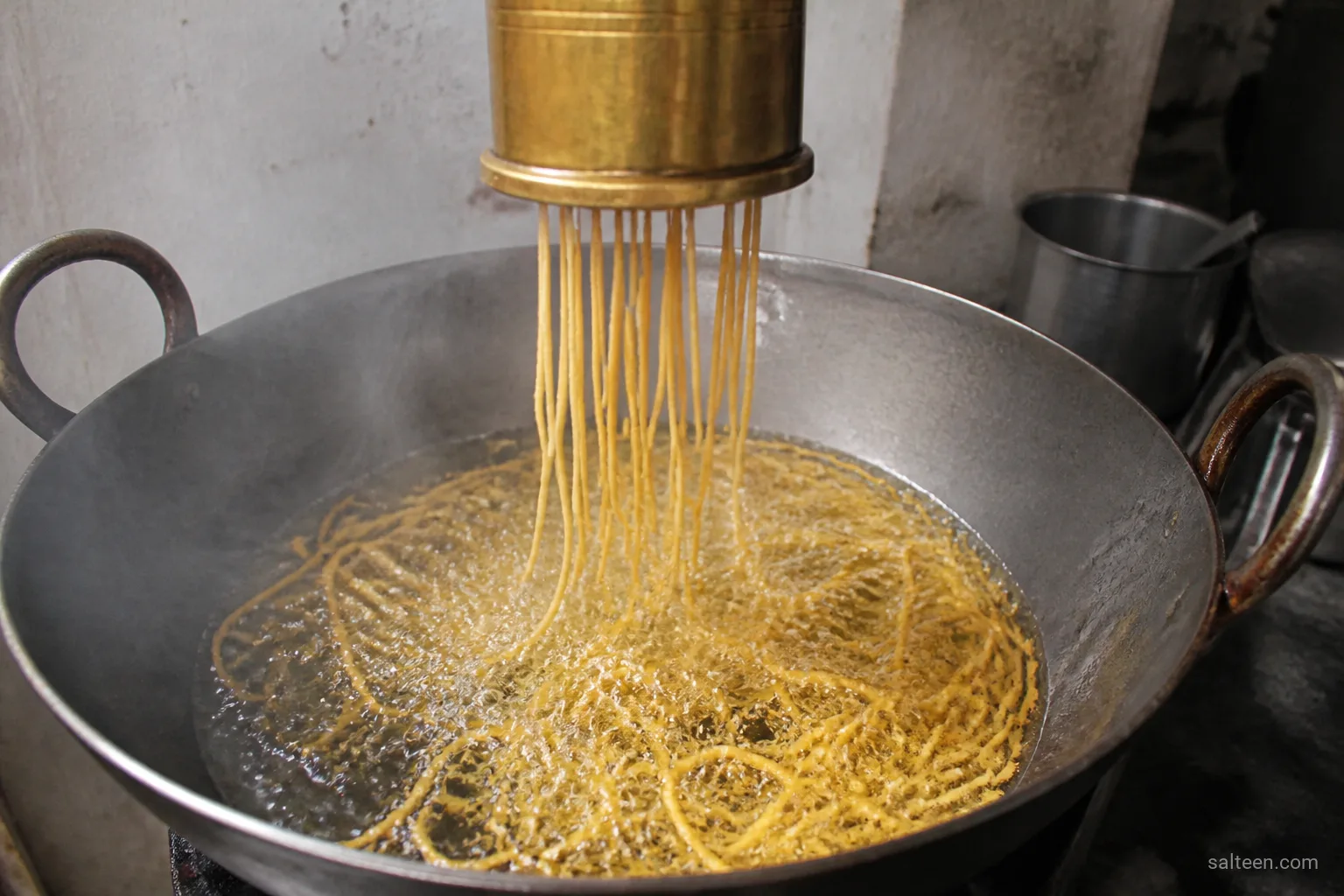
Several details decide the result. Adding hot oil to the dough is common to many recipes. One says it gives a crumbly texture, and another says it helps make the sev light and crunchy. The dough is usually used immediately, as one blogger says of Ratlami sev. The oil temperature is tested by dropping in a tiny piece of dough, which should sizzle and rise at once without browning too quickly.
Traditionally the dough was pressed through a jhara, a metal sieve or perforated ladle, held above the pan. A study of Ratlami sev describes the dough being mashed over a strainer called a jhara. A food blogger who writes about the snack also describes passing the dough through a sieved ladle directly over the hot oil. The chakli press is the home version of the same idea.
Why sev is crisp
Three things work together. The first is that the dough is thin. A thin thread of gram flour fries all the way through in a couple of minutes, which leaves almost no moisture inside. The second is that the oil is hot enough to seal the surface quickly. The third is that the frying is done on a medium flame, as the recipes advise, so the colour and the crunch arrive together. If the oil is too cool the dough soaks it up and turns heavy, and if it is too hot the outside burns before the inside dries.
Sev and bhujia
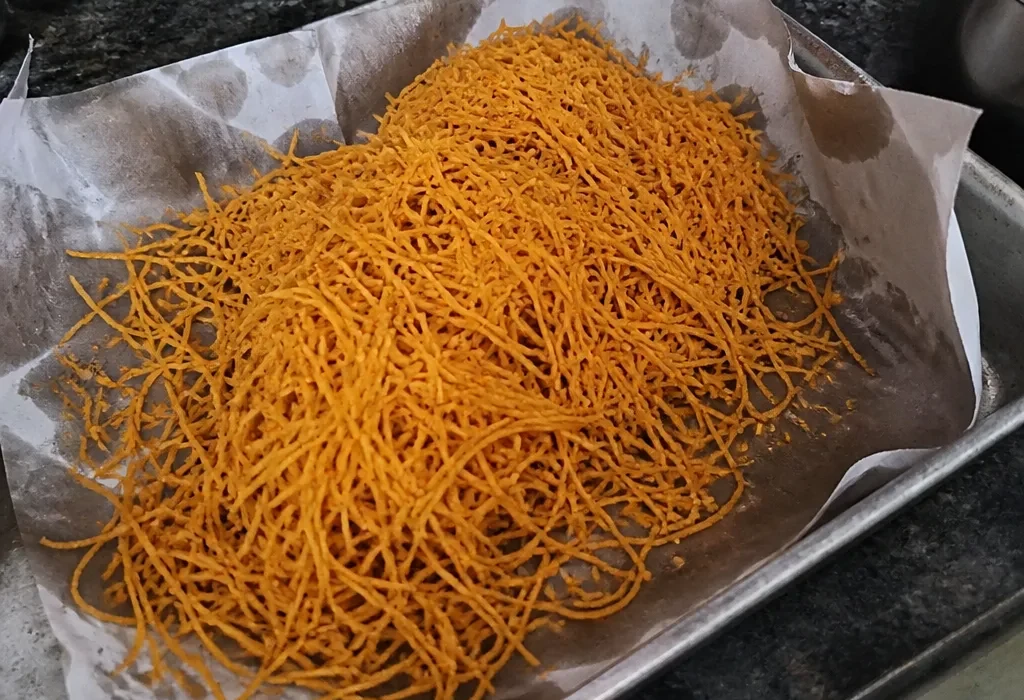
The two words overlap. In many homes bhujia simply means a spicy sev, and in markets bhujia sev is a category of its own. The best known regional bhujia is Bikaneri bhujia from Bikaner in Rajasthan. Wikipedia describes it as a crispy snack of moth bean (Vigna aconitifolia), gram flour and spices, light yellow in colour, made by pressing the dough through a sieve and deep frying it. Bikaneri bhujia has its own Geographical Indication registration.
Ratlami sev comes from Ratlam in Madhya Pradesh. The Better India reports that it was born about 200 years ago and received its GI tag in 2014 to 2015, and a food blogger notes that the spice blend and the thickness of Ratlami sev differ from Bikaneri sev, with a larger mesh used for the Ratlami.
How sev is eaten
Sev is a snack, a topping and an ingredient.
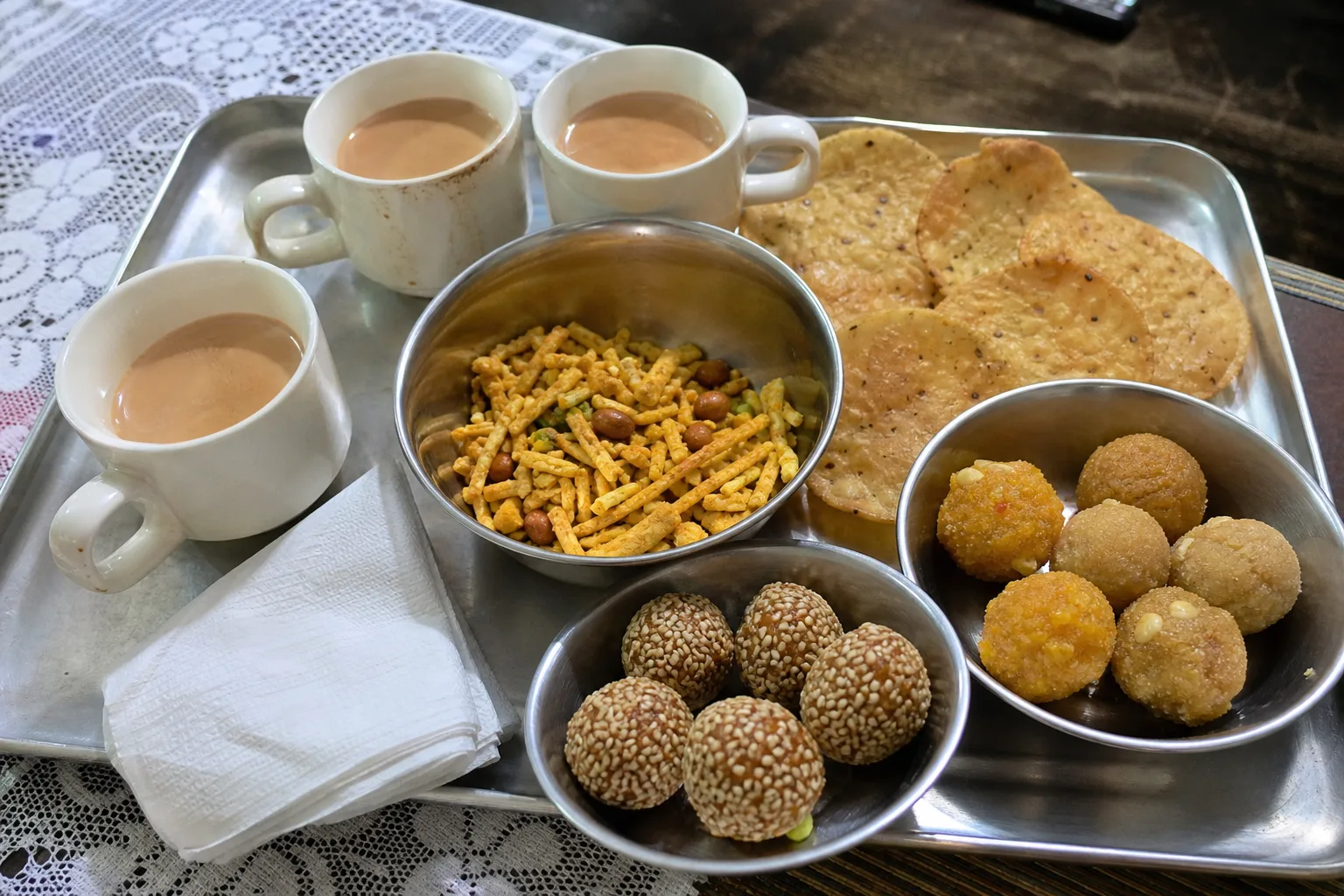
- On its own with tea, or with a few green chillies and a slice of lemon.
- On chaat and bhel, where it adds crunch to soft or sour dishes.
- On poha and upma, as a crunchy finish.
- In a curry, where thick sev can be dropped into a gravy.
How we make namkeen
- Which snacks does the unit make, and is sev one of them?
- Is the flour bought ground or milled in house?
- Which oil is used for frying, and how often is it changed?
- Who presses the sev, by hand or with a machine?
- One memory of the sound or the smell of frying in the unit.
If a line cannot be confirmed, this section stays out of the post.
Where to go next
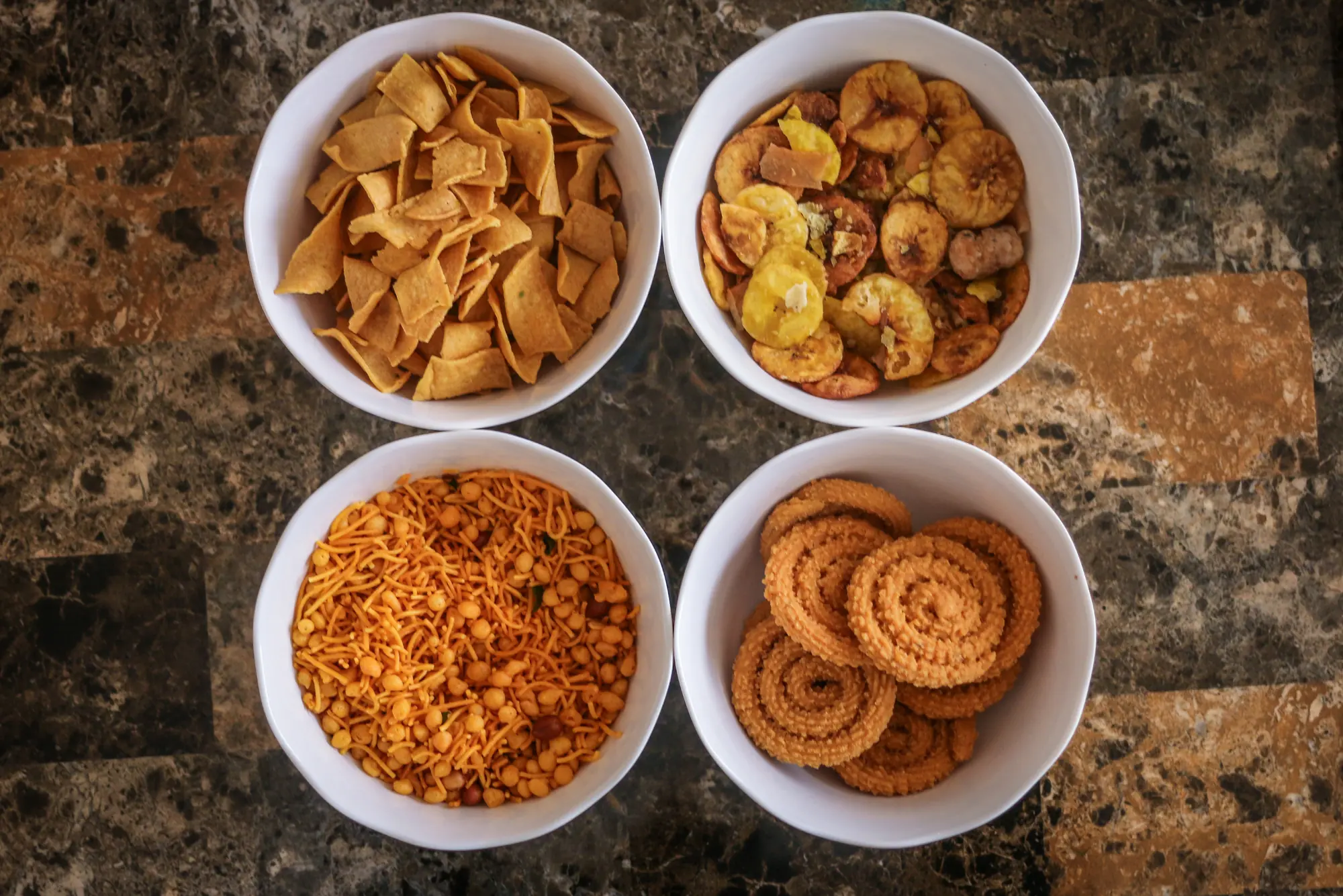
For the wider world of namkeen, read our guide to namkeen types, origins and smarter snacking. The snacks from our kitchen are in the namkeen and snacks collection.
Frequently asked questions
How is sev made?
Gram flour is mixed with oil, salt, spices and a little water into a soft dough. The dough is pressed through a fine mould or sieve into hot oil and fried until crisp.
What is sev made of?
Mostly gram flour (besan), with oil, salt and spices. Some versions mix in rice flour or other flours.
What is the difference between sev and bhujia?
The words overlap. Bhujia is usually a spicier sev, and Bikaneri bhujia is made with moth bean flour as well as gram flour.
Why is hot oil added to the dough?
Recipe writers say it makes the sev crumbly, light and crunchy.
What is Ratlami sev?
A spicy sev from Ratlam in Madhya Pradesh that carries a Geographical Indication tag.
Sources used for this post: The Better India on the history of Ratlami sev; Vegetarian Recipes of India, besan sev; Indian Healthy Recipes, sev (omapodi); Tarla Dalal, sev; Cook With Kushi, masala sev; Slurrp, Ratlami sev tips; Maayeka, Ratlami sev; Veggie Platter, Ratlami sev; a study of Ratlami sev (Scribd); Wikipedia, Bikaneri bhujia. Dates and recipe details are quoted as each source gives them.