Blog
Kalonji, Rai and Sarson: Three Seeds That Get Confused

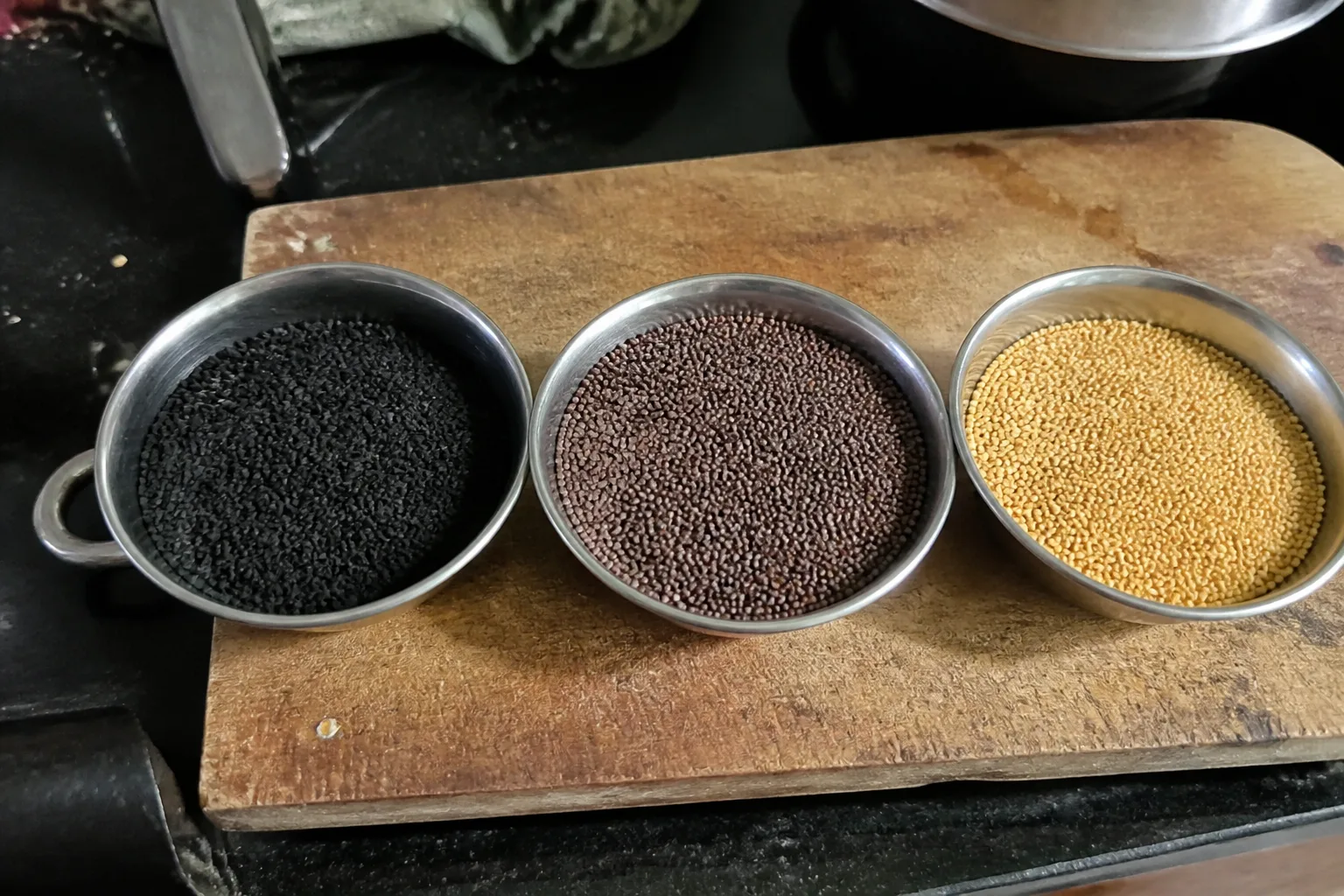
A spice blog on Indian mustard names the problem in its opening: many home cooks mistake Indian mustard for the yellow condiment in Western supermarkets, because “brown mustard” often means Brassica juncea seeds while “yellow mustard” means the milder Sinapis alba, and chefs report frequent substitution errors. Add Hindi names to that and kalonji, and you have three seeds on a pickle masala label that get swapped.
The short answer
In short
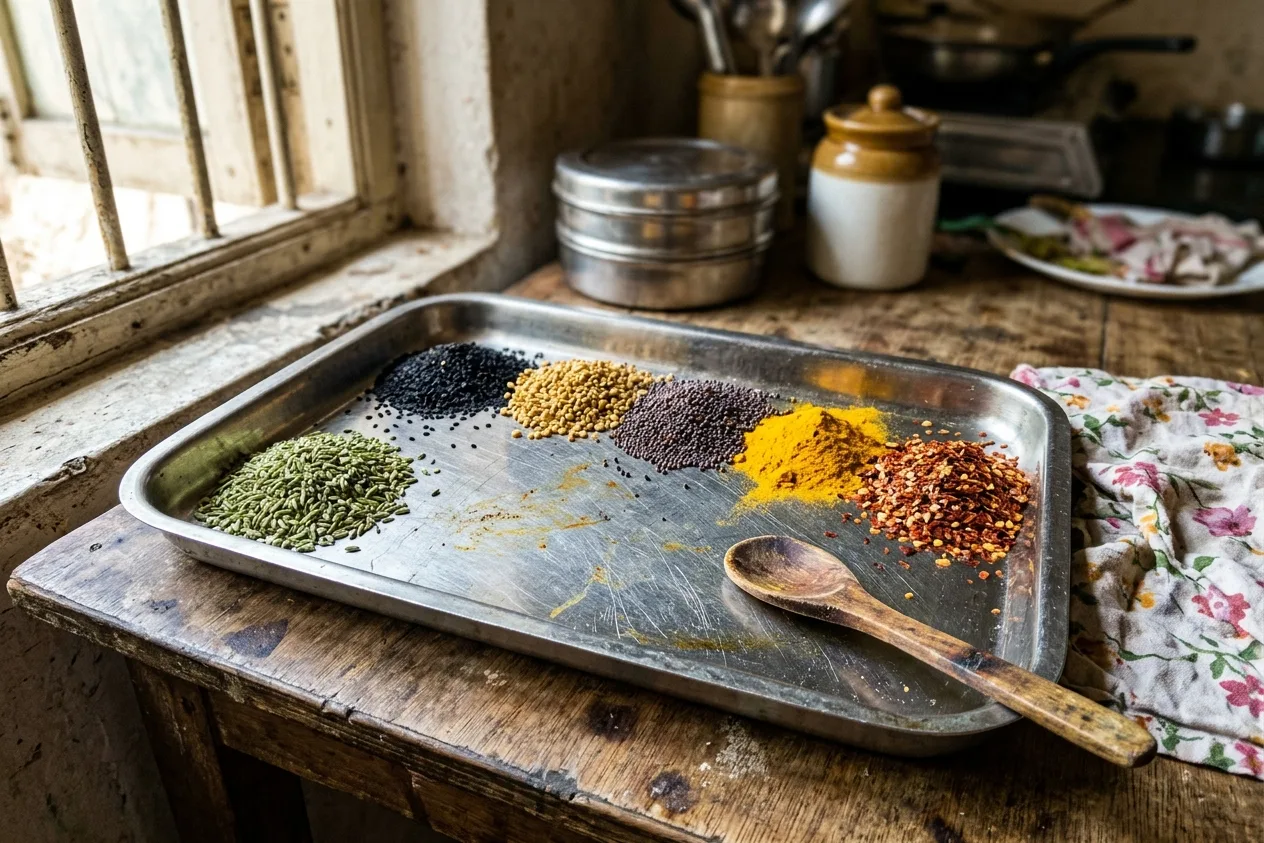
Rai is mustard seed, usually black or brown mustard. Sarson is mustard, and it names the oil seed and the plant that gives sarson ka tel. Kalonji (nigella) is not mustard at all: it is a different plant. In achar, all three can appear.
Rai
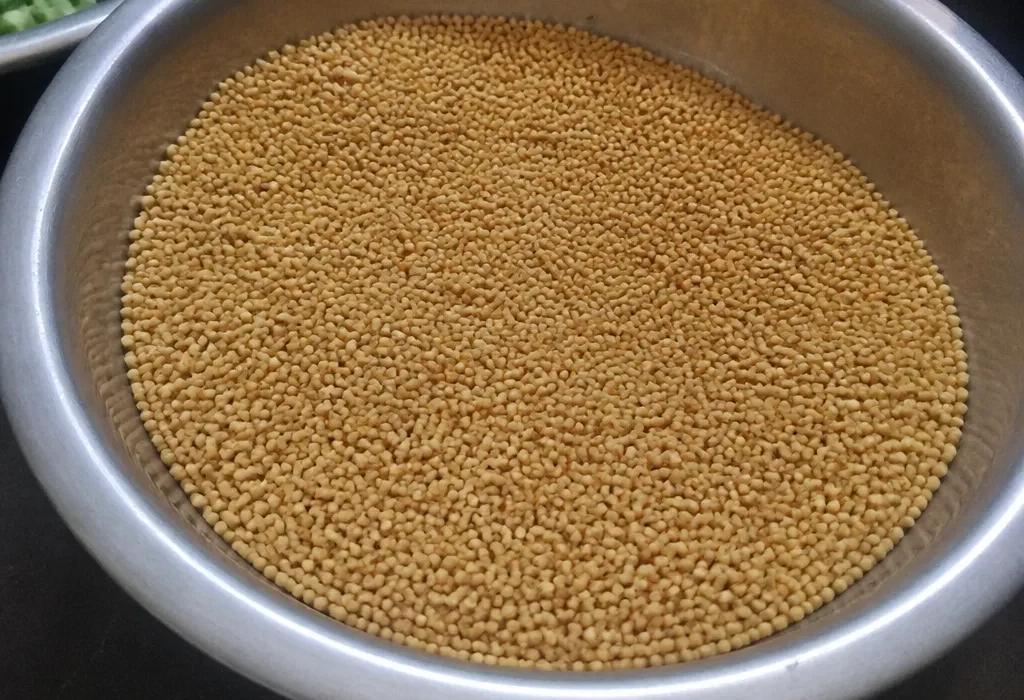
Wikipedia says black mustard, Brassica nigra, is cultivated for its dark brown to black seeds, which are commonly used in Indian cuisine, where they are known as rai. The seeds are thrown into hot oil or ghee, where they pop and release a nutty flavour. The Alibaba spice guide describes brown mustard, Brassica juncea, as the Indian or Chinese mustard, slightly larger than the black seed, and says black seeds contain higher concentrations of the pungent compounds, making them more pungent when activated.
Sarson
Wikipedia adds that the oil of black mustard is used often as a cooking oil in India, called sarson ka tel. A food science lecture on oils and fats says the varieties of Brassica campestris (brown sarson, yellow sarson and toria), known together as rape, are cultivated for commercial production of mustard oil, while others such as rai (Brassica juncea) are also grown. FSSAI’s standard defines mustard oil as oil expressed from clean and sound seeds of the campestris, juncea or napus varieties of Brassica.
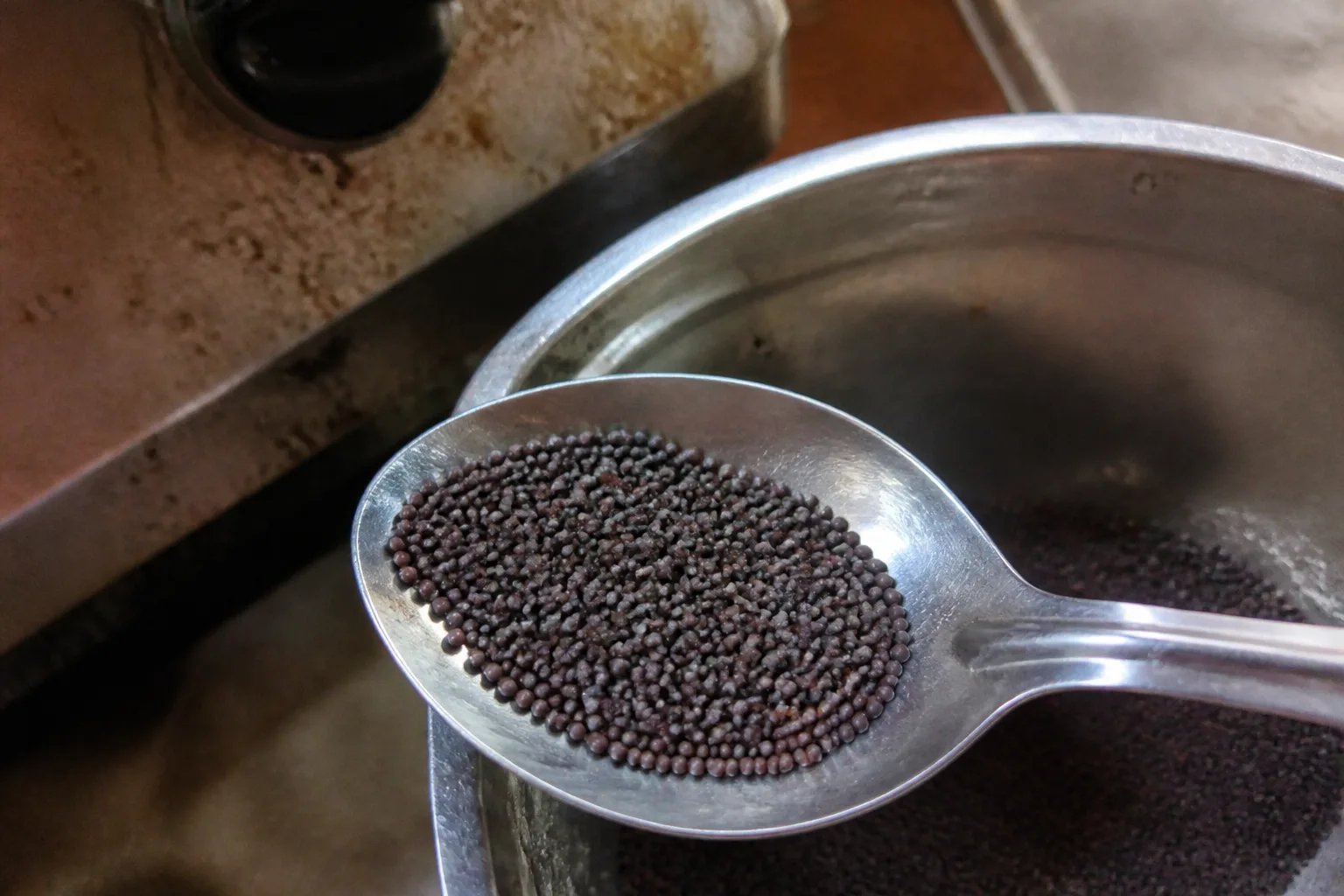
So in common use, sarson is the oilseed crop and its oil, and rai is the spice seed. The sources do not draw one clean line, and in many homes the words overlap. A spice blog notes that in India the leaves of Indian mustard are called rai or sarson, as in sarson ka saag.
Kalonji
Kalonji is Nigella sativa, of the buttercup family, also called black cumin, black seed or nigella, according to Alibaba’s spice pages. It is not black sesame, which belongs to a different family, and it is not a mustard. The same spice site notes that the common kalonji and onion seed mix-up matters little in pickles. Our post on achar masala covers its place in the blend, where it is a subtle bitter note.
Side by side
| Seed | Plant | What it is used for | Taste |
|---|---|---|---|
| Rai (black mustard) | Brassica nigra | Tempering, pickle masala | Sharp, pungent when crushed |
| Rai (brown mustard) | Brassica juncea | Tempering, pickling, paste | Slightly larger seed, pungent |
| Sarson | Brassica campestris and related | Oilseed, sarson ka tel | Pressed for oil |
| Kalonji | Nigella sativa | Pickle masala, breads | Mild bitter, a background note |
Why it matters in pickle
Mustard seed brings pungency in a pickle masala, the heat that rises when it is crushed. In the oil it is the same compound that FSSAI uses in its kachi ghani rule, as in reading a mustard oil label. Kalonji brings none of it. For the mustard seed as the oil’s source, see kacchi ghani mustard oil and mustard cake.
Reading a masala label
If a label says “mustard”, ask which seed, since sarson and rai may differ. If it says “kalonji”, it is nigella, and if it says “black cumin”, check, since that name is used for more than one spice.
Frequently asked questions
What is the difference between rai and sarson?
Rai usually means the mustard seed used as a spice, and sarson the oilseed crop and its oil. The words overlap by region.
Is kalonji the same as mustard seed?
No. Kalonji is nigella, a different plant.
Is black mustard the same as brown mustard?
No. Black is Brassica nigra and brown is Brassica juncea.
Sources used for this post: Wikipedia, Black mustard.; Alibaba Spice Blog, Indian mustard, black mustard, brown and black mustard seeds, and black seed vs black sesame; Sources of Oils and Fats lecture notes (SlideShare); FSSAI, mustard oil standard; Organic Mandya, mustard seeds (seller page)