Blog
Ghee or Oil: What Traditional Sweets Used and Why

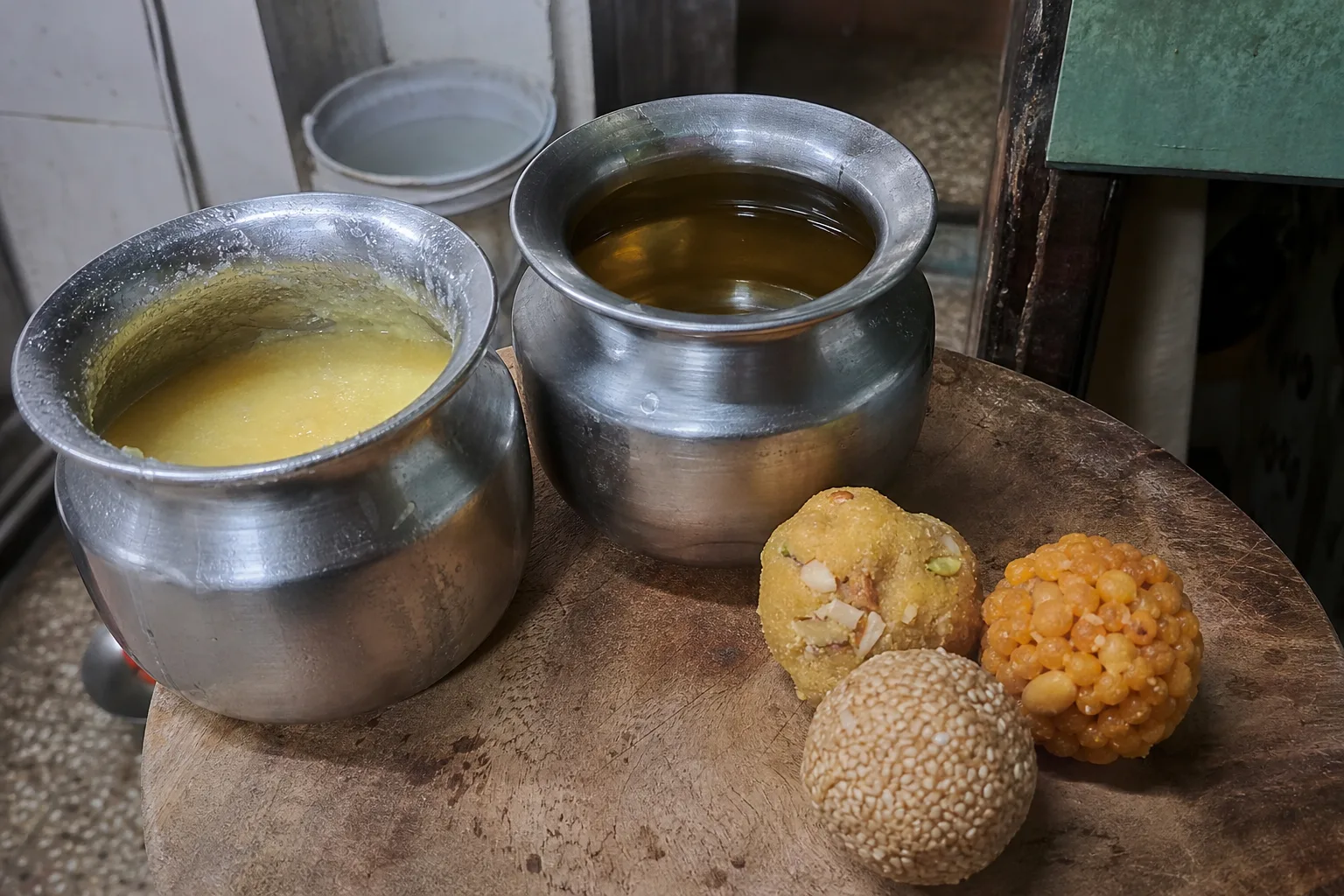
The Star, a Kenyan paper, quotes food historian Colleen Taylor Sen on ghee: paeans to it are found in the Rig Veda, a collection of hymns dating back nearly 4,000 years. The same piece says that in the 1980s vegetable oils were heavily promoted, and as their use rose, ghee use fell. Between those two dates sits the question of what a halwai fried and stirred his sweets in.
The short answer
In short
Sources describe ghee as the defining fat of traditional ladoo, halwa and many mithai, with a flavour, aroma and keeping quality that refined oil does not give. Fried sweets are less clear. We found no source naming the fat in each, so we say it varied and is not documented here.
Why ghee
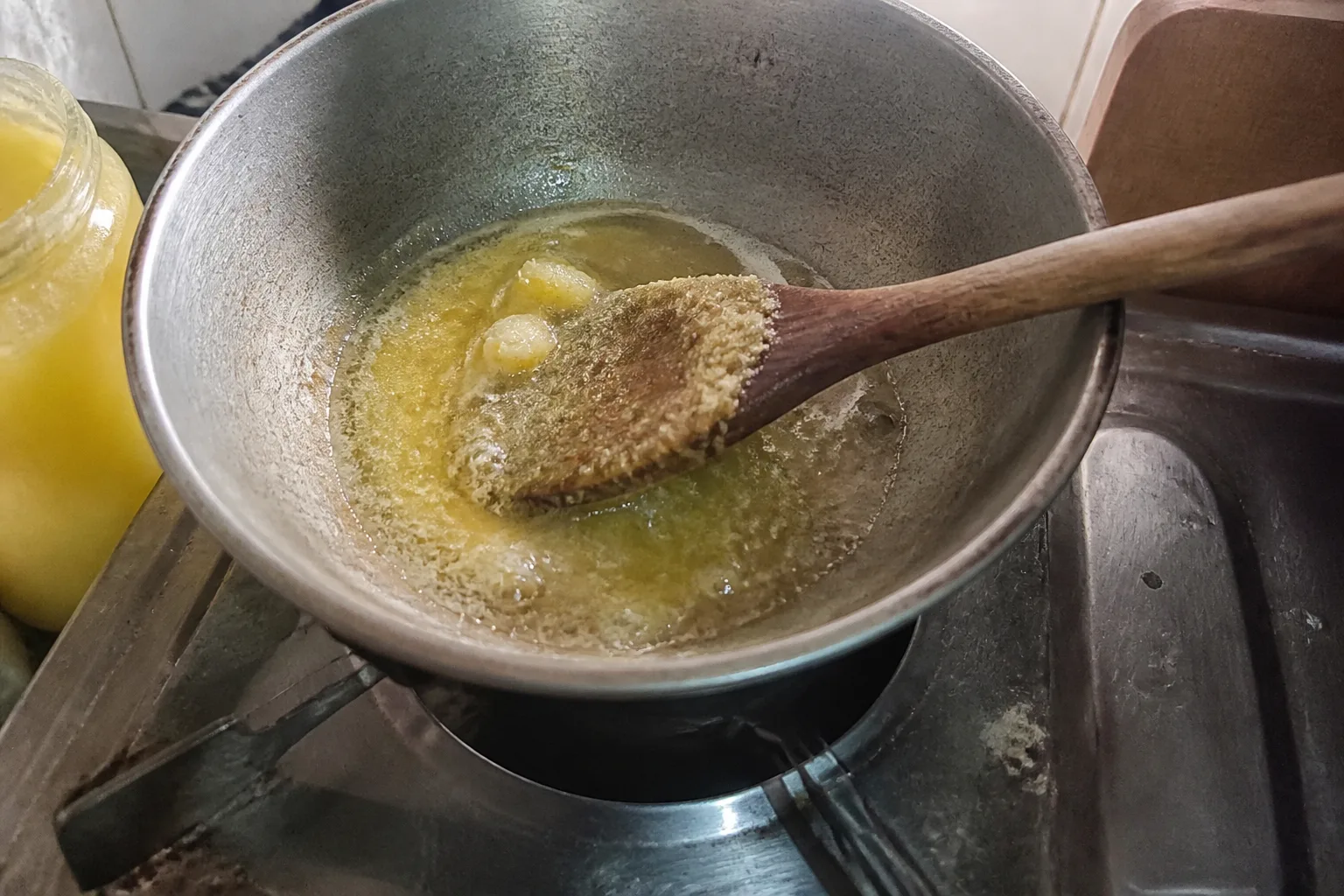
- Flavour. Godesi says slow cooking gives ghee a warm roasted aroma that adds depth to sweets and savoury dishes. Kanwarji’s, a mithai maker, says traditional halwais relied on desi ghee for flavour, aroma and a smooth texture.
- Keeping quality. The Daily Meal says that in the warm climate of South Asia regular butter quickly goes rancid, while well made ghee can stay edible for a long time. Ghee solved a storage problem as well as a taste one.
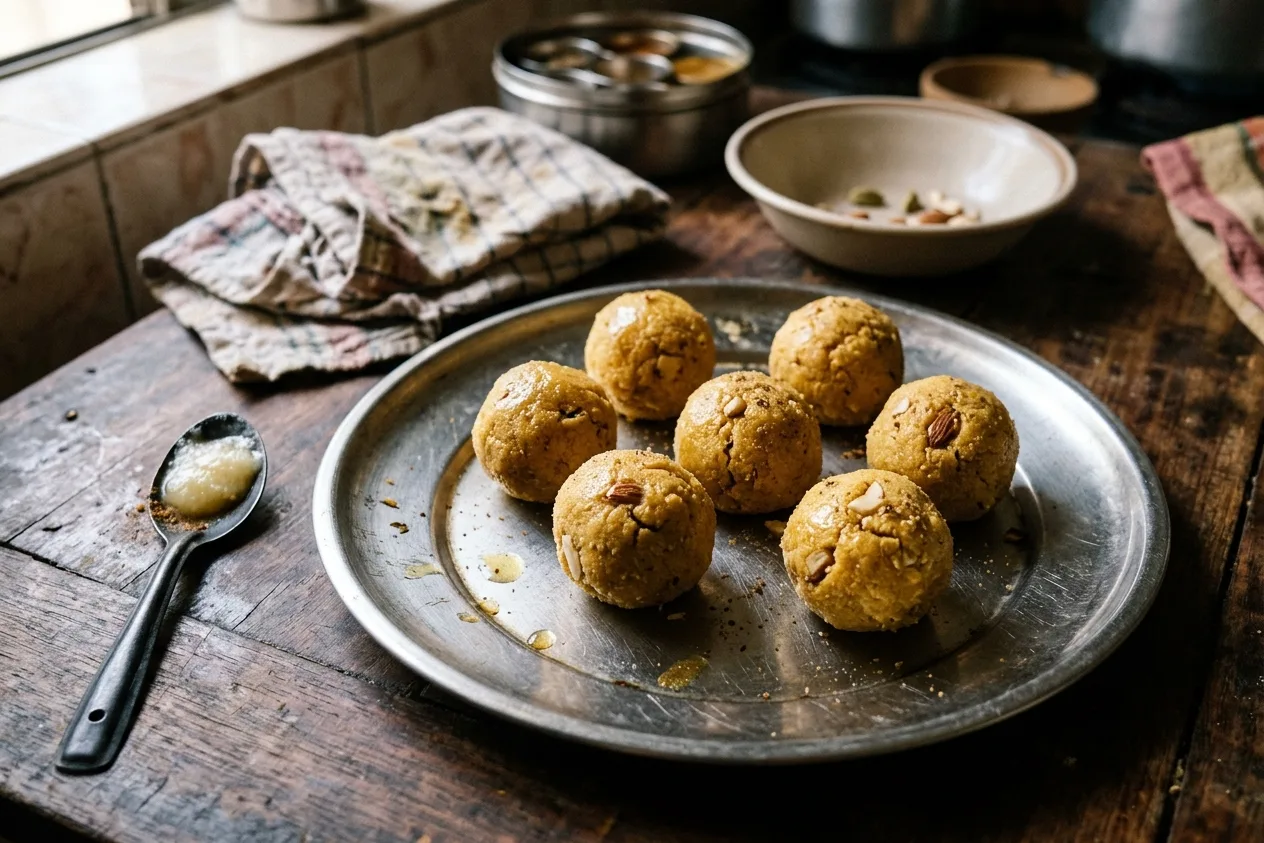
- Role in the sweet. Cook with Manali says there is no besan ladoo without ghee, and Veg Recipes of India says to roast the besan in it until it releases ghee. Wikipedia lists Indian sweets such as Mysore pak among ghee preparations.
What replaced it
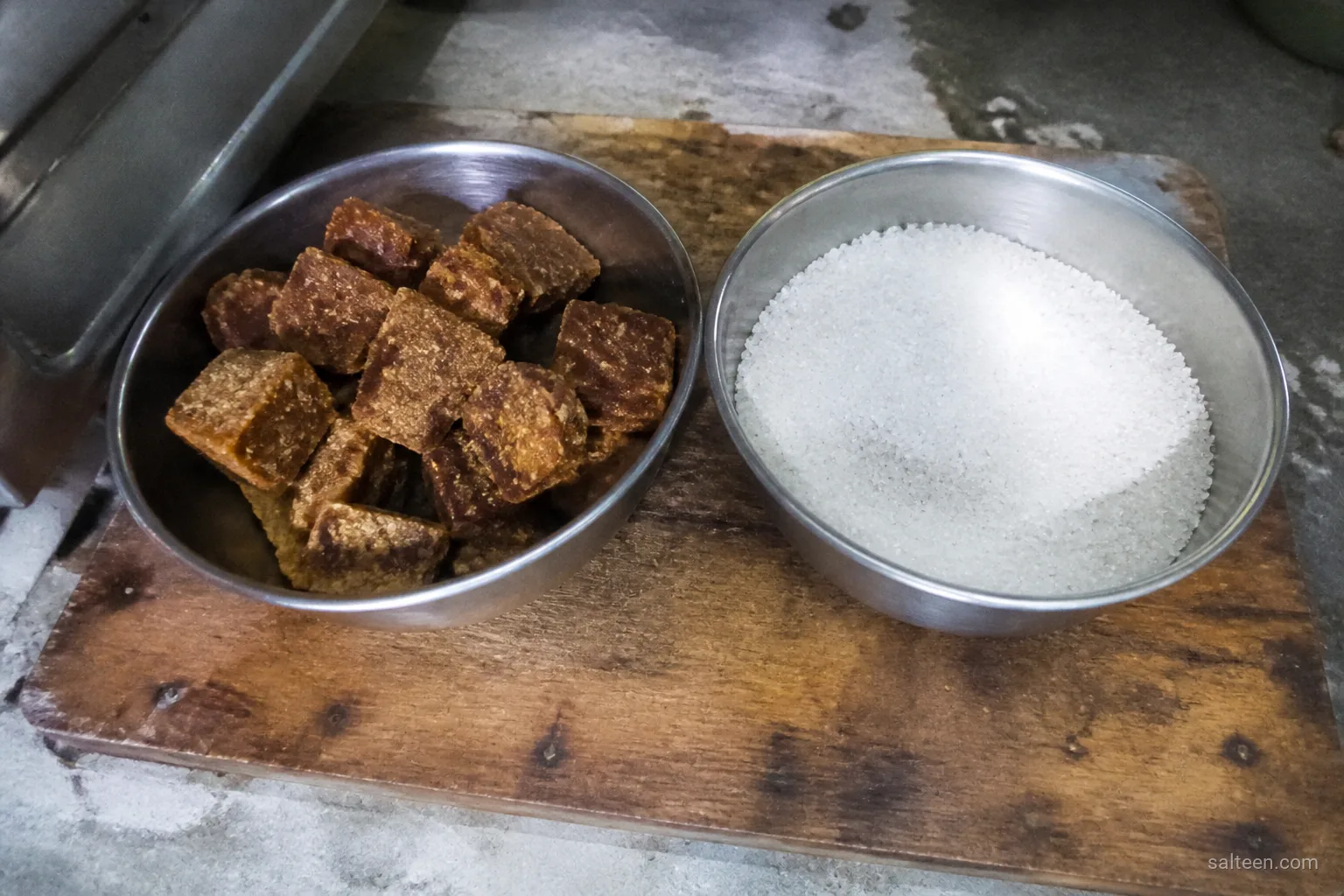
The Star article says the neutral flavour of refined vegetable oil became the norm and ghee the exception, after the 1980s promotion. Organic Mandya, a seller, says traditional laddus, barfi and halwa were once made with four ingredients: jaggery or khandsari sugar, ghee, flour of a grain or legume, and sometimes milk, while modern commercial versions add 15 to 20 more. Treat that as one seller’s view.
Can oil work in sweets
Veg Recipes of India says coconut oil can be used in place of ghee in besan ladoo, so oil is an option for home cooks. The result tastes different. See besan ladoo and slow roasting for the method and atta ladoo and panjiri for a winter ghee sweet.
Fried sweets
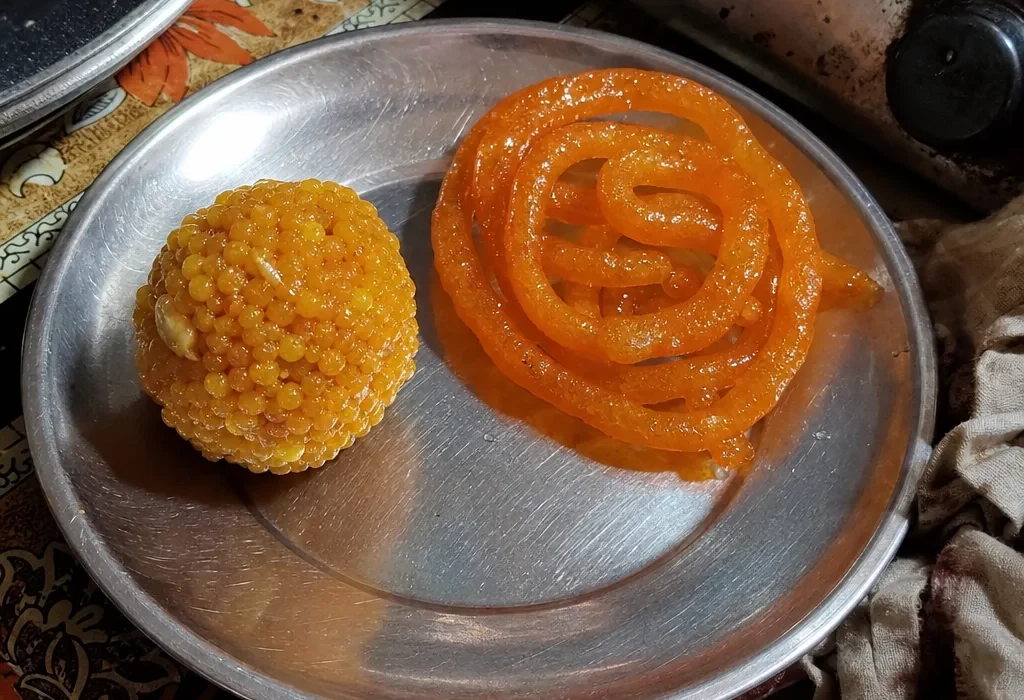
Karanji, gujiya, jalebi and shankarpali are fried, and the fat for frying varied by region and maker.
Where mustard oil fits
See kacchi ghani mustard oil explained and mustard oil in a Kashi kitchen.
A note on claims
Several pages we read, from Sri Sri Tattva and Shiva Organic among others, make health claims for ghee. We do not repeat them. They are not our area, and the cultural and culinary reasons stand without them.
For the pantry
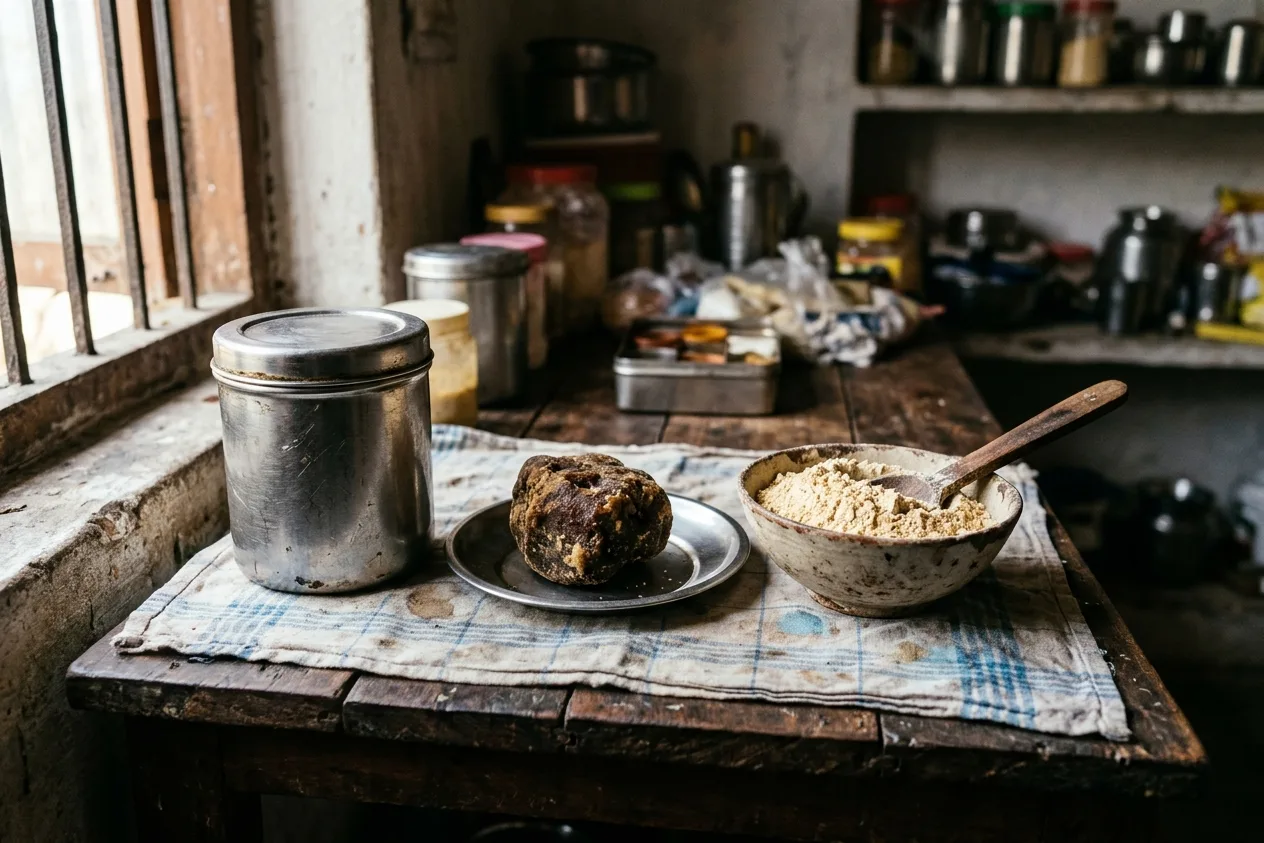
Our post on ghee, gud and sattu in the Poorvanchal pantry covers what sits beside it.
Frequently asked questions
Were traditional sweets made in ghee or oil?
Ghee was the defining fat of ladoo, halwa and many mithai. Frying fats for fried sweets are not documented in the sources we found.
Why is ghee used in sweets?
For flavour, aroma, texture and keeping quality in a warm climate.
Can I use oil instead?
Some recipes allow it, as with coconut oil in besan ladoo, but the taste changes.
Sources used for this post: The Star (Kenya), The purest food on earth; The Daily Meal, ultimate guide to ghee; Wikipedia, Ghee.; Godesi, what is ghee; Kanwarji’s, desi ghee mithai (seller); Organic Mandya, healthy festive sweets (seller); Cook with Manali and Veg Recipes of India, besan ladoo