
Blog
Atta Ladoo and Panjiri: Winter Sweets Made in Ghee

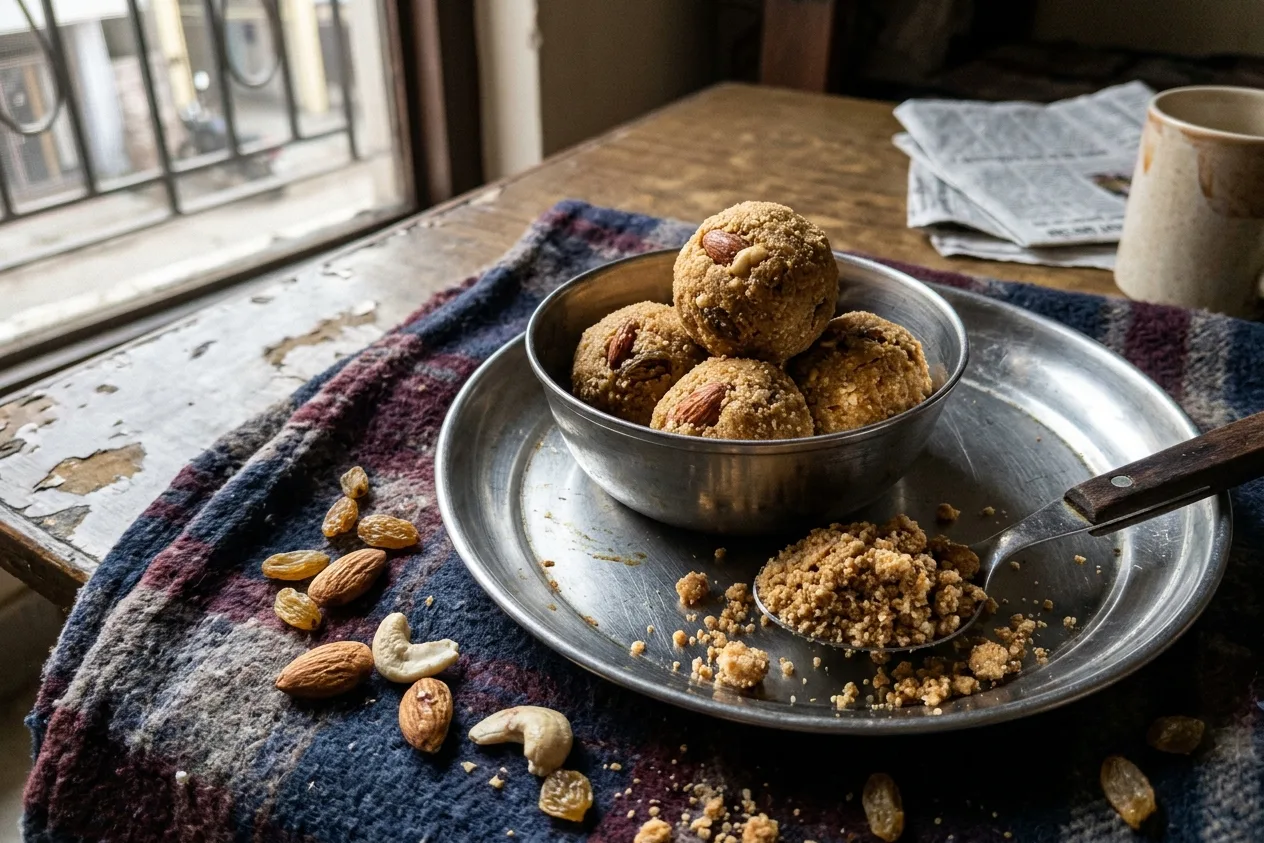
The smell of whole wheat flour browning slowly in ghee is the first sign that winter has arrived in many North Indian homes. A heavy pan, a long wooden spoon and about half an hour of stirring turn plain atta into a deep golden mixture that smells of toasted nuts. Add sugar and dry fruit to it, and that is panjiri. Press it into round balls with a little more ghee, and that is atta ladoo.
This post explains what these two sweets are, how they differ, how they are made and why they belong to the cold months.
In short
Panjiri is whole wheat flour roasted in ghee and mixed with sugar, dry fruit, makhana and edible gum (gond). It is dry and crumbly. Atta ladoo is the same mix with more ghee, shaped into balls. Both are made in winter and are also offered as prasad on festivals such as Janmashtami.
What panjiri is
Panjiri is a traditional North Indian sweet made from whole wheat flour, ghee, sugar and dried fruit, and it is sometimes called kasaar in some places. Food writers place its roots in Punjab, and it is made in Haryana, Uttar Pradesh and neighbouring states. It is a dry, crumbly sweet, closer to a roasted flour mix than to a soft halwa, and it is eaten by the spoonful, often with a glass of warm milk.
Panjiri has a ritual side as well. It is prepared as prasad for Krishna Janmashtami and after the Satyanarayan katha. A coriander version, dhaniya panjiri, is the one most linked with Janmashtami. Panjiri is also given to new mothers after childbirth in many families, which is a long standing custom, and we only note it here as a custom and make no health claim.
What atta ladoo is
Atta ladoo uses the same base of roasted atta and ghee, but it is bound with a little more ghee so that it can be pressed into round balls while the mixture is still warm. Food writers note the difference plainly: panjiri uses less ghee than a ladoo, and if you want to make ladoos from panjiri, you warm some extra ghee and mix it in.
Panjiri and atta ladoo at a glance
- Base: whole wheat flour roasted slowly in ghee
- Panjiri: dry and crumbly, eaten by the spoon
- Atta ladoo: extra ghee, pressed into balls
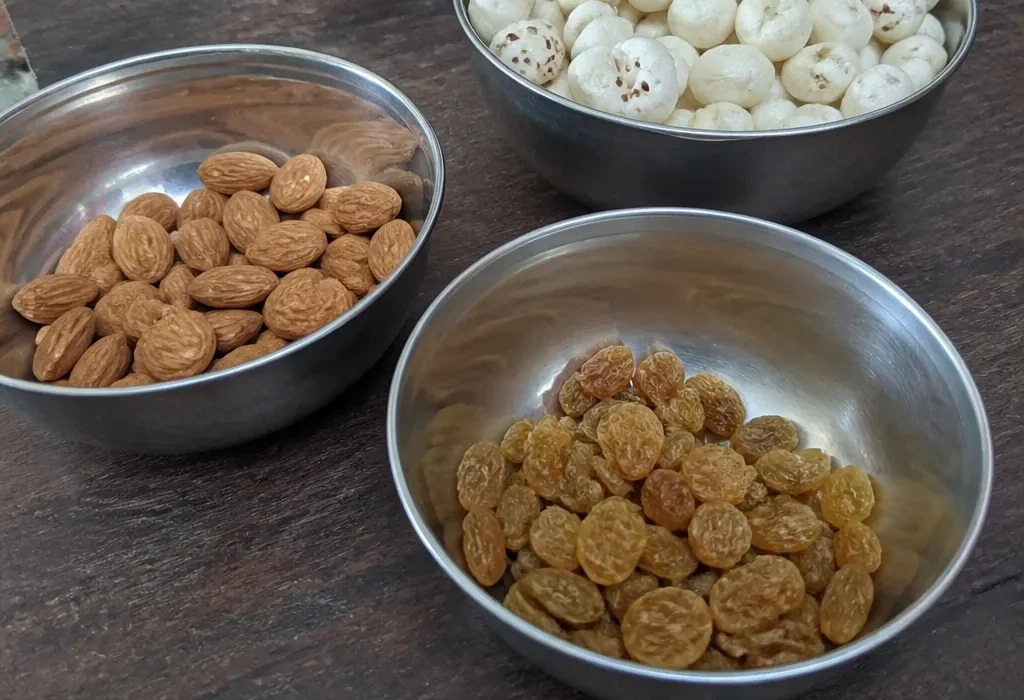
- Common add ins: almonds, cashews, pistachios, makhana (fox nuts), gond (edible gum), melon seeds, dry coconut, cardamom
- Sweetener: powdered sugar (boora) or powdered jaggery
What goes in
Recipes differ, and families guard their own mix. The ingredients that appear again and again are:
- Atta, whole wheat flour, the base
- Desi ghee, in generous quantity, for roasting and binding
- Sugar or jaggery, powdered, mixed in after the mixture has cooled
- Dry fruit: chopped almonds, cashews and pistachios
- Makhana, roasted until crisp and crushed
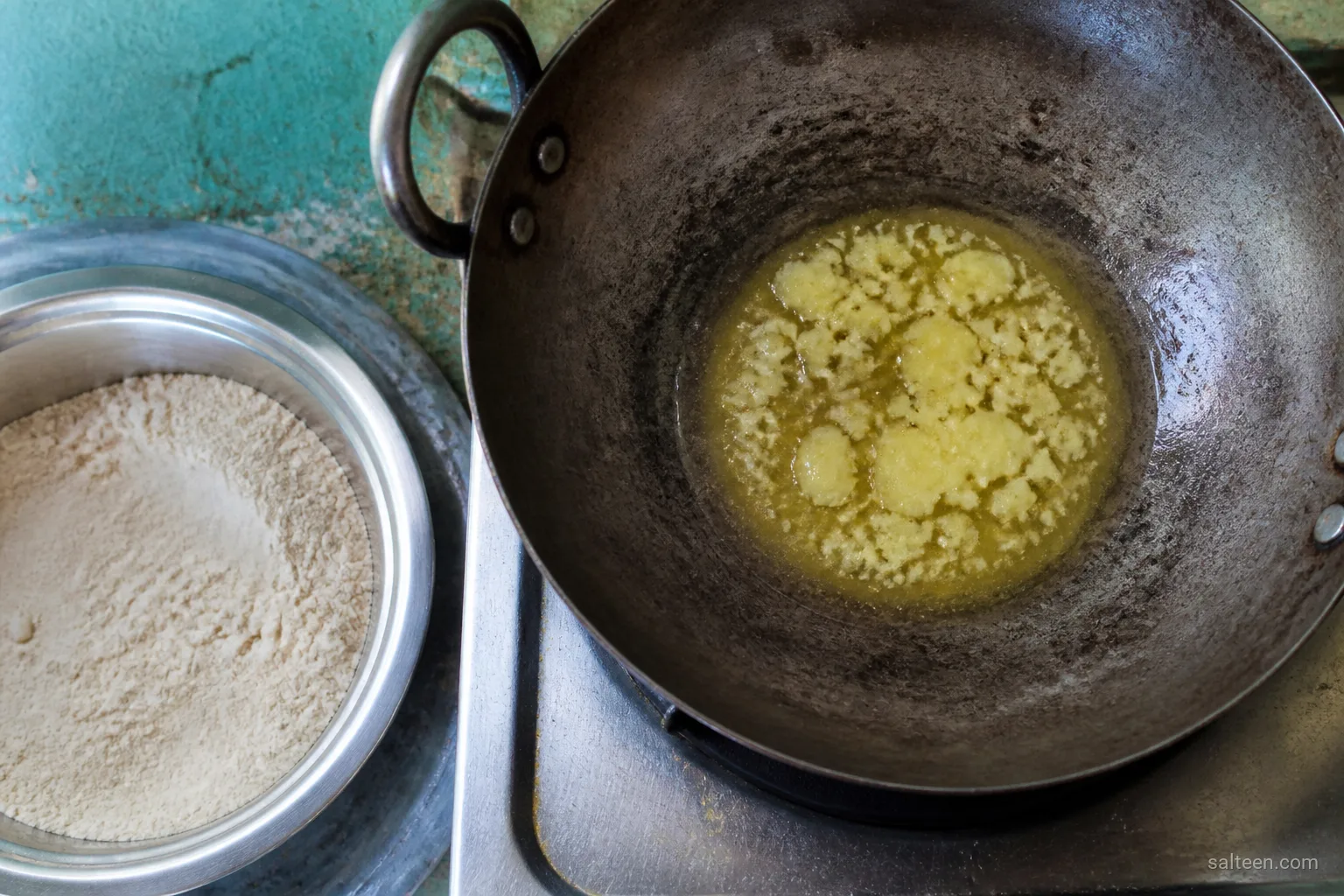
- Gond, fried in ghee until it puffs up, then crushed
- Cardamom, for fragrance
- Some families add ajwain and dry ginger powder (sonth), melon seeds (magaz) and coconut
How panjiri is made
The method has a pattern that almost every recipe shares: roast each ingredient separately, then combine.
- Fry the gond. Heat ghee in a heavy bottomed pan. Fry the gond in small amounts until it puffs up and turns pale. Cool and crush it.
- Roast the makhana and nuts. In the same ghee, roast the makhana until crisp, and the nuts until lightly golden. Set them aside.
- Roast the atta. Add the flour to the remaining ghee and roast on a low flame, stirring all the time, until it turns golden brown and gives off a nutty smell. This takes patience, and it is the step that decides the taste.
- Cool. Take the pan off the heat and let the mixture cool a little. Sugar added to a very hot mix will melt and make it sticky.
- Combine. Mix in the gond, makhana, nuts and cardamom. Add powdered sugar or jaggery once the mixture has cooled.
- Store. Cool completely before putting it in a dry container.
For atta ladoo, add a little extra warm ghee in the last step and shape the mixture into balls while it is still warm enough to hold together.
Why winter
The tradition says that panjiri is made to keep the body warm in the cold months, and food writers repeat that ingredients such as whole wheat, ghee, nuts, gond and jaggery are regarded in Indian kitchens as warming and energy giving. This is a traditional belief about food, and we are not making a medical claim about it. Panjiri is given to children, new mothers and elders in winter in many families.
There is also a calendar reason. The sweet fits the season of Lohri and Makar Sankranti, when the sun moves into a new phase of its path, the harvest cycle turns, and winter slowly begins to retreat. In Punjabi households, panjiri is prepared as prasad and shared after the rituals. And there is a practical reason: ghee and flour based sweets keep well, and a cold kitchen suits slow roasting, which in a hot summer would be a trial.
The smell of atta browning slowly in ghee is how many families know that winter has really started.
How they keep
Panjiri and atta ladoo have no milk or cream in them, so they keep for weeks when they are fully cooled and stored in a dry airtight container. Keep them away from damp and use a dry spoon. In hot weather, store them in a cool place. Ghee based sweets can turn rancid with time, so go by smell, and consume them within the period the maker suggests.
Tips for a good batch
Cooks who make panjiri every winter give nearly the same advice.
- Use a heavy pan and a low flame. The flour should brown slowly. A high flame burns it before the inside is roasted.
- Keep stirring. The flour catches at the bottom of the pan within seconds.
- Roast each ingredient separately. Nuts, makhana and gond need different times, and roasting them together gives uneven results.
- Wait for the gond to puff. It is ready when each piece swells and turns pale, and it is crushed after it has cooled.
- Cool before adding sugar. Sugar stirred into a very hot mixture melts and turns it sticky.
- Taste the ghee. Good ghee makes the sweet, and its smell comes through in every spoonful.
Variations
Panjiri changes from house to house. Some versions use powdered jaggery in place of sugar, and a coriander seed version (dhaniya panjiri) is made for Janmashtami. A fuller mixture with more ghee can be pressed into a tray and cut into squares like a barfi, or rolled into ladoos. Others keep it loose and serve it by the spoon with warm milk.
Panjiri compared with other winter sweets
| Sweet | Base | Texture |
|---|---|---|
| Panjiri | Roasted atta, ghee, dry fruit, gond | Dry, crumbly |
| Atta ladoo | Roasted atta, extra ghee | Round, firm |
| Gond ladoo | Edible gum, atta, ghee, nuts | Dense, crunchy bits |
| Atta halwa | Atta, ghee, sugar syrup | Soft, wet |
| Til ladoo | Sesame, jaggery | Chewy |
Panjiri and atta halwa use the same ingredients, and what separates them is the texture: halwa is cooked with liquid and panjiri is dry.
Where to go next
Winter sweets sit beside winter snacks in a Banarasi home. For the namkeen side of the same table, read our guide to namkeen. For what is eaten in the same season across the Indian calendar, see our seasonal pantry calendar. Our sweets are listed in the ladoos and sweets collection.
Frequently asked questions
What is panjiri?
A North Indian sweet of roasted whole wheat flour, ghee, sugar, dry fruit and edible gum. It is dry and crumbly and is also offered as prasad on Janmashtami.
What is the difference between panjiri and atta ladoo?
Panjiri is crumbly. Atta ladoo is made with extra ghee so that the same mixture can be pressed into balls.
Why are these sweets made in winter?
Tradition holds that wheat, ghee, nuts and jaggery are warming, and the sweets fit the season of Lohri and Makar Sankranti. They also keep well and suit slow roasting in a cool kitchen.
How long does panjiri keep?
Weeks, when fully cooled and stored in a dry airtight container. Check the smell before eating.
Can panjiri be made with jaggery?
Yes. Many recipes replace sugar with powdered jaggery.
Sources used for this post: Wikipedia (Panjiri).; Veg Recipes of India; Whisk Affair; Cook with Manali; Sailu’s Food; Sharmi’s Passions; Archana’s Kitchen; Curly Tales (traditional panjiri); Slurrp (panjiri); Down To Earth (a Punjabi winter dish). Ingredient lists vary by family and are given as common patterns.