Blog
Ghee, Gud and Sattu: The Pantry of a Poorvanchal Home

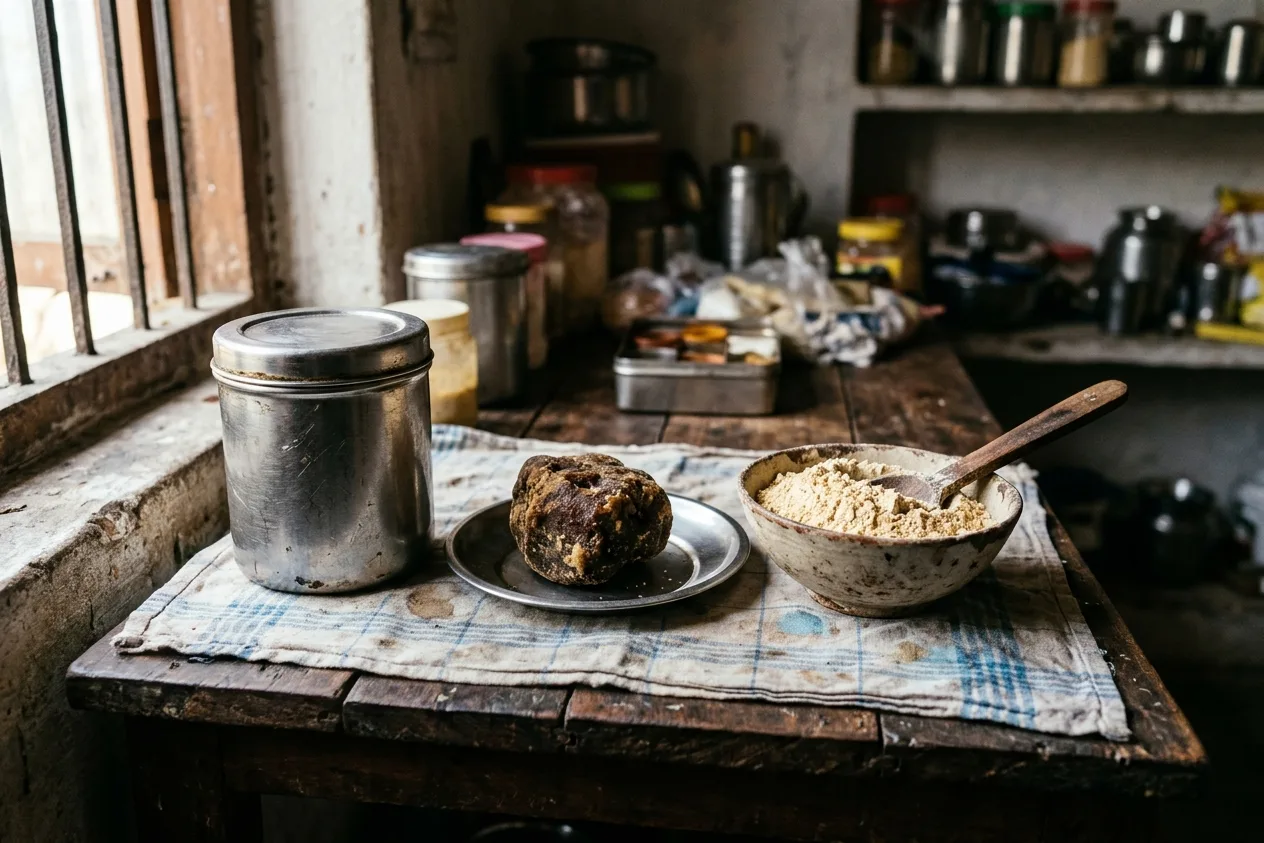
A Slurrp feature on sattu says that ground into flour, it becomes a pantry staple with astonishing shelf life, needing no refrigeration and no spice rack. That one line explains why a flour of roasted gram has stayed at the centre of kitchens in eastern Uttar Pradesh and Bihar for so long. It is cheap, it lasts, and it turns into a meal with water, salt or jaggery.
Poorvanchal is the eastern part of Uttar Pradesh, the region of which Banaras is the best known city. This post looks at three staples of its pantry, ghee, gud and sattu, and at how they work together.
What is Poorvanchal
In short
Poorvanchal (Purvanchal) is the eastern region of Uttar Pradesh, bordering Bihar. Its home food, shared with Bihar and Jharkhand, is built on wheat and rice, dal, sattu, ghee, jaggery and pickle.
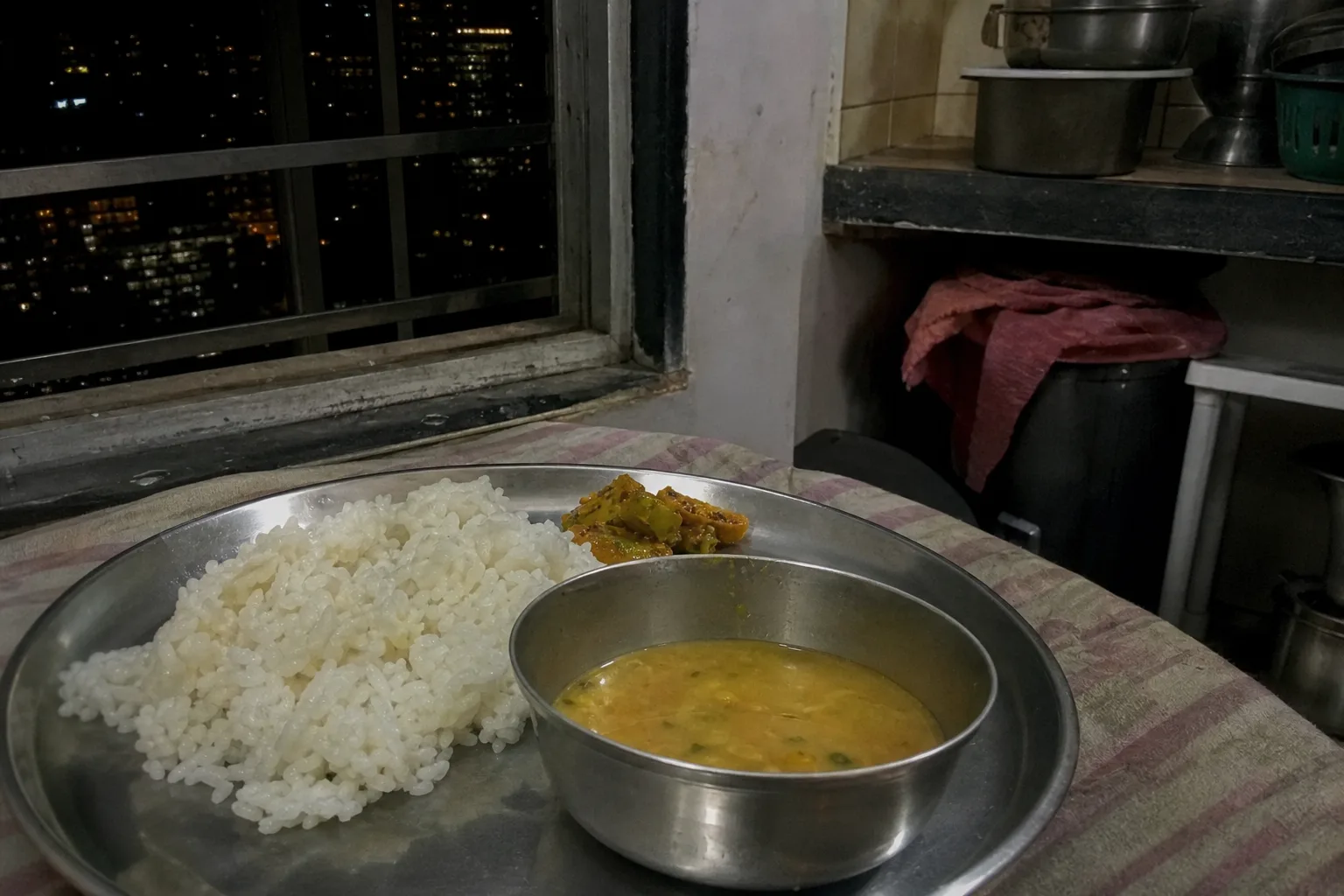
The National Virtual Library of India describes Bihari cuisine as including Bhojpuri, Maithili and Magahi cooking, consumed not just in Bihar but also in Jharkhand and eastern Uttar Pradesh. A typical meal, it says, consists of dal, bhaat (rice), phulka (roti), tarkari (vegetable) and achar. That outline fits the Poorvanchal thali too, with regional detail.
Sattu: the flour that keeps
Sattu is roasted gram or roasted barley, ground to a flour. A Wikipedia entry says that in Bihar it is prepared with toasted gram flour, toasted barley or a mixture of both. It is common in eastern Uttar Pradesh, Bihar and Jharkhand, particularly in the Bhojpuri areas, and is served cold as a savoury drink in the heat of summer, or as a porridge or soft dough.
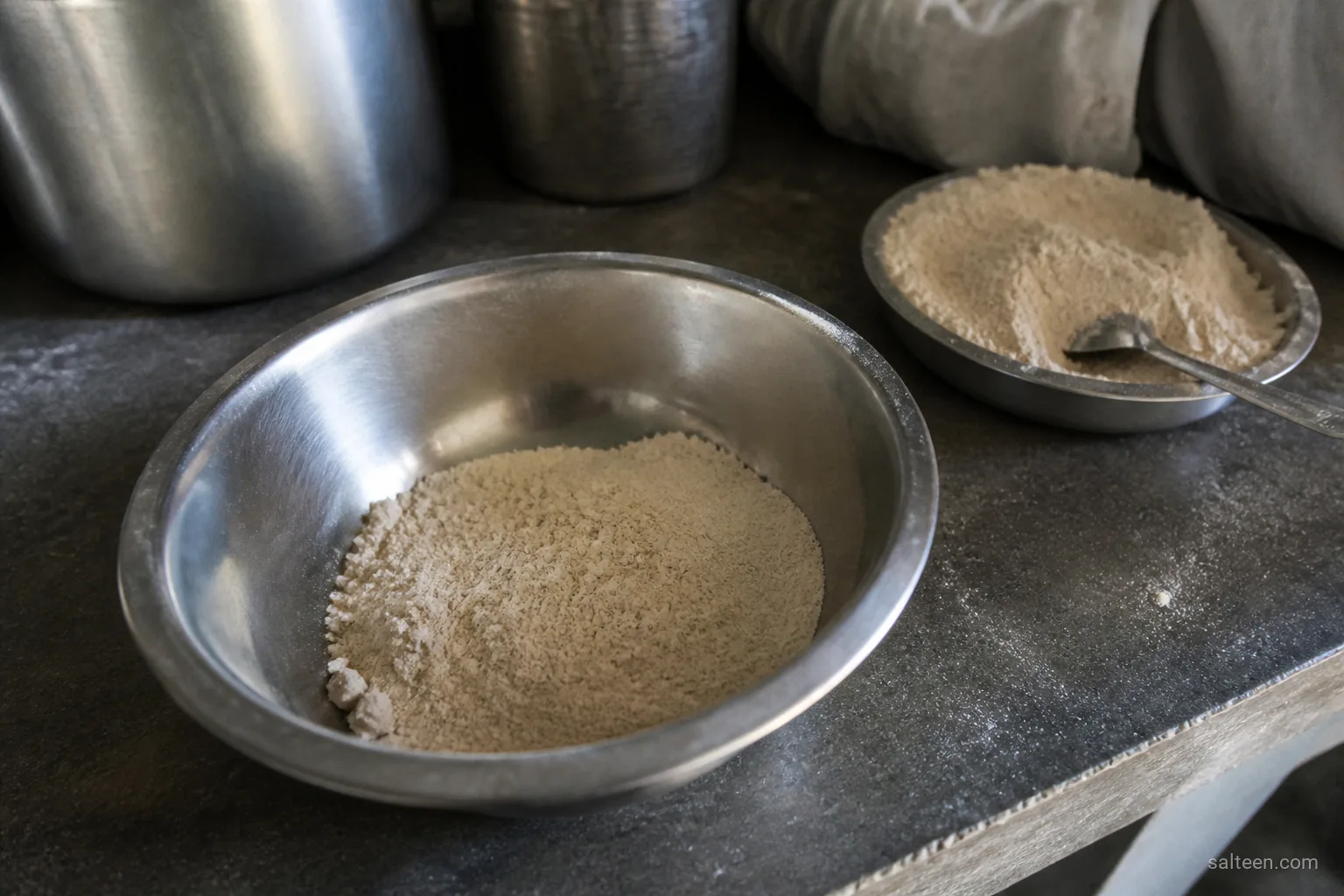
It is not the same as besan. A Whetstone Magazine writer notes that anyone from Purvanchal, where sattu is most commonly eaten, has had to explain the difference between sattu and Bengal gram flour. Besan is raw ground chana. Sattu is roasted first.
How sattu is eaten
Sattu in the kitchen
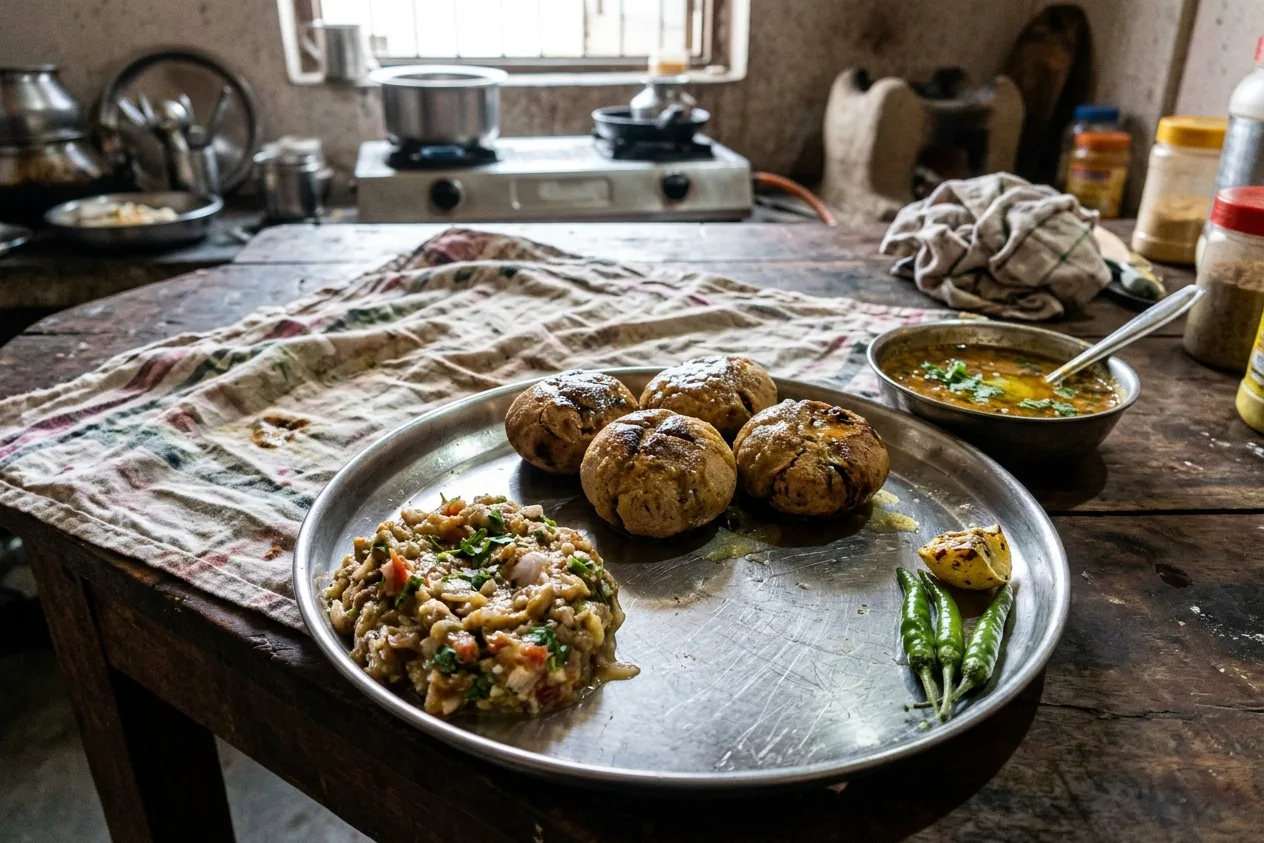
- Litti, the wheat dough ball stuffed with sattu, mustard oil and spices, roasted and dipped in ghee, served with chokha and pickle.
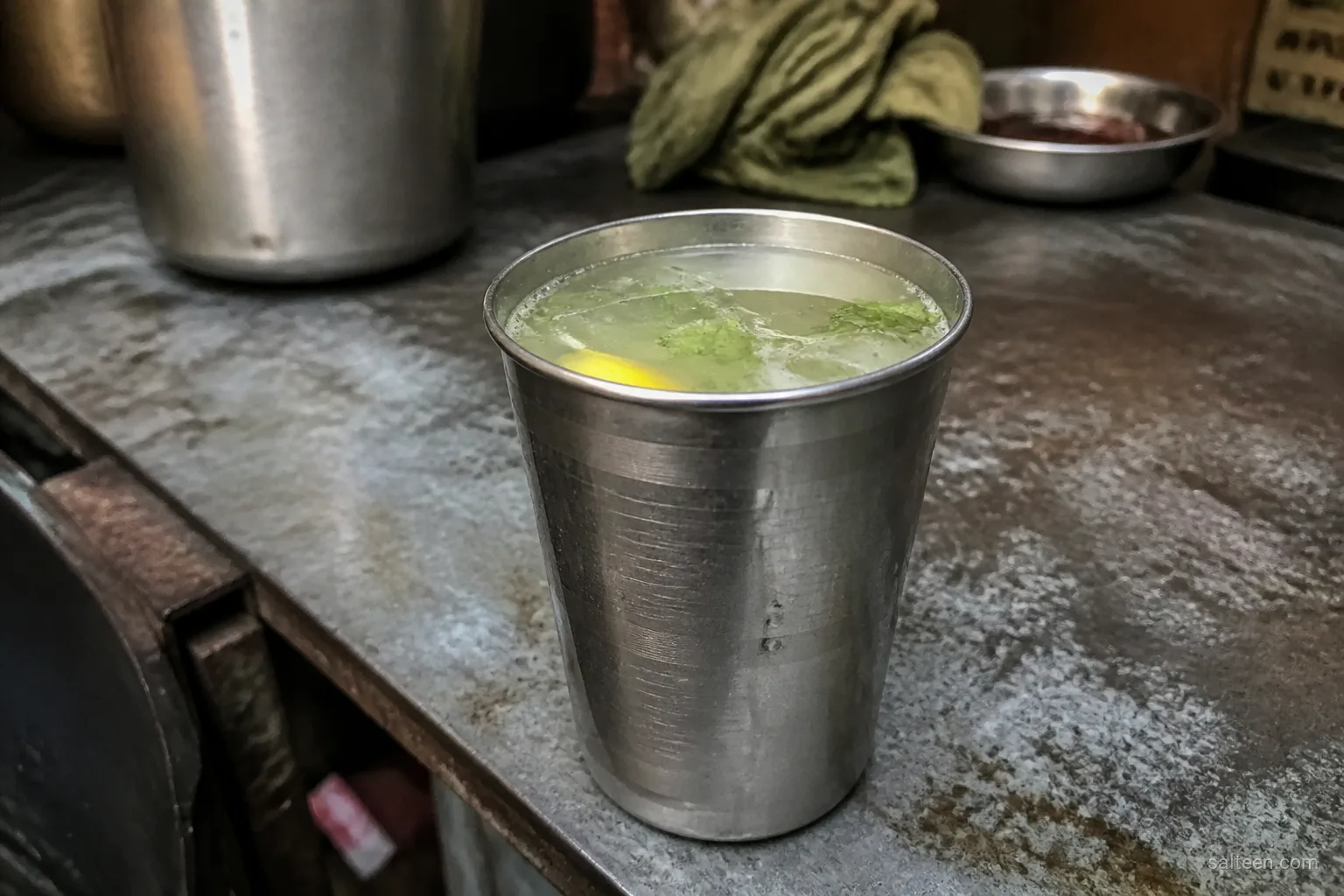
- Sattu sharbat, a cool summer drink, salty or sweet, with lemon and mint.
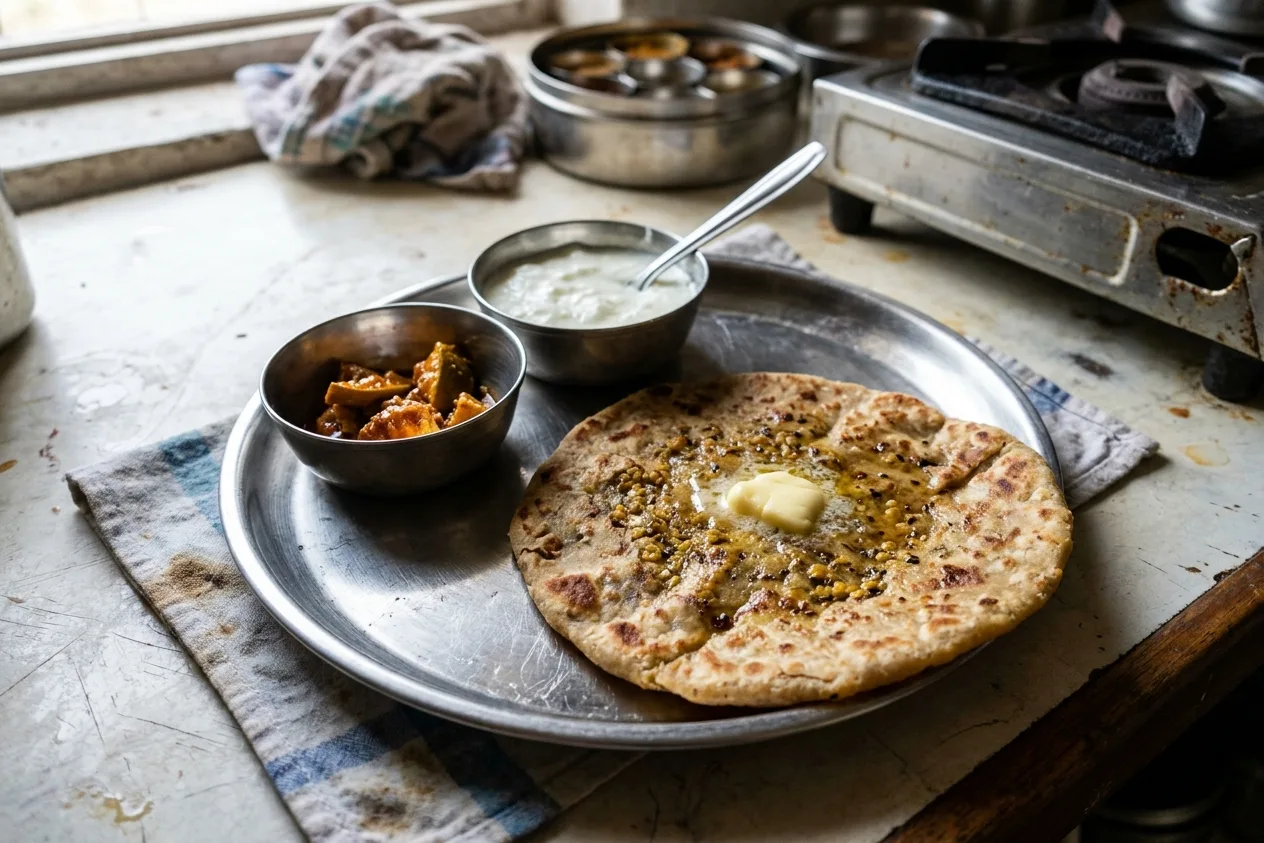
- Sattu paratha, a flatbread with a spiced sattu filling.
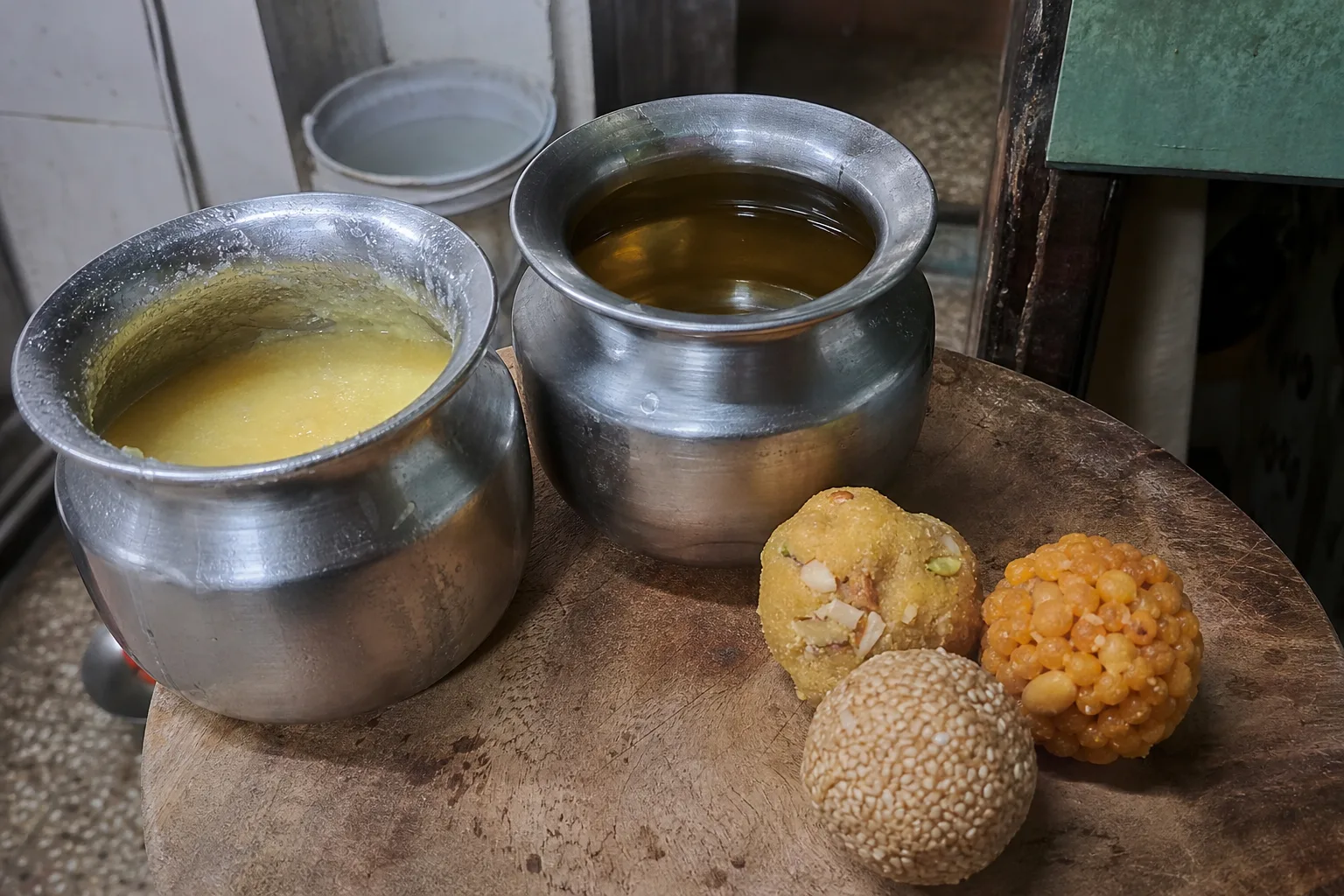
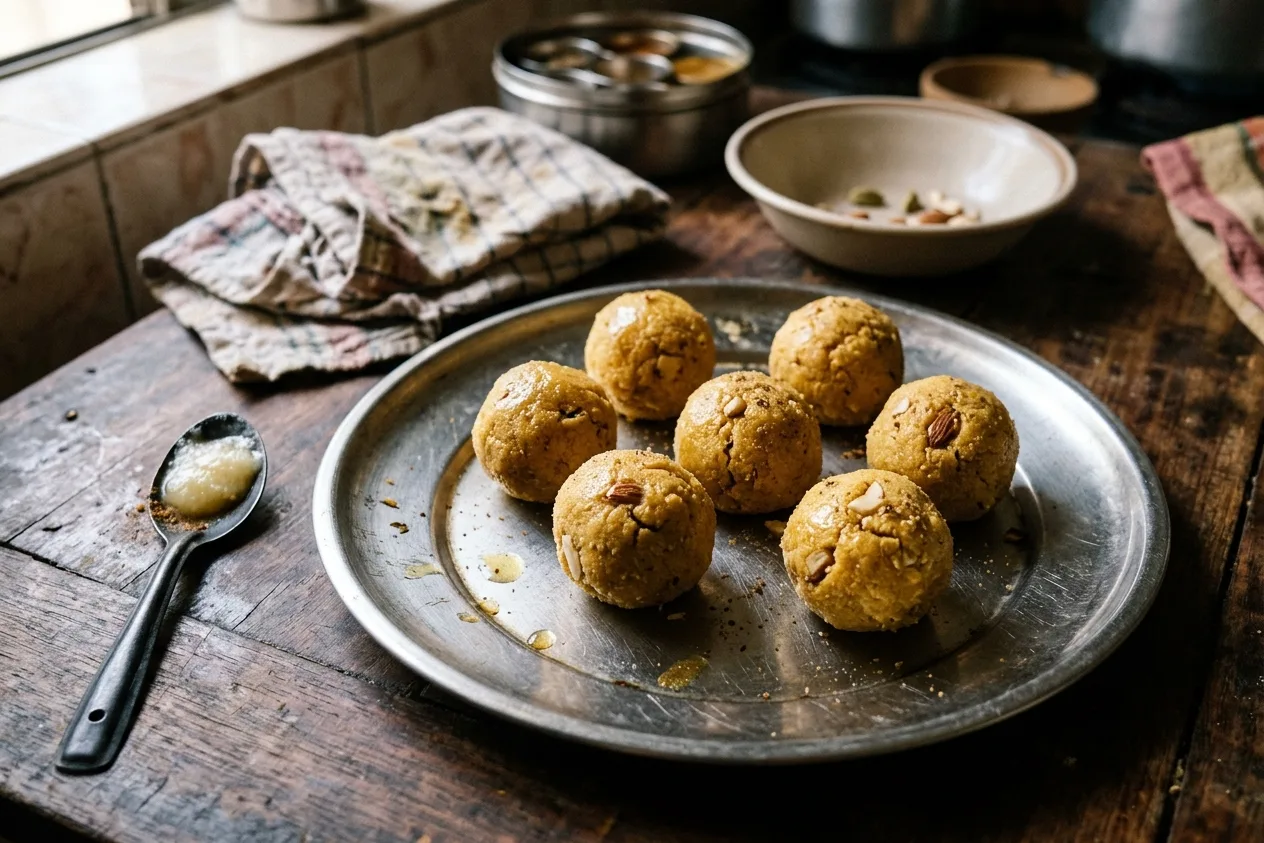
- Sattu laddoo, made with jaggery and ghee, often in winter.
- Dhuska and other snacks that use sattu as a base.
Litti is the dish the world knows. The Government of Bihar’s cuisine page describes it as wheat and sattu with spices, kneaded into round balls and dipped in ghee, and notes that ghee is served with it to enhance the taste. The Indian Culture portal says it is also eaten in Jharkhand, parts of eastern Uttar Pradesh and Nepal. Goya magazine points out that in shops that can afford it, the litti is dipped deep in ghee. Our own take on the full plate is in our guide to Banaras food.
Sattu has long been a labourer’s food. Outlook Traveller says that traditionally litti is the poor man’s food, a staple for labourers and farmers working in the fields. In recent years it has moved onto restaurant menus, and a Down To Earth feature notes that sattu is finding a place in fashionable dinner spreads.
Gud: the sweetener of the pantry
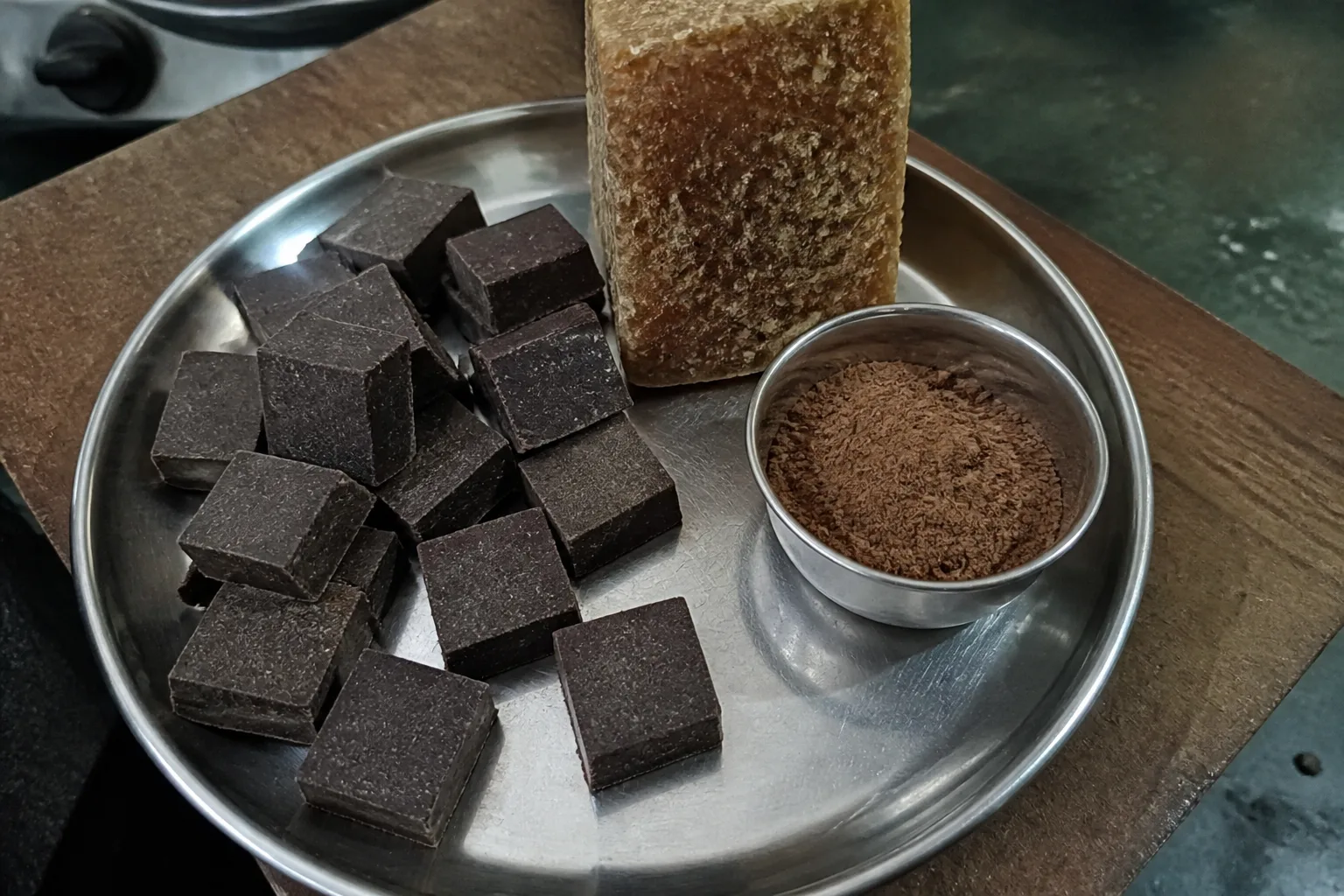
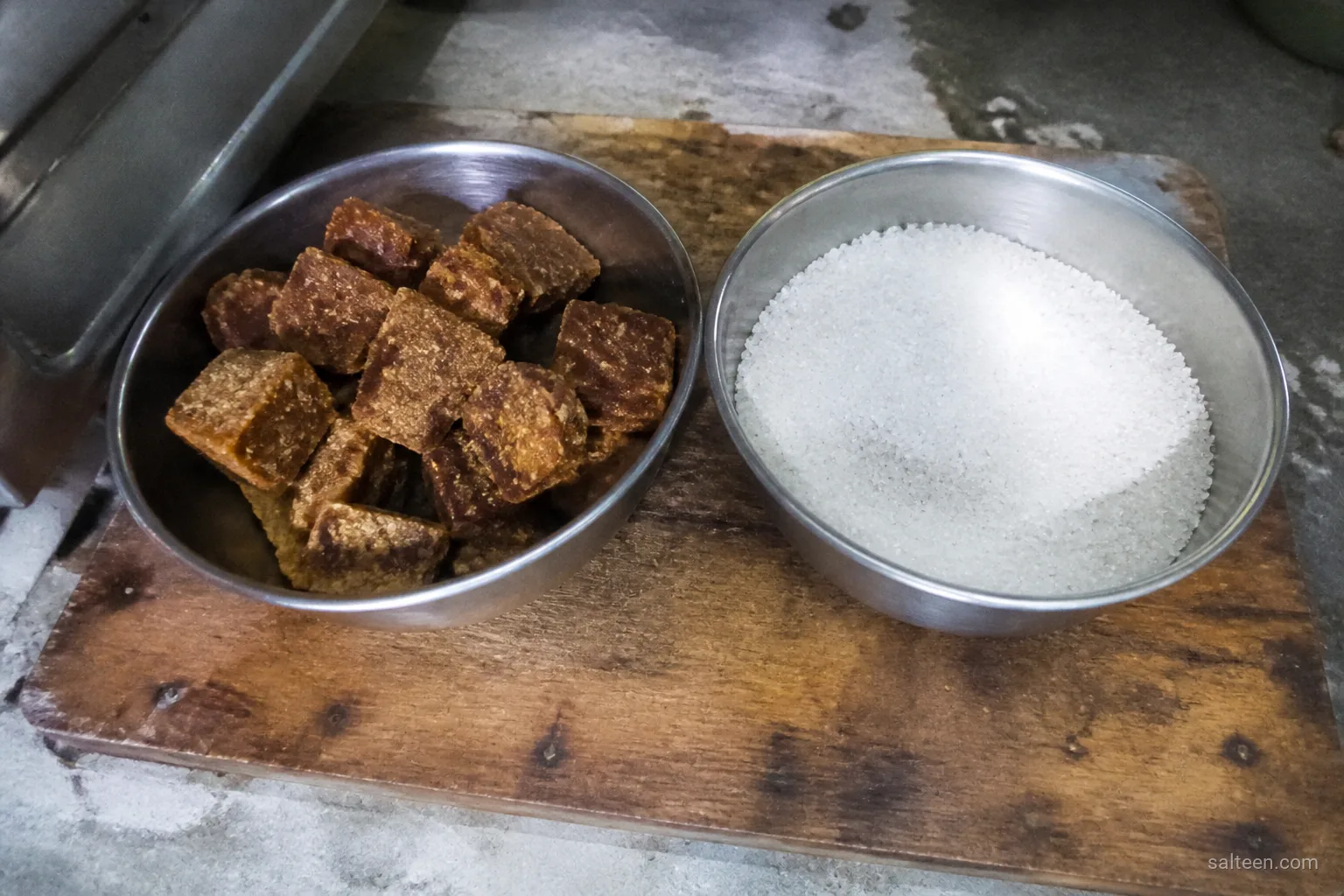
Jaggery, gud, is the other half of many of these dishes. It is the sweetener in sattu laddoos with ghee, and it is the sweetener in tilkut and til ladoo at Makar Sankranti. We write about the sesame sweets in our post on tilkut and til ladoo. On the Sankranti plate in Bihar, jaggery or sugar and sesame come together with curd and flattened rice, as recipe sources note.
Sattu, gud and ghee together make the simplest kind of home sweet: flour, jaggery and fat.
Ghee: the finishing touch
Ghee is the third staple, and in this region it is a finish and a fat. Litti is dipped in it. Khichdi is topped with it. Sattu laddoos are bound with it.
Why these three work together
Each of the three keeps without a fridge, which matters in a home where food had to last through a hot summer or a long journey. Sattu is a flour that needs only water. Gud is a solid sweet that does not spoil quickly. Ghee is a fat that holds well when kept clean and dry. Together, they make a meal or a snack in minutes, and together with pickle they make a plate. That is an observation of ours, and not a claim made by the sources.
What is in our pantry
- Which staples were always in the house, and in which containers?
- Who made the ghee, who bought the gud, and where was sattu ground or bought?
- How was sattu eaten at home in summer and in winter?
- What was kept in the pantry for guests?
- One memory: a smell, a jar, a spoon.
If a line cannot be confirmed, this section stays out of the post.
Where to go next
For the wider table of the region, read our guide to Banaras food.
Frequently asked questions
What staples are in a Poorvanchal pantry?
Wheat and rice, dal, sattu, ghee, jaggery (gud) and pickle are the core of the home food of eastern Uttar Pradesh and Bihar.
Why are sattu and gud common in eastern UP?
Both are cheap and keep well without a fridge, and sattu is a ready to eat flour that has long been a food of working people. That is partly our own reading.
What is the difference between sattu and besan?
Sattu is roasted gram or barley ground to a flour. Besan is ground raw chana.
What is litti chokha?
A dish of wheat dough balls stuffed with sattu, roasted and dipped in ghee, served with mashed vegetables (chokha) and pickle.
Sources used for this post: Slurrp, “Sattu: The Flour That Fed the Fields”; Wikipedia, Sattu.; Whetstone Magazine, the story of sattu; Goya, Sattu and the Bihari identity; Goya, litti chokha; Government of Bihar cuisine page; Indian Culture portal, food of Bihar; National Virtual Library of India, cuisine of Bihar; Outlook Traveller, litti chokha; Down To Earth, “More than food”. Sattu’s origin is disputed in the sources and is not stated here.