Blog
Jaggery and Sugar in Mithai: What Changes in Taste and Texture

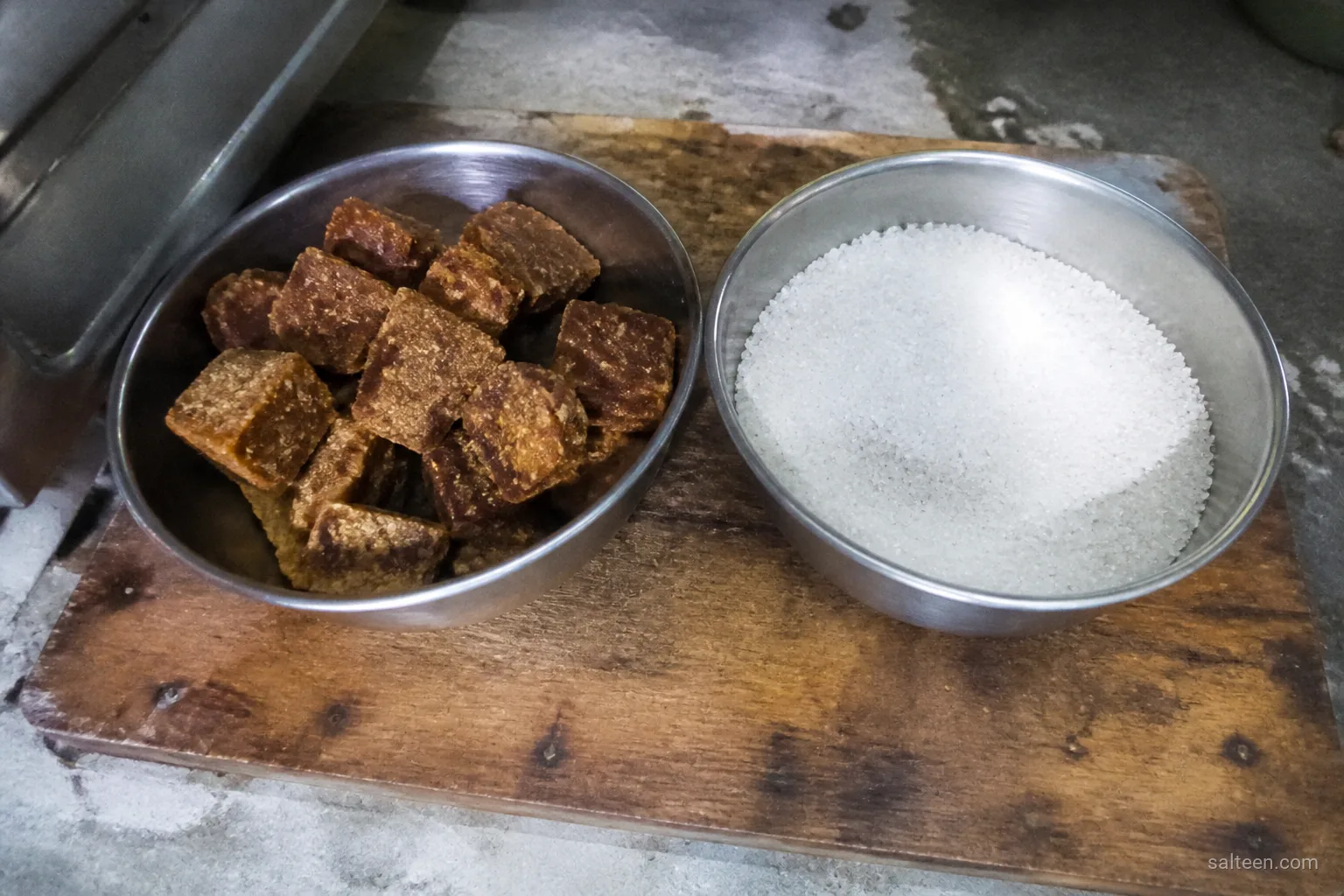
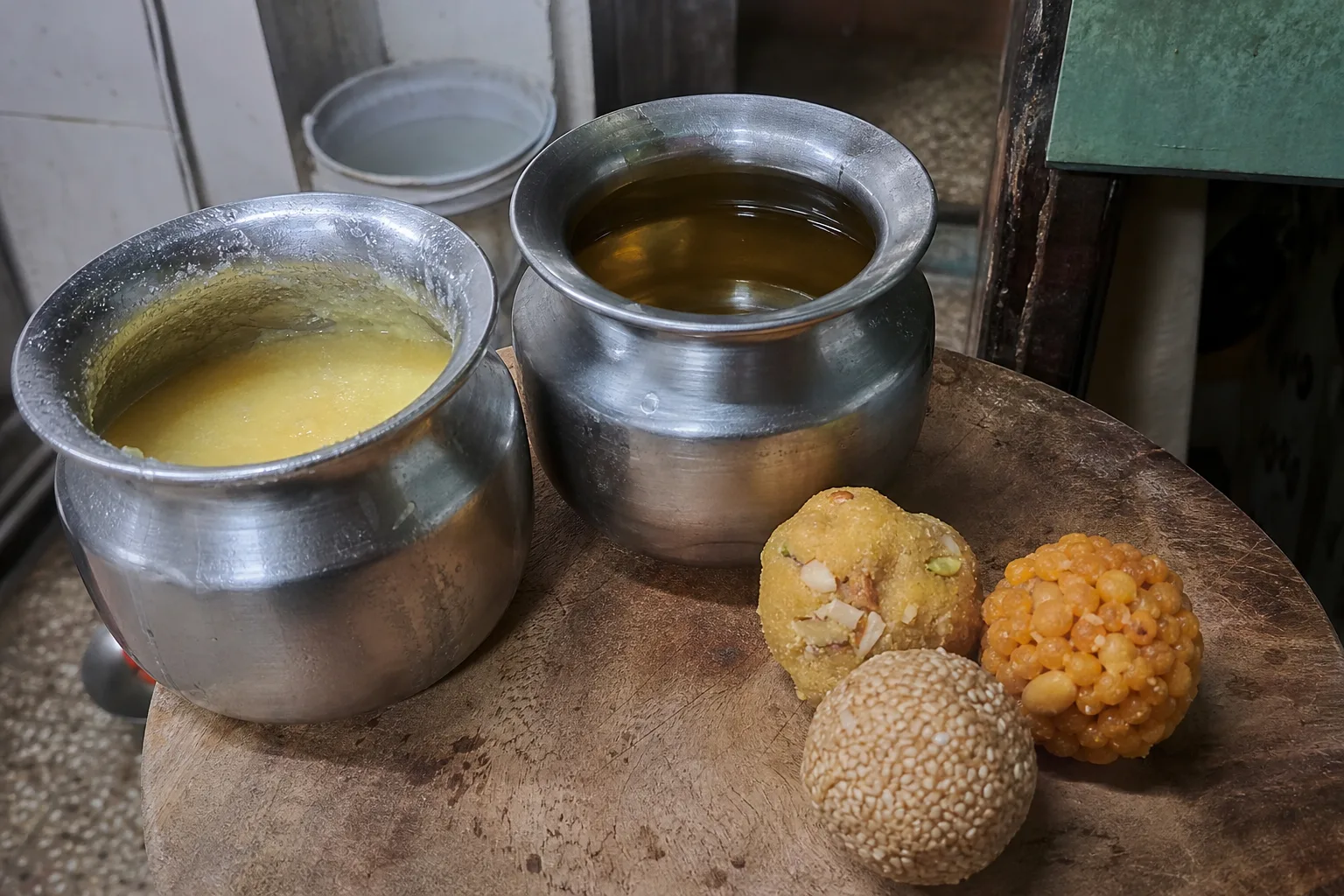
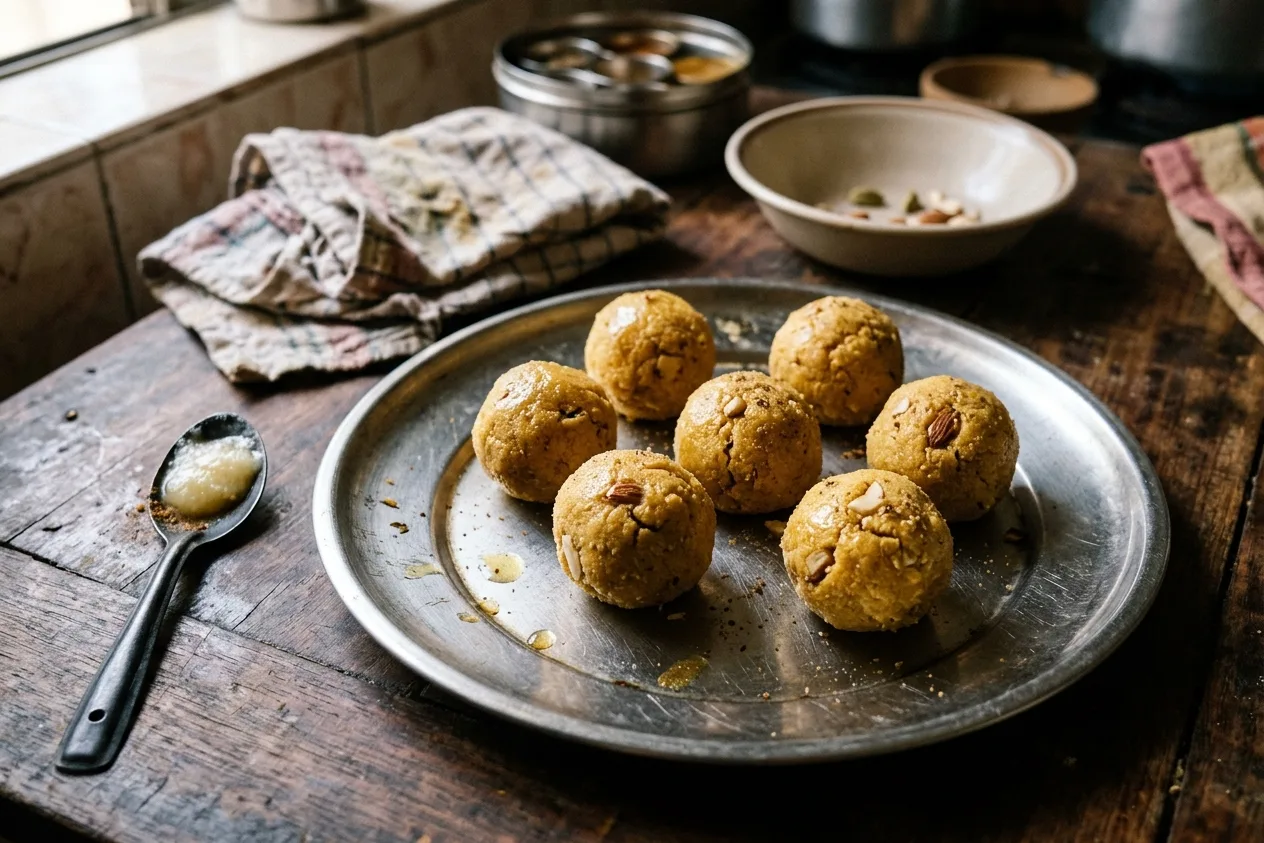
A recipe for jaggery laddus published by a pickle and sweets seller says they keep for about two weeks at room temperature in an airtight container, and that a coating of ghee stops them absorbing moisture. The same laddu made with sugar would behave differently in the jar, and in the mouth. Jaggery and sugar come from the same plant, but a cook who swaps one for the other changes the colour, the taste, the moisture and often the texture of the sweet.
This guide covers those four changes. It deliberately leaves out nutrition and health, which are separate questions with their own evidence, and sticks to what happens in the kadhai and on the plate.
The short answer
In short
Jaggery gives sweets a darker colour, a caramel and molasses taste and more moisture. Sugar gives a clean, neutral sweetness, a lighter colour and a drier, finer texture. Jaggery works well in laddoos, tilkut, halwa and kheer. Sugar suits sweets where colour and smoothness matter.
What each one is
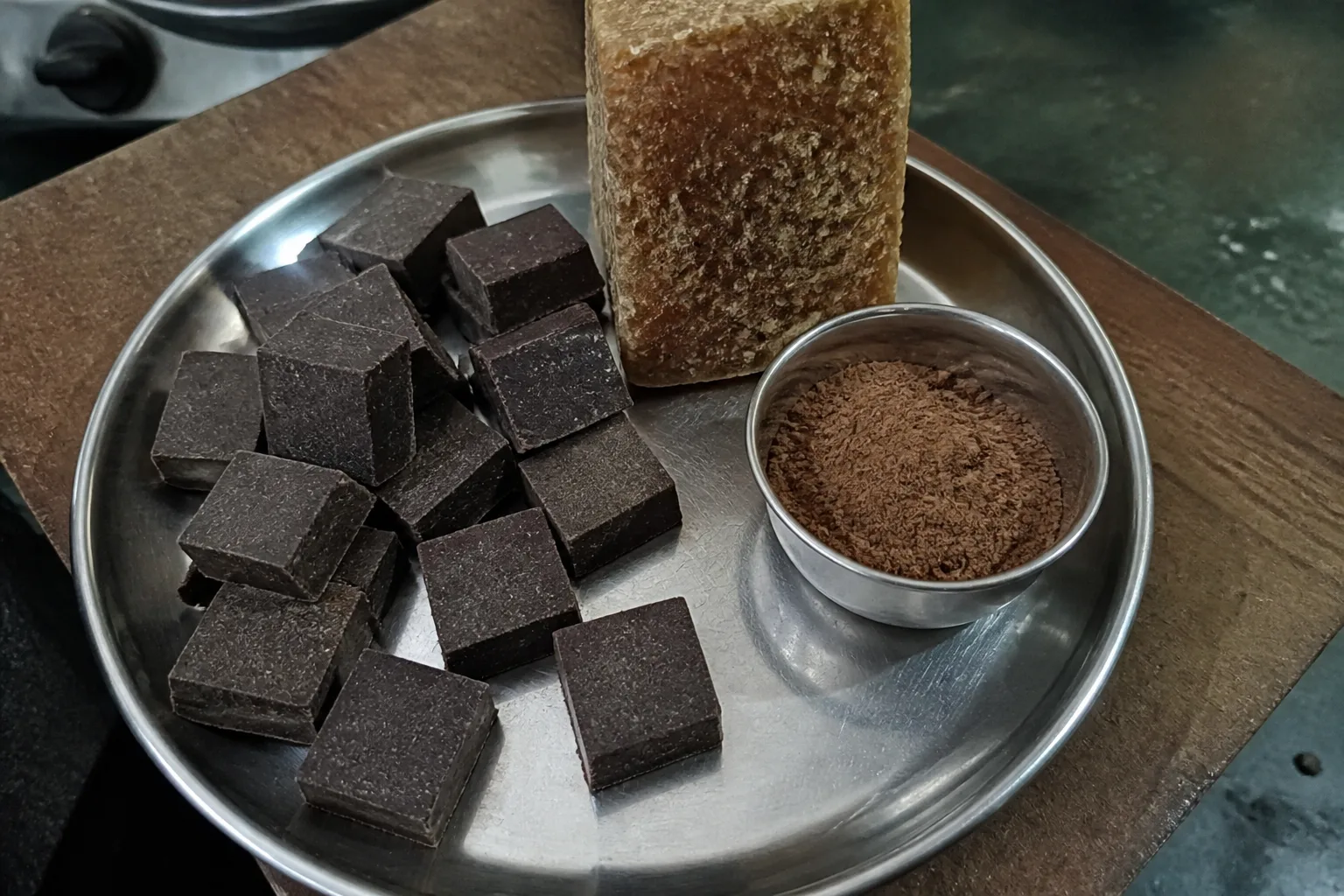
Both come from sugarcane in most Indian kitchens. Sanjeev Kapoor’s site makes the key distinction: in jaggery the sugar syrup is not treated and does not go through a crystallisation process, whereas white sugar is refined into crystals. A food encyclopaedia entry says jaggery is an unrefined natural sweetener that comes in shades from light amber and golden brown to dark brown. DhampurGreen, a sugar and jaggery producer, says that brown sugar is essentially refined white sugar with molasses added back, while jaggery is naturally unrefined, so the two are not the same even though they look alike.
Taste
MasterClass says jaggery can taste similar to fresh cane juice, maple syrup, caramel or molasses, depending on what it contains. A producer’s note adds that palm jaggery has a deep flavour and caramel with a hint of smoke, and is a preferred choice in many South Indian sweets.
Sugar has no such range. Its taste is plain sweetness, and that is its use. In a sweet built on saffron, cardamom or rose, sugar lets those flavours come through. In a sweet built on sesame, wheat or gram flour, jaggery adds a flavour that belongs there. This is why tilkut, which we describe in our post on tilkut and til ladoo, is made with jaggery in its darkest form, called gur tilkut.
Colour
Jaggery is brown, and anything made with it takes on that colour. An Indian sweets seller notes that jaggery gives desserts a golden hue. For a laddoo or a halwa that is welcome. For a white rasgulla, a pale burfi or a clear sugar syrup, it is not, and sugar is the choice.
A buying note from a seller of natural foods says real jaggery ranges from dark brown to golden, and that a uniform bright yellow colour may point to chemical treatment. Colour is a clue to how a block was made, and not a measure of quality on its own.
Moisture
This is the change that surprises cooks. A shop that sells jaggery says that jaggery can be substituted for sugar in many recipes, though it has a different flavour profile and moisture content, which can affect texture, particularly in baked goods. A seller’s comparison of the two says jaggery is not ideal for baking because of its moisture and its colour.
Jaggery is also hard at room temperature but can turn slightly sticky in humid weather, according to the same comparison, and a good block is described as golden, hard, crystalline and low in moisture. A sweet made with jaggery syrup therefore has more softness to it and a stickier surface than a sugar sweet. Our laddu example above shows why the ghee coating matters.
Texture
Texture differs for two reasons. The first is moisture, as above. The second is the form in which the sweetener goes in.
- Jaggery is usually melted into a syrup and mixed with roasted flour, sesame or nuts, where it binds the mixture as it cools. It gives a chewy or crumbly set, depending on the temperature of the syrup.
- Sugar can be used as a fine powder, a syrup or granules. A food site notes that castor sugar, which is ground to a very fine texture and dissolves quickly, is the choice for smooth sweets like halwa or shrikhand, and demerara sugar is sprinkled on sweets for a crunchy finish.
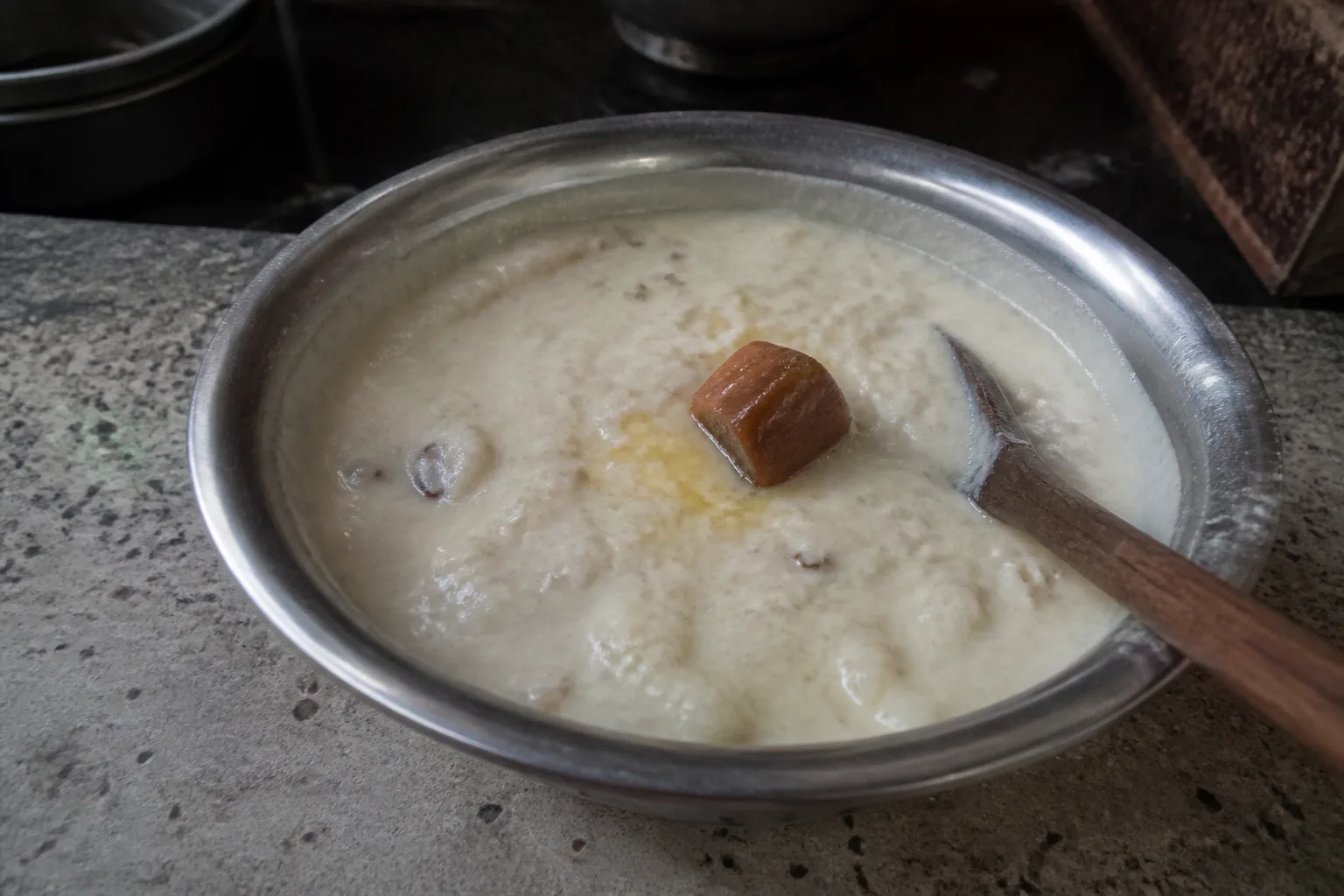
A chef quoted by Gulf News gives one practical caution. To add jaggery to milk, boil it with water into a thick syrup first, or the milk will curdle. Kheer made with jaggery is therefore made carefully, and it is a point where sugar is simpler.
Which sweets suit which
A working guide
- Better with jaggery: atta ladoo, panjiri, sesame sweets (tilkut, til ladoo, gajak), sattu laddoo, gur halwa, kheer made carefully.
- Better with sugar: white or pale sweets, syrup sweets such as rasgulla and gulab jamun, burfi where colour matters, smooth halwa and shrikhand.
- Either works: coconut laddoo, besan laddoo, carrot halwa, with a change in colour and flavour.
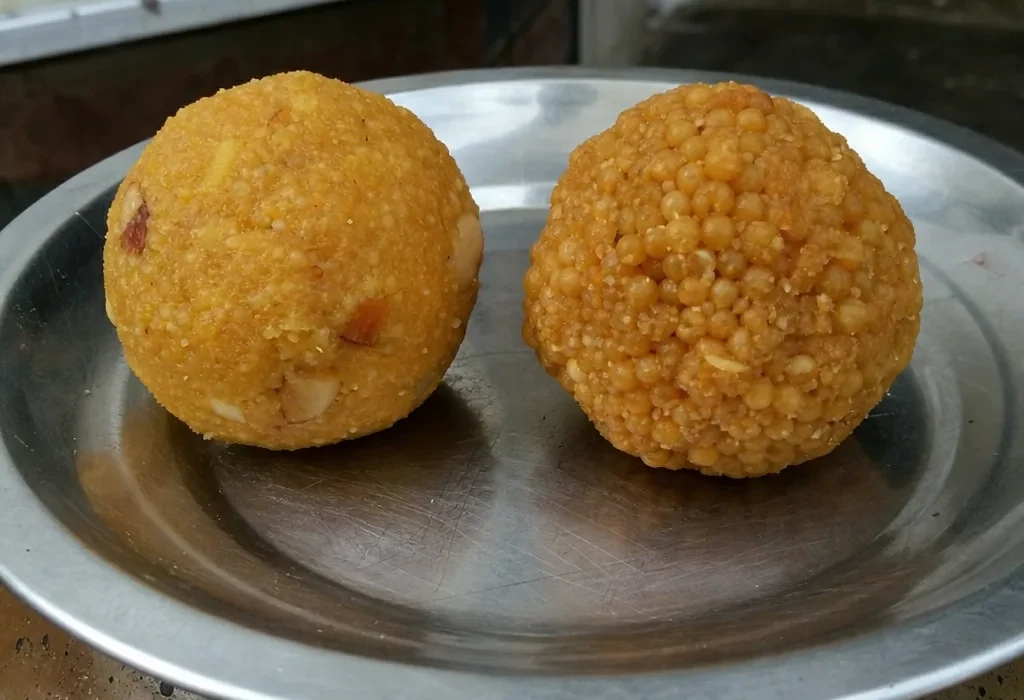
MasterClass notes that jaggery is a main component of ladoos, simple sweets of atta, nuts, dried fruit, sugar and ghee, in casual and ceremonial settings. A news summary lists gajar ka halwa, kheer and coconut laddoo as sweets in which jaggery can be used instead of sugar. These are not rules, and cooks differ.
Can jaggery replace sugar in mithai
In many sweets, yes, and the result will be darker, a little softer and more caramel in taste. The change is largest in sweets where sugar does a structural job, such as a syrup that must reach a precise stage or a sweet that must be white. A few habits help.
- Start with the traditional sweets, where jaggery already belongs.
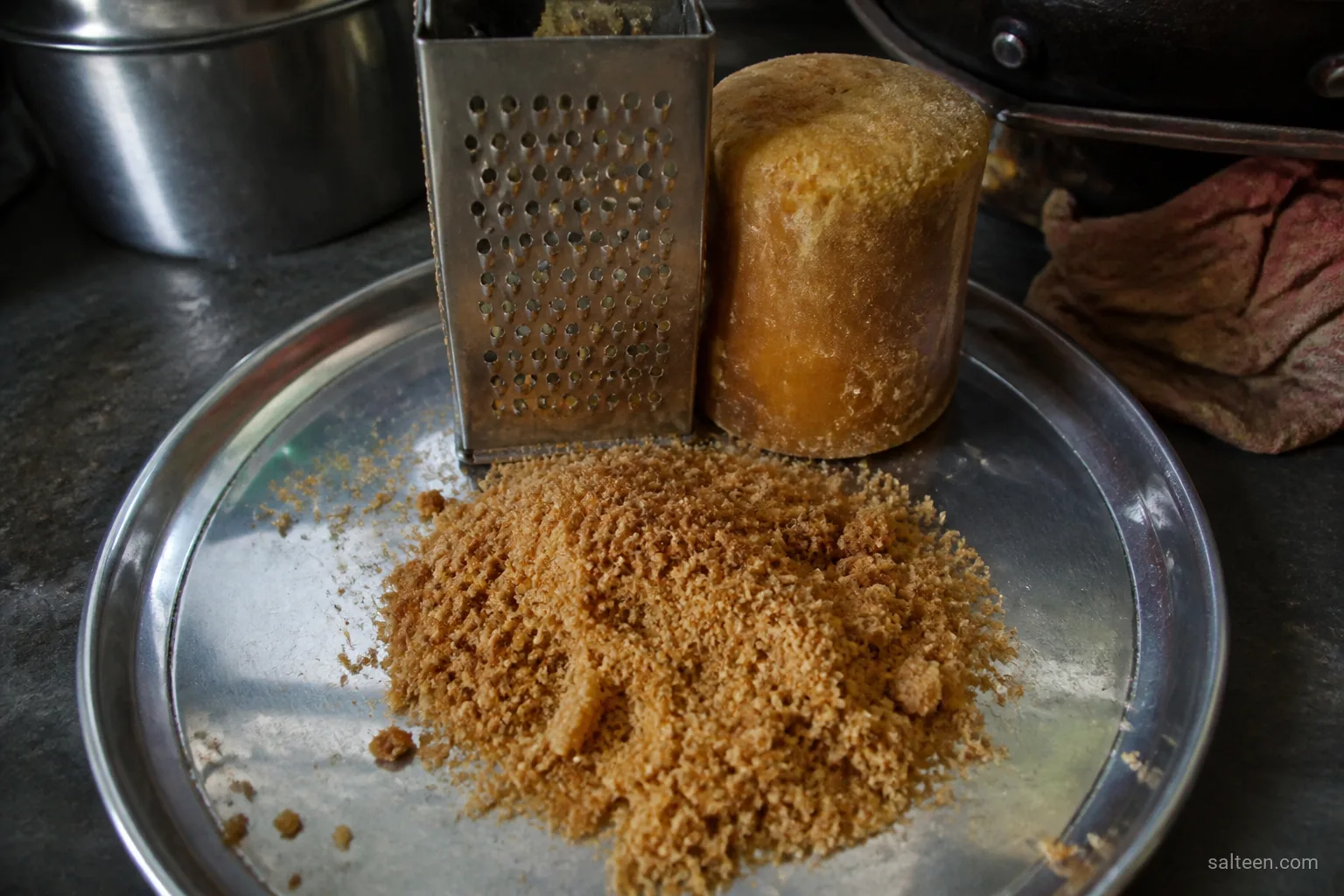
- Use powdered jaggery for even mixing, as a seller of everyday jaggery advises.
- Expect more softness and store the sweet airtight, as with the laddus above.
- Test a small batch before making a large one.
Our kitchen
Our own sweets and their sweeteners are described on the product pages, and we do not repeat them here. The wider ingredient story, starting with the oil, is in our kacchi ghani mustard oil guide. The winter sweets we write about are in our post on atta ladoo and panjiri.
Frequently asked questions
How does jaggery change the texture of sweets?
It adds moisture and stickiness, so sweets are softer and chewier, and they need airtight storage. Sugar gives a drier, finer texture.
Can jaggery replace sugar in mithai?
In many sweets, yes, especially laddoos, halwa and sesame sweets. It is less suitable where colour or a precise syrup matters.
Why is jaggery darker?
It is unrefined, and the cane syrup is not crystallised, so the colour and flavour of the cane stay in.
Does jaggery change the taste?
Yes. It tastes of caramel, molasses or cane juice, depending on the type. Sugar tastes only sweet.
Is jaggery better than sugar?
This post covers taste and texture only. It makes no health comparison.
Sources used for this post: MasterClass, jaggery guide; Sanjeev Kapoor, “Sweet goodness: Jaggery”; Two Brothers Organic Farms, jaggery and sugar notes; Organic Mandya, jaggery laddu recipe and jaggery guide; Slurrp, “From jaggery to mishri”; Gulf News, India’s jaggery comeback; DhampurGreen, jaggery and brown sugar; House of Indya, jaggery sweets; NewsBytes, jaggery desserts. Seller guides are marketing material and are used for texture and handling notes only.