
Blog
A Winter Thali Plan: Greens, Roti and Achar

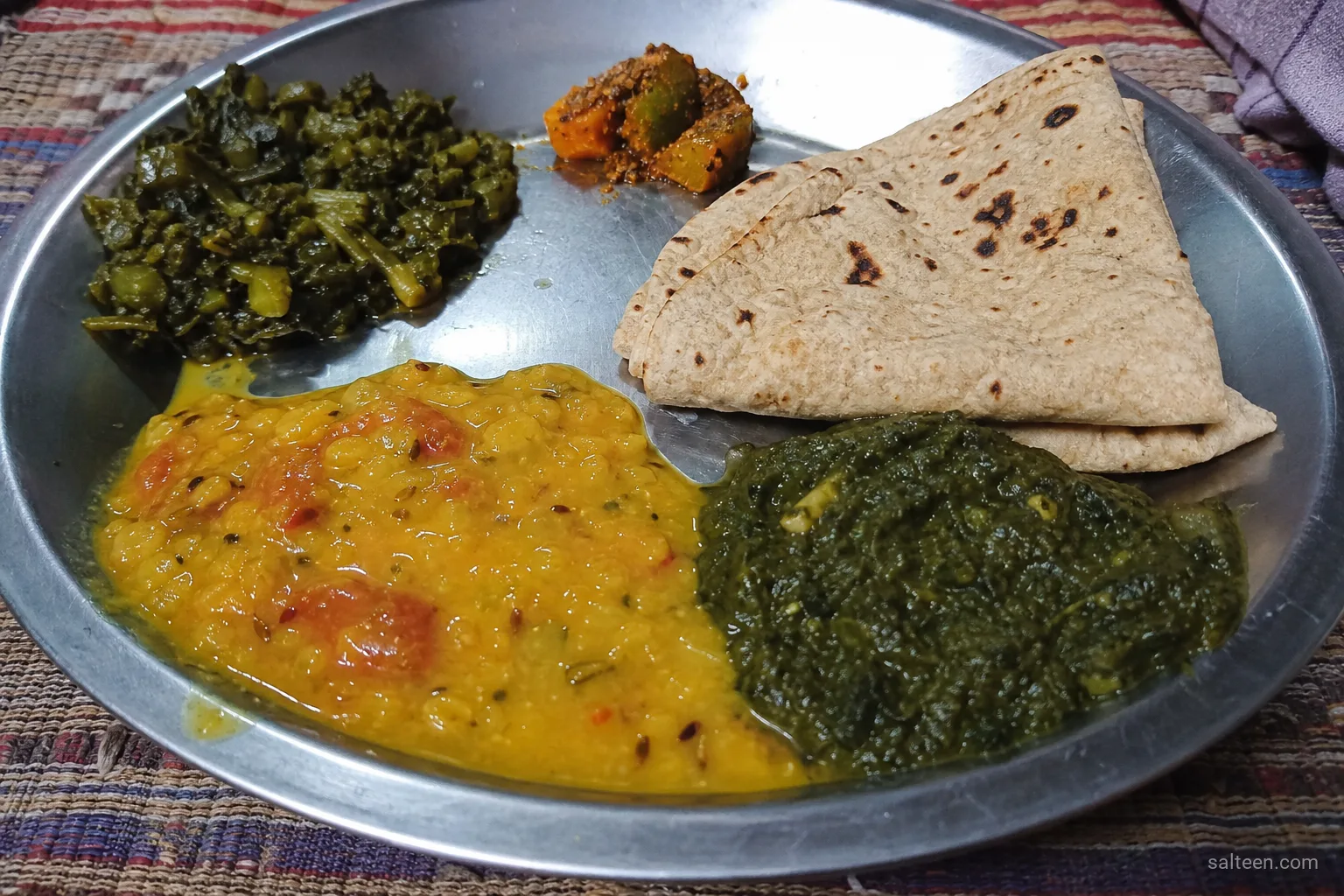
A recipe from Outlook Traveller for sarson ka saag starts with 2 kg of mustard leaves, 200 grams of bathua, 200 grams of methi and 600 grams of palak. That is a lot of greens for a single pot, and it tells you what winter eating looks like in north India. For a few months the market is full of leaves, and the thali bends around them.
This post builds a winter thali from the parts up. It lists the greens that arrive in the cold months, the breads that go with them, the supporting dishes, and the place of achar on the plate. It ends with a week of plates that anyone can follow.
What is a winter thali
In short
A winter thali is a plate built from the season: saag made from mustard, spinach, bathua and fenugreek leaves, a maize or millet roti, a pot of dal, a lump of jaggery or white butter, and a spoon of achar to lift it all.
A thali is a complete plate with several small dishes served together. In summer it leans toward light vegetables and curd. In winter the plate gets heavier and warmer, and the leafy greens move to the middle. One site on seasonal eating notes that in an Indian household winter is the time when palak, sarson, bathua and methi change from health food to comfort food.
The greens of the season
Four leaves carry most of the winter plate.
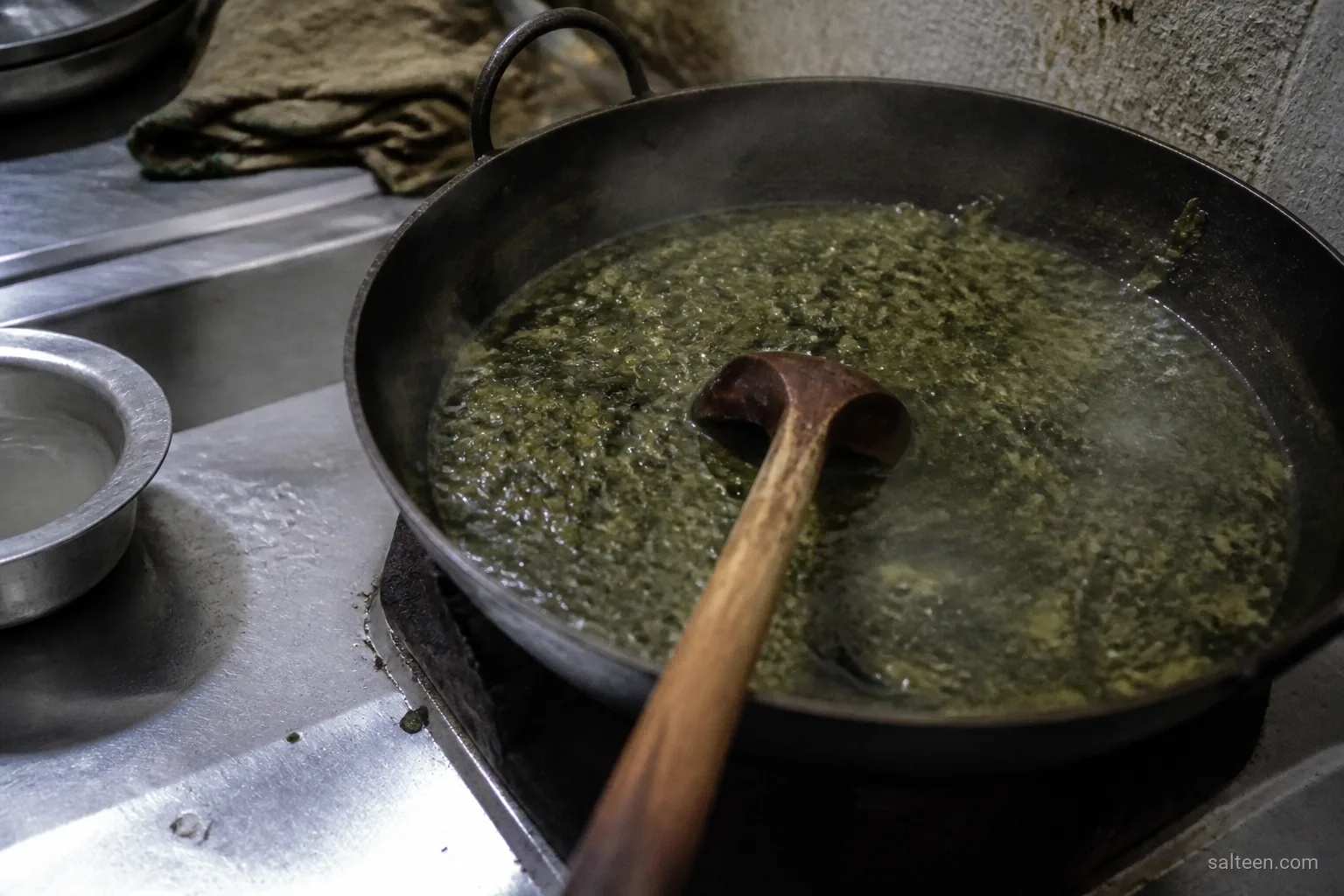
Sarson is mustard greens, and it is the star of the classic Punjabi saag. The yellow mustard fields are what mark the onset of winter in much of the north, as one food site puts it. Mustard greens are a little bitter on their own, which is why recipes mix them with other leaves.
Bathua (chenopodium) is the second leaf of the saag and is also cooked on its own with a garlic tadka. Palak is spinach, the mildest of the group, and it softens the bitterness of the others. Methi is fenugreek, which adds its own sharp, slightly bitter note. A cooking blogger explains that since mustard greens are bitter, the saag is usually cooked with other greens such as spinach, bathua and methi to balance the flavour.
Outside Punjab the leaves change. Lal saag is a winter dish in eastern India, and in the south, keerai kootu is cooked from greens and lentils. A winter plate looks different in each region, but a plate with leaves on it is common to all.
The breads: makki, bajra and plain roti
Makki ki roti is the flat bread made from maize flour, and it is the traditional partner of sarson ka saag. It is gluten free and is served hot with a spoon of butter. In Rajasthan and parts of north India makki roti is also eaten with bajra khichdi, a millet porridge cooked with vegetables and spices, and the plate is usually finished with ghee or yoghurt.
Maize and millet flours do not have the gluten that makes wheat dough stretch, so the dough is patted by hand and handled gently. If that is too much trouble on a weekday, a plain wheat roti works perfectly well with saag.
The supporting dishes
A winter plate has more than saag. A few small dishes round it out.
- Dal. Any everyday dal sits well beside the saag, and gives the plate some protein.
- Gur or jaggery. A lump of jaggery on the side is the traditional partner of makki roti and saag. It sweetens each mouthful against the bitterness of the leaves.
- White butter. A dollop on top of hot saag or roti is part of the classic Punjabi serving. Recipes from several sites finish the dish this way.
- Onions and masala chaas. Raw onion and a glass of spiced buttermilk are the usual accompaniments, as one recipe site lists them.
- Achar. A spoon of pickle cuts through the richness and adds sharp flavour to a plate that would otherwise be soft and earthy.
Where achar fits
Good to know
Saag is soft, rich and a little bitter. Achar supplies what it lacks: salt, sharpness and a bite of heat. A small spoon is enough.
Think of the pickle as a seasoning that sits on the plate and not as a separate dish. Winter pickles are the natural choice because they come from the same season. A pickle of carrot, cauliflower and turnip is the classic partner of makki roti and saag, and we have written about it in our post on gajar gobhi shalgam achar. A tart amla pickle works against a heavy plate too, and it is covered in our amla achar guide.
A week of winter plates
This is a plan for seven evenings. It is only a suggestion, built from the pairings above, and you should change it to suit your kitchen.
| Day | Greens | Bread | Side | Pickle |
|---|---|---|---|---|
| Monday | Sarson, palak and bathua saag | Makki roti | Jaggery, white butter | Gajar gobhi shalgam |
| Tuesday | Methi and aloo | Wheat roti | Moong dal | Lime or green chilli |
| Wednesday | Palak dal | Rice or roti | Onion salad | Mango or mixed |
| Thursday | Bathua with garlic tadka | Wheat roti | Curd | Red chilli |
| Friday | Leftover saag, reheated | Makki or bajra roti | Dal | Amla |
| Saturday | Bajra khichdi with vegetables | None | Ghee, yoghurt | Any winter pickle |
| Sunday | Lal saag or mixed greens | Roti | Kadhi | Gajar gobhi shalgam |
Saag tastes better the next day, according to one cooking blogger, so the Friday plate is not a compromise. It is a reason to cook a large pot on Monday.
Cooking the saag in a few steps
A quicker method is common in many homes. One recipe says to pressure cook the mustard, bathua and spinach leaves, then add them to sautéed ginger, garlic, onion and spices. Another says to blend the greens and finish them with a tempering. Maize flour is stirred in by some cooks, two tablespoons for a large pot in one recipe, to thicken it. Methods vary, so follow the one your family trusts.
Where to go next
For more on what to serve beside a pickle, see our guide to what to eat with achar. For the oil behind the pickles on this plate, read our kacchi ghani mustard oil guide. The current range is in the pickle and achar collection.
Frequently asked questions
What is a winter thali?
A plate of seasonal dishes served together in the cold months. A typical one has a saag made from winter greens, a maize or millet roti, dal, jaggery or butter, and a pickle.
Which greens are eaten in winter?
Mustard greens (sarson), spinach (palak), bathua and fenugreek (methi) are the main ones in north India. Lal saag is eaten in the east and keerai in the south.
Why is saag cooked with several greens?
Mustard greens are bitter on their own, so cooks mix them with spinach, bathua and methi to balance the taste.
What is eaten with sarson ka saag?
Makki ki roti, white butter, jaggery, raw onion and masala chaas are the usual partners.
Can I make a winter thali without makki flour?
Yes. Wheat roti or a bajra roti works with saag, and bajra khichdi is a complete winter meal.
Sources used for this post: Outlook Traveller sarson ka saag recipe; Cook With Manali sarson ka saag; Archana’s Kitchen sarson ka saag and makki ki roti; Slurrp pieces on saag and winter dishes; Ruchi’s Kitchen sarson ka saag; Daily Guardian (3 January 2026) on sarson ka saag and makki ki roti. The weekly plan is our own suggestion.