
Blog
Haldi on the Terrace: From Fresh Root to Pickle Spice

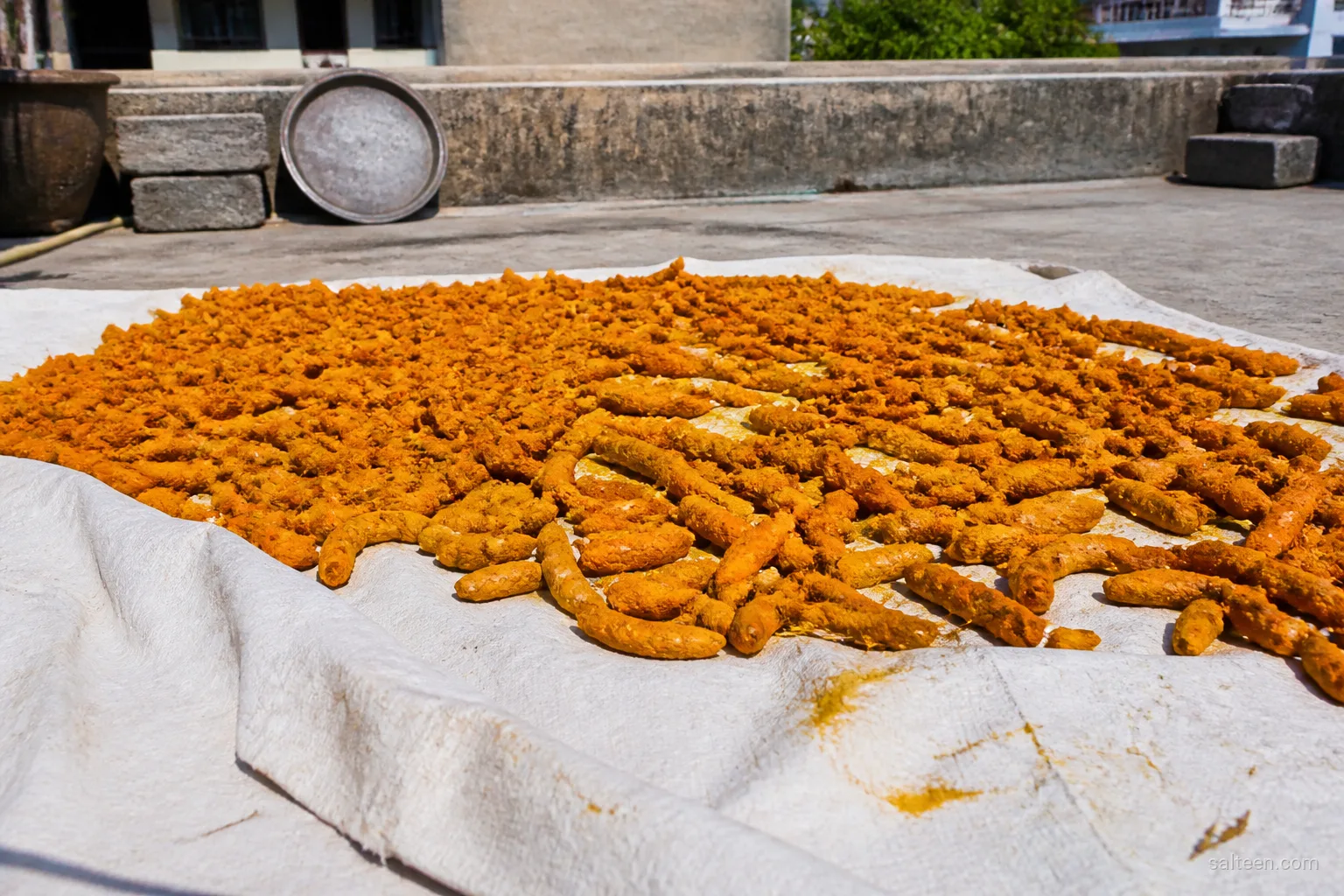
Turmeric takes seven to nine months to grow, according to an Indian Horticulture paper, and when it is ready, the work has to start within three or four days. The harvested roots are boiled, dried, polished and only then ground. The harvest falls between January and March, in the last cold weeks of winter, and that is when the yellow roots are boiled and laid out to dry.
This post follows haldi from root to powder, explains why the roots are boiled before they are dried, and shows why the spice matters to a jar of achar.
When is haldi harvested
In short
Turmeric is harvested seven to ten months after planting, usually from January to March in India. Harvested roots must be boiled within two to four days, then sun dried and polished.
A crop management source says the time of harvest depends on the variety and usually extends from January to March. Early varieties are harvested at 7 to 8 months, medium varieties at 8 to 9 months and long duration varieties at 9 to 10 months after planting. A produce guide says the crop is ready when the lower leaves turn yellow and the stems dry, a sign that the plant has gone dormant.
From field to terrace
The steps from root to powder
- Dig and clean the rhizomes, washing off the soil.
- Separate the fingers from the mother rhizomes. Mothers are usually kept as seed for the next year.
- Boil the fingers in water until soft, within a few days of harvest.
- Dry in the sun until hard and brittle.
- Polish to remove roughness and improve colour.
- Grind to powder.
After digging, turmeric is cleaned of mud and other material. The fingers, the thin side roots, are separated from the bulbs or mother rhizomes, which take a little longer to cook. One agricultural source says the mothers are usually kept as seed material.
Why the roots are boiled first
Boiling is called curing, and it is the step people are most surprised by. Agricultural university sources describe curing as boiling fresh rhizomes in water until soft before drying. One source says that it removes the raw odour, reduces drying time and gives a uniformly coloured product. Another explains that curing gelatinises the starch for more even drying, and that during the process the colouring material is spread evenly through the rhizome.
The time depends on the root. A processing summary gives 45 to 60 minutes for fingers and 90 minutes for mother rhizomes. A Tamil Nadu university source describes a commercial steam boiler that cooks 100 kg for 60 minutes and says this reduces drying time to 10 days and improves quality. The practical sign that boiling is complete, according to an Indian Horticulture paper, is that the rhizomes soften when pressed lightly.
Curing should not be delayed. Sources say it should be done two or three days after harvest, because the rhizomes can spoil in the meantime.
Drying on the terrace
After boiling, the rhizomes are spread out and dried in the sun. This is the step that turns a soft, damp finger into a hard, brittle one that can be stored and ground. Two details matter. The first is dryness. A grading note says that good grades of turmeric must be perfectly dry, and free of weevil damage, over boiling and fungus. The second is the amount of weight that is lost. The dry recovery of different turmeric varieties ranges widely, from 19 to 23 percent, which means that a 100 kg harvest of fresh roots yields only about 19 to 23 kg of dry turmeric.
This is also why dry or powdered turmeric costs much more than fresh. An Indian Horticulture paper says dry or powder forms are priced 4 to 5 times higher than fresh rhizome.
Polishing and grinding
Once dry, the rhizomes are rough and dull. Polishing, usually by rubbing in a drum, smooths the surface and improves the colour. A processing source describes adding turmeric powder in the final minutes to colour the roots. Polishing is mostly for appearance and for the market. For turmeric that is going to be ground immediately, the rhizomes are sliced into flakes after washing and dried, as an Indian Horticulture paper describes.
The dry root is then ground into powder, and it is that powder that goes into dal, sabzi and pickle.
Why haldi goes into achar
Turmeric is in almost every pickle masala, and the reasons are both taste and tradition. One retailer’s guide on mango pickle lists turmeric among the ingredients that act against bacteria and fungi, and mango pickle recipes call for it to be tossed with the cut fruit and salt before the pieces are dried. This is a guide on a retailer’s site, so we treat its preservation claims as a traditional view and not as a laboratory finding. What can be said safely is that the spice gives the colour of a pickle and a mild earthy bitterness that balances salt and chilli.
Haldi at Salteen
- Is the haldi bought as whole dried roots, as powder, or grown by the family?
- If whole, is it ground in the unit?
- Is any of it dried on the terrace in January to March?
- Which pickles use it?
- One memory: the colour, the smell, the stained hands.
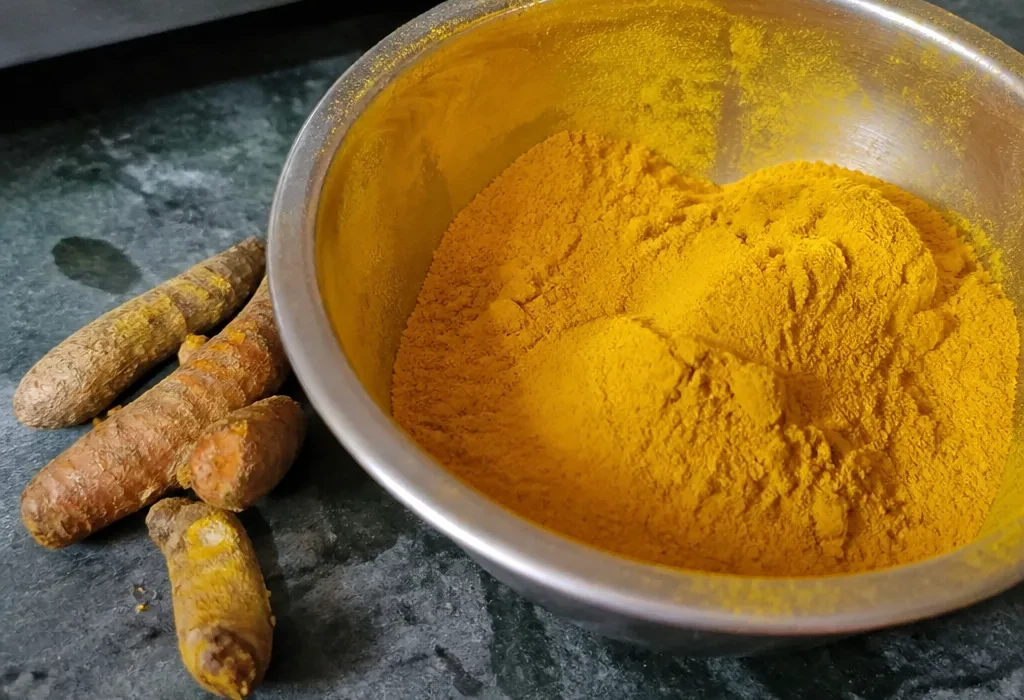
If a line cannot be confirmed, this section stays out of the post. The photo P027-2 must be a real photo from the family.
Where to go next
The oil that carries the spice is covered in our kacchi ghani mustard oil guide. The jar itself is explained in our post on sun curing achar.
Frequently asked questions
How is turmeric powder made from fresh root?
Fresh rhizomes are cleaned, boiled until soft, dried in the sun, polished and then ground into powder.
When is turmeric harvested in India?
Usually from January to March, seven to ten months after planting, depending on the variety.
Why is turmeric boiled before drying?
Boiling removes the raw smell, shortens drying time and gives a more even colour.
How much dry turmeric does fresh turmeric give?
Between about 19 and 23 percent of the fresh weight, depending on the variety.
Sources used for this post: Indian Journal of Horticulture, primary processing of turmeric (ICAR); Indian Journal of Horticulture, post harvest processing in medicinal turmeric; FAO, turmeric post harvest operations; Kerala Agricultural University, turmeric harvesting and processing (celkau.in); Tamil Nadu Agricultural University model, as quoted on celkau.in; INFLIBNET, turmeric grading and curing; Produce Blue Book on turmeric; Organic Mandya mango pickle guide. Figures vary by variety and region.
