
Blog
Dahi, Rabri and Lassi in Kulhads: Banaras and Its Dairy Habit

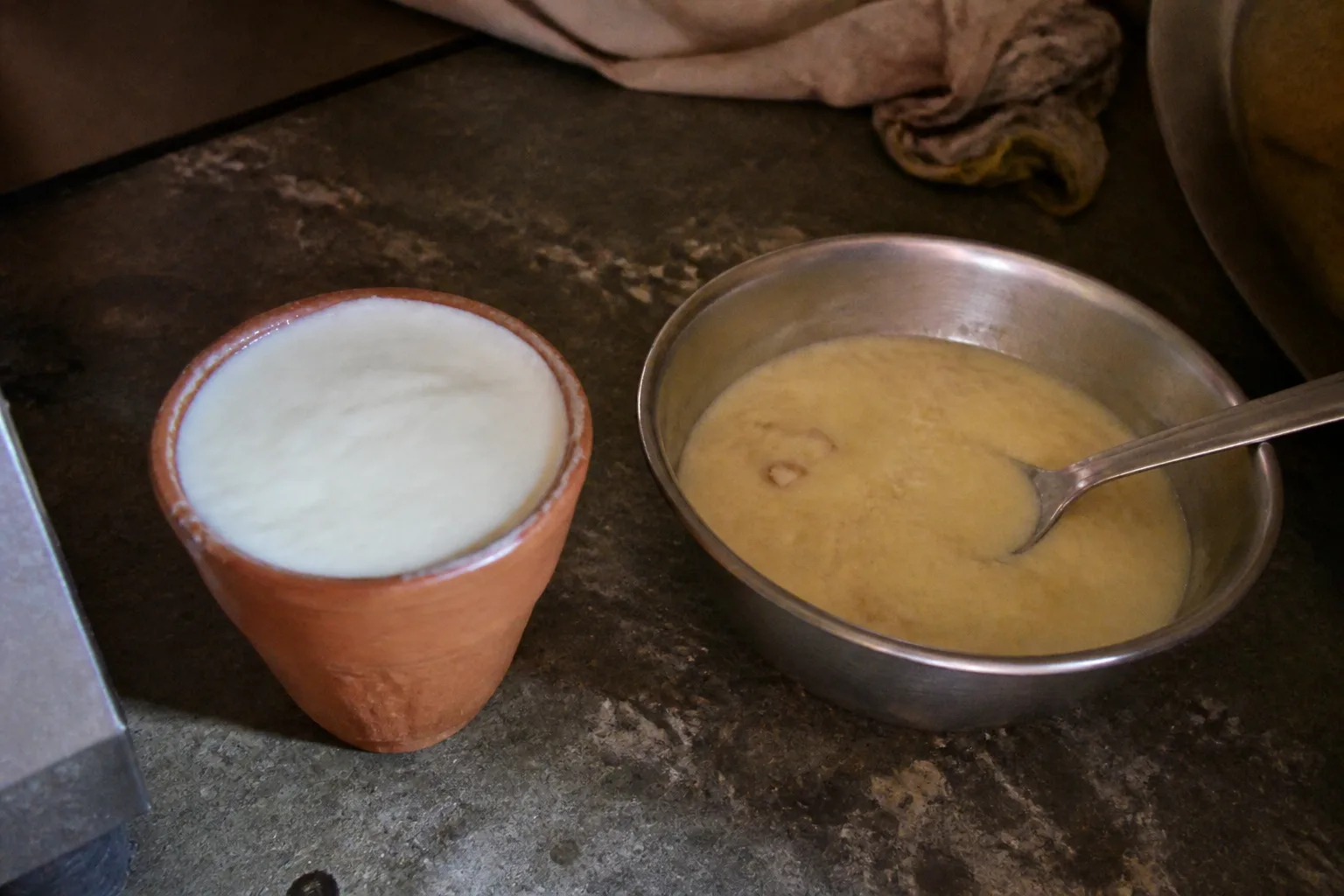
Sahasa, a Varanasi food page, says that what sets Banarasi lassi apart is excellent milk, and so curd and malai, plus a secret ingredient: Banaras’s own speciality, rabri. The lassi is poured into kulhads, topped with a layer of malai from the set curd, then with a generous portion of fresh rabri.
The short answer
In short
Banarasi lassi is thick because it starts with full-fat curd whisked by hand, and is topped with malai and often rabri (milk reduced until thick). It is served in a clay kulhad and eaten with a spoon as much as sipped.
Why it is so thick
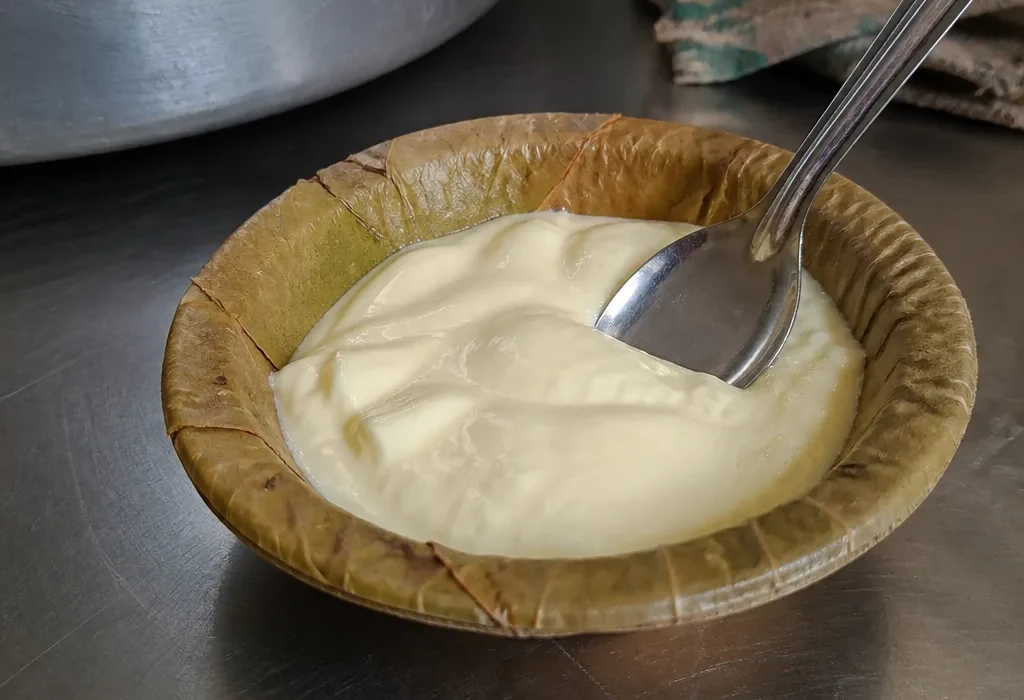
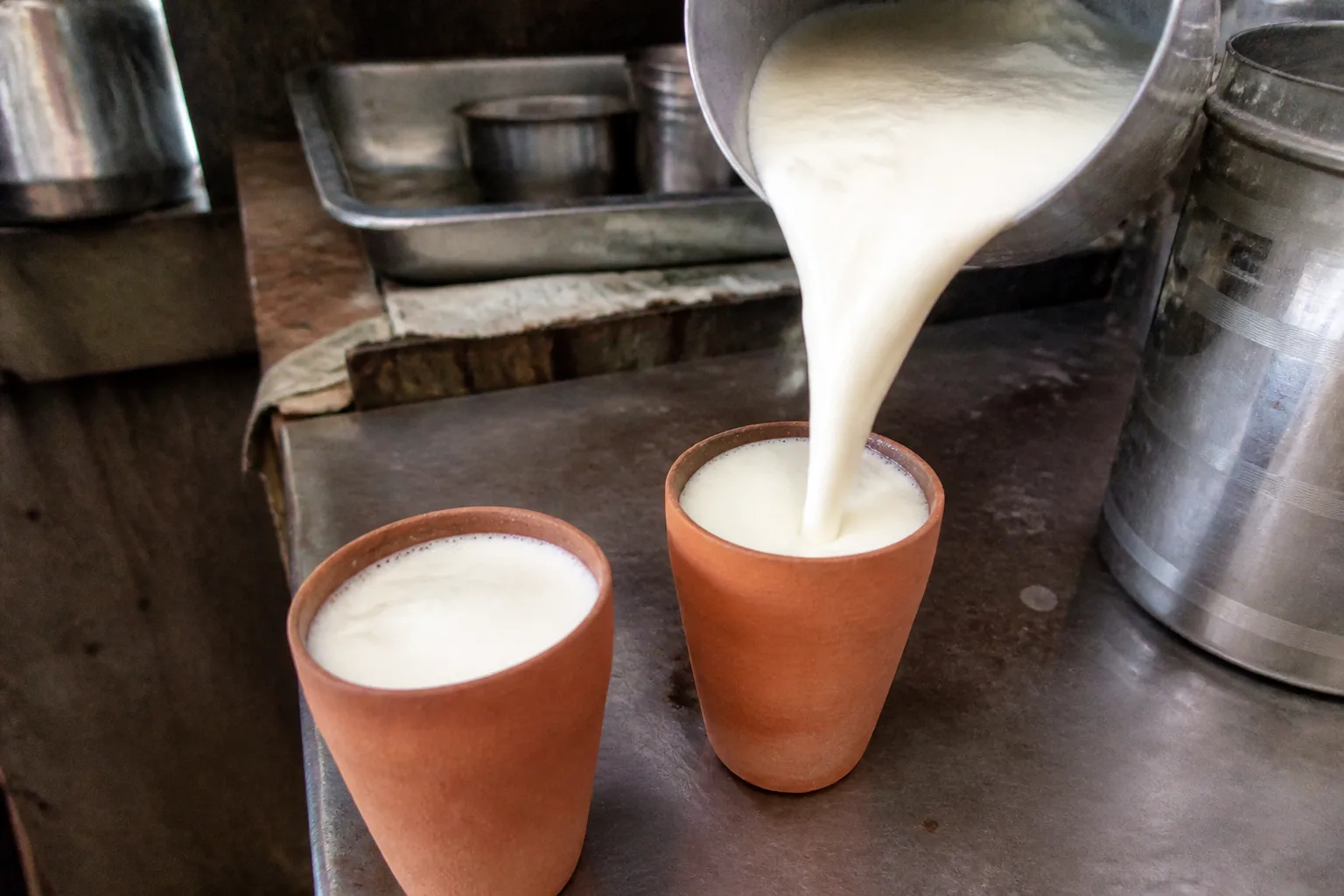
Explurger describes the Banarasi version as full-fat yogurt whisked to a thick, slightly tangy consistency, topped with fresh malai, chilled, served in a clay kulhad, and eaten with a spoon and not sipped. Tboacademy describes the lassi at one well known shop as hand beaten yoghurt with thick malai and a topping such as fruit, saffron or rose essence. Reviewers of Shiv Prasad Lassi Bhandar, writing on Wanderlog, describe a thick layer of rabri that needs a spoon to scoop out of the earthen cup.
What rabri is
Sahasa calls rabri the “sinfully rich” topping, and says the unsweetened rabri balances the intensely sweet lassi and malai. In plain terms, rabri is milk simmered and reduced until thick, with layers of cream.
How locals eat it
Sahasa says the best way, according to locals, is a spoonful of rabri, then a sip of lassi, then a spoonful of malai and a sip of lassi, so that the unsweetened rabri is balanced by the sweet lassi and the cream.
The kulhad
Banaras serves much of its food and drink in clay. Our post on kulhad chai in Banaras covers the cup. For the dairy side of the city, see malaiyo, the winter sweet and Lonely Planet’s description of malai toast, thick slices of bread toasted over charcoal or a griddle and slathered with malai and sugar.
Where people go
Writers name Blue Lassi, a small shop in the lanes near Manikarnika Ghat, Pehalwan Lassi near BHU, Shiv Prasad Lassi Bhandar near Ramnagar Fort and Lassi Bhandar in Ramnagar. A tour operator says Blue Lassi has been a Varanasi institution since the 1920s, which we could not confirm elsewhere. Outlook India says Anchal is the third generation looking after that shop. Reviews are mixed: some on Wanderlog call a rabri lassi exceptional, and others say it did not live up to the hype or that hygiene at a roadside counter fell short. We do not rank shops. Choose by what you see.
Dairy as a Banaras habit
Lonely Planet notes that most cuisine in Varanasi is vegetarian, and that vegans may find it hard to avoid dairy. That fits the city’s plates: dahi, malai, rabri and sweets such as lavang latika. See lavang latika and the Banaras food guide, once it is published.
At home
A thick curd, a spoon of cream and a cooled reduced milk is the home version of the same idea. For what goes beside a heavy lassi, see tamatar chaat in Banaras and litti chokha.
Frequently asked questions
Why is Banarasi lassi so thick?
Full-fat curd is whisked by hand, then topped with malai and often rabri.
What is rabri?
A thick, rich sweet of reduced milk and cream, used as a topping in Banarasi lassi.
Why a kulhad?
Clay is the traditional cup for lassi and tea in Banaras.
Sources used for this post: Sahasa, Banarasi lassi; Explurger, Varanasi food guide; Tboacademy, Varanasi food trail; Wanderlog, reviews of Shiv Prasad Lassi Bhandar, Pehalwan Lassi and Blue Lassi Shop; Outlook India, Varanasi street food trail; Lonely Planet, what to eat and drink in Varanasi; Trivenicabs, Varanasi food tour (tour operator).