Blog
Banana Chips: What Makes a Chip Stay Crisp

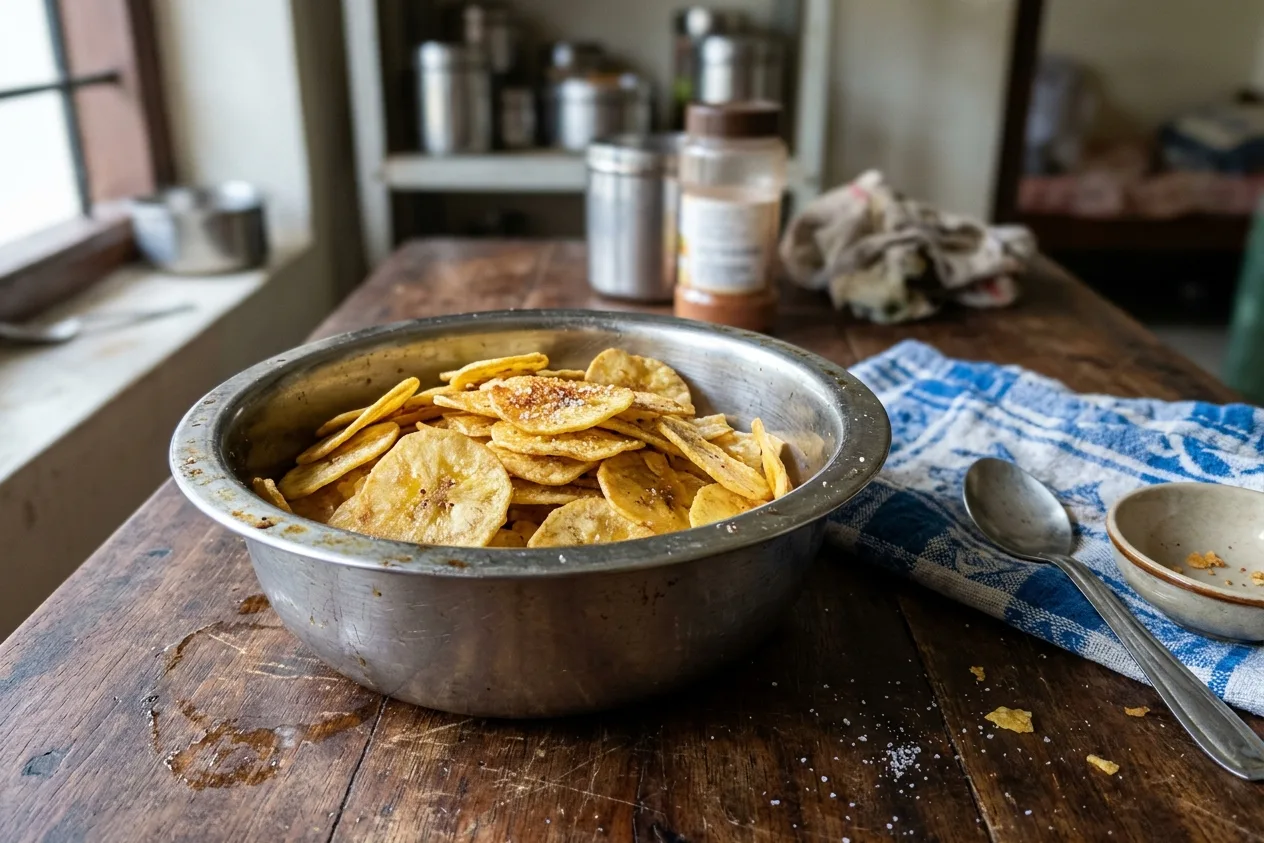
A guide on banana chip processing from the Practical Action charity says frying removes some of the water, gelatinises the starch, destroys enzymes and micro-organisms, and gives a crisp product with a characteristic aroma and taste. The same guide says that the low moisture content inhibits microbial growth, and that packaging prevents recontamination. Crispness is a moisture story from start to finish.
This guide covers each point where moisture decides the result.
The short answer
In short
Banana chips stay crisp when they are made from unripe, firm green bananas, cut evenly and thin, dried on the surface, fried at steady medium heat and stored airtight. They go soft when moisture gets in, so a poor seal is the usual cause after frying.
The banana
Slurrp advises unripe, firm, green bananas for the best texture, and says to avoid ripe bananas, which turn soft and sticky. Practical Action adds that ripe and overripe fruit is too soft to make chips. Vegetable plantains with stiff, starchy flesh work best. Kerala style chips, Veg Recipes of India says, use the firm Nendran banana.
The slice
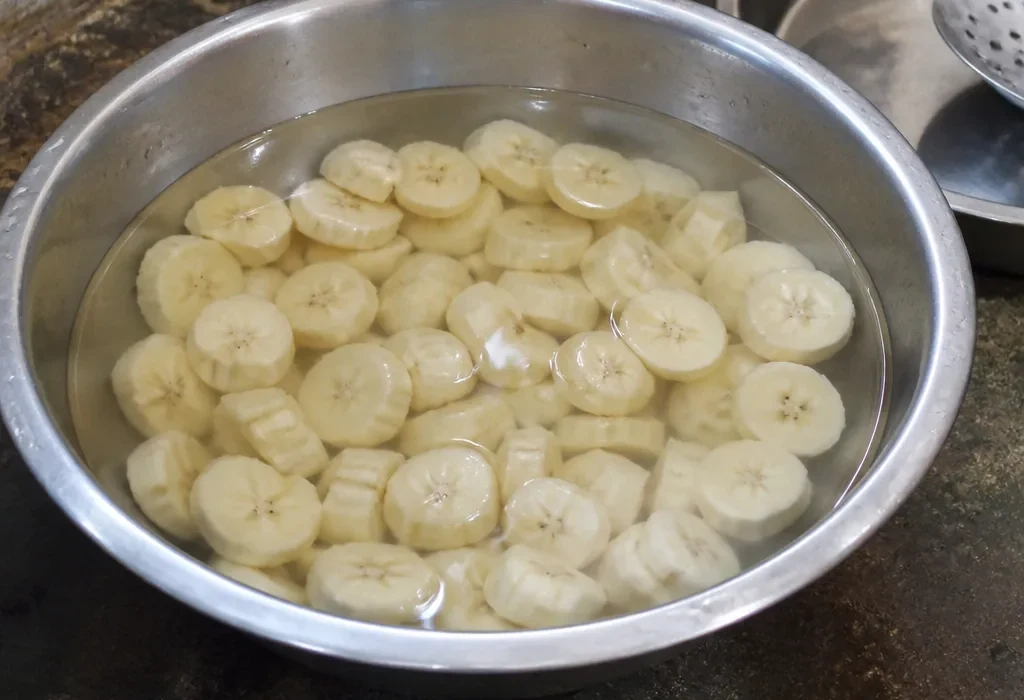
Slurrp says to use a mandoline or a sharp knife for uniform, thin slices, which helps even frying and prevents sogginess. A second processing guide says a packet of chips of varying thicknesses is less attractive than one with uniform pieces.
The surface
Slurrp’s tips say to pat the slices dry with a clean towel before frying, since moisture causes splattering and uneven frying. Practical Action notes some processors partially dry the slices before frying, which removes some of the moisture and makes the chips crispier. Veg Recipes of India wipes the banana dry before slicing.
The oil and its heat
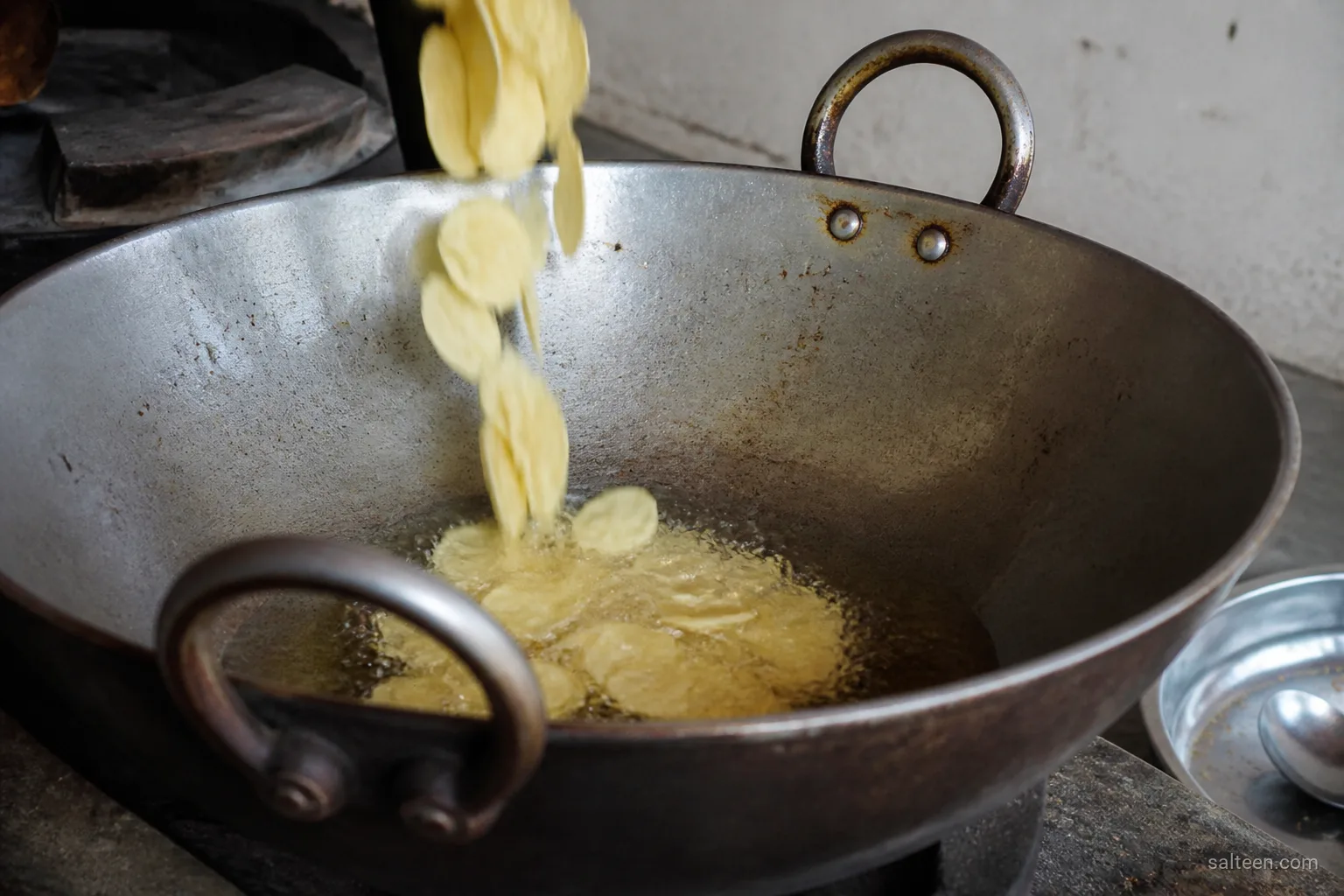
- Temperature. Slurrp suggests about 175°C. Too low, and the chips may become oily and soggy. Too high, and they turn brown outside and stay soft inside. Veg Recipes of India says not to fry on a low flame, as the chips will absorb too much oil.
- Batches. Adding too many chips at once drops the temperature and slows the cooking, Practical Action explains, so fry in a single layer.
- Which oil. Slurrp suggests a neutral oil such as coconut or sunflower, with coconut oil giving an authentic South Indian flavour. Sharmis Passions says groundnut or coconut oil are both used. Veg Recipes of India uses coconut oil but says sunflower or any oil will do.
After the fry
Cool completely, then pack. Practical Action says to cool to room temperature and put the chips into moisture proof, airtight bags, stored in a cool place away from direct sunlight. Slurrp says to avoid exposing them to air or moisture.
Why chips go soft
- Moisture in the air after the pack is opened.
- Ripe fruit, which holds more sugar and water.
- Oil too cool, so the chip absorbs oil and not heat.
- Thick or uneven slices, which do not dry through.
- Warm packing, which traps steam.
Frequently asked questions
Why do banana chips go soft?
Usually moisture: from damp slices, a cool oil, warm packing or an unsealed bag.
Which oil is used for banana chips?
Coconut oil is the classic in Kerala, and groundnut and sunflower oil are also used.
Can ripe bananas be used?
Sources advise against it, since ripe fruit turns soft and sticky.
Sources used for this post: Practical Action, banana chips processing guide; Slurrp, banana chips tips (several pieces); Veg Recipes of India, banana chips; Sharmis Passions, vazhakkai chips; Foxy Folksy, banana chips.