
Blog
NRI Care Packages: Which Foods Travel Well

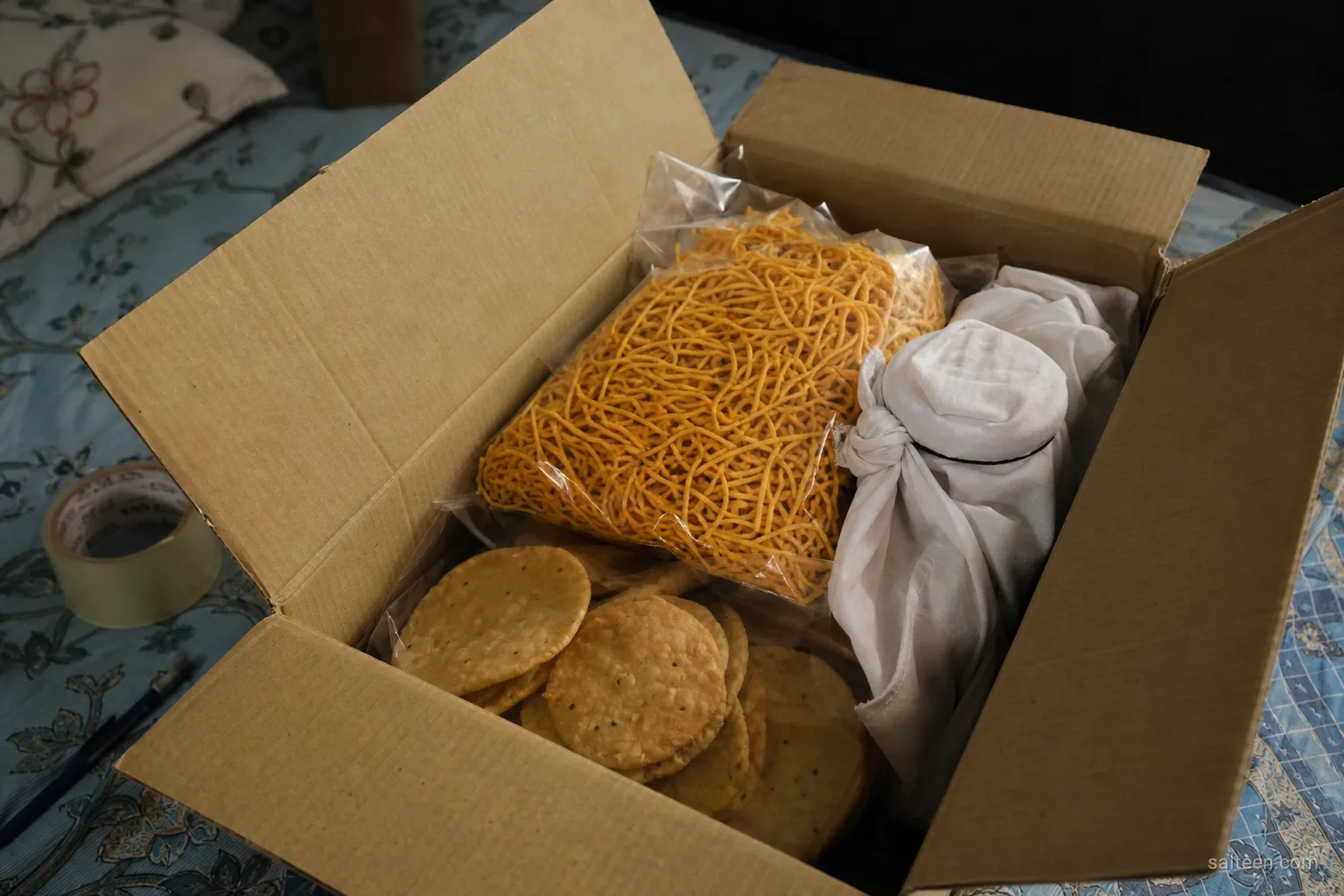
India Post, according to a food feature in Onmanorama, moves an enormous number of parcels every day, and its rule of thumb fits on one line: anything that can leak, spoil, smell or damage other parcels is not allowed. Dry and stable items usually make it through. That single idea is a useful guide for anyone packing a box of Indian food for a son, daughter or friend abroad, and it explains why some foods are easy to send and others are not worth the trouble.
This guide covers which kinds of food generally travel well, how to pack them, and where to read the official rules before you send anything. It does not list customs rules by country, because those rules are set by each country, they change, and the official pages are always the better source.
What makes a food travel well
In short
Foods that travel well are dry, sealed, shelf stable and clearly labelled. Foods that go wrong are fresh, wet, dairy based, meat based or likely to leak. Rules differ for every destination country, so check the official page before you pack.
Courier companies and food writers give the same advice. One courier guide says you cannot send any food classed as perishable, meaning something that can go off or spoil in transit. DHL’s guide for people sending parcels abroad says that every destination country maintains its own list of prohibited and restricted items, and that you should check the latest guidelines for your destination before sending a package. A food adviser summarising common practice adds that commercially packaged, sealed, labelled, dry and non-perishable items are almost always allowed, while fresh, homemade, meat based or liquid dairy items are almost always rejected. That is a general summary and not a rule of law, but it is a sensible starting point.
Foods that usually travel well
An Onmanorama feature on avoiding parcel rejection lists the categories that generally go through domestic and international parcel services without trouble.
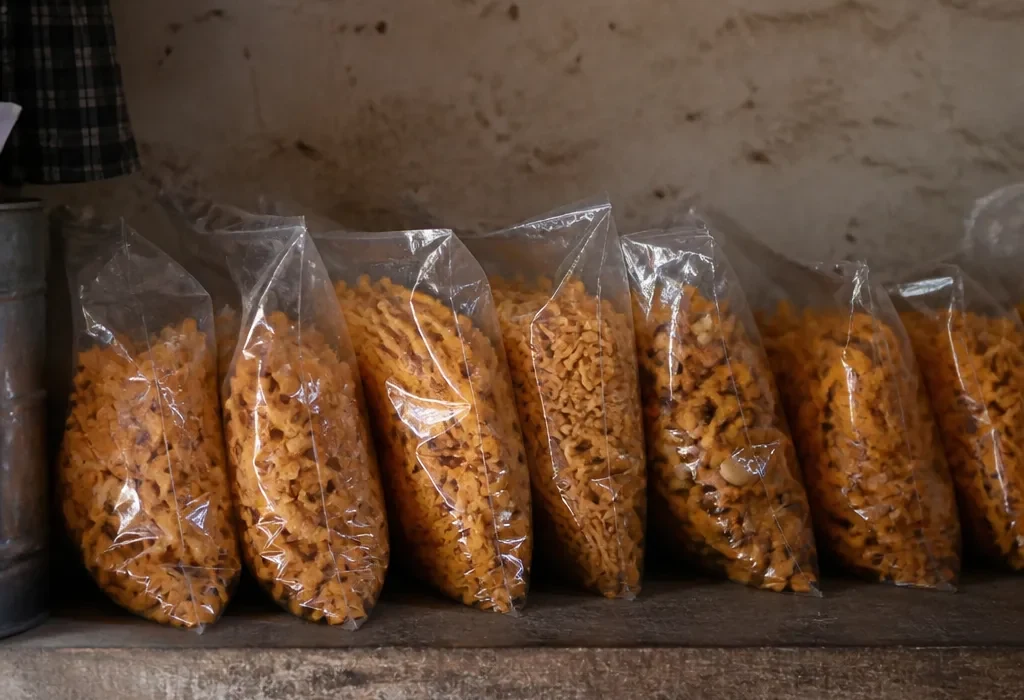
- Dry snacks such as mixture, murukku, chips and biscuits.
- Hard sweets such as laddu, chikki and plum cake.
- Powders such as tea, coffee, masalas and chutney powders.
- Dry fruits and nuts.
- Pickles, but only when tightly sealed and double packed, according to the same feature.
A freight company that ships to Canada lists the same family of foods: packaged namkeen and chips, dry sweets with low moisture such as ladoos, barfi and mathri, spices and lentils, and sealed ready to eat packs with ingredient lists. It lists loose, unsealed achar as something not to send.
Foods that cause problems
Fresh fruit and vegetables are the first category to avoid. A shipping guide to the United States says that fresh produce is restricted and often prohibited, and a customs guide adds that raw meat, dairy, eggs, seeds and anything containing meat are strictly prohibited. Homemade paneer, liquid milk and fresh yoghurt are in the same list. A travel guide for people carrying food to the US notes that even commercially packaged ghee is sometimes flagged and may be best bought on arrival.
Seeds deserve a mention because spice mixes sometimes contain them. A shipping guide says that dry spices that are seed free are generally acceptable, and that commercially packed, seed free spices are generally lower risk.
The point here is not to memorise a list. It is that wetness, dairy, meat and fresh produce are the categories that turn up again and again as problems, and a dry sealed pack is the category that turns up as acceptable.
Pickle: the item people worry about most
Pickle is the food that families abroad ask for most, and it is also the one that worries senders. A DHL guide on sending pickles from India says the first step is to make sure the jars are tightly sealed, and says that sending homemade pickles abroad can be a heartfelt gesture for someone far from home. A travel site says vegetable pickles in factory packaging are generally allowed to the United States if declared, and that the UK permits vegetable pickles under its government rules. Another guide for people moving abroad takes a more careful line and advises checking the rules first before carrying homemade pickles.
These sources are not all equal and they do not all agree, which is exactly why the official page for your country is the right place to look. Meat and fish pickles are treated differently from vegetable pickles in the sources we read, and one shipping guide says that meat and fish pickles are excluded from a general acceptance of pickles.
How to pack a care package
A simple packing checklist
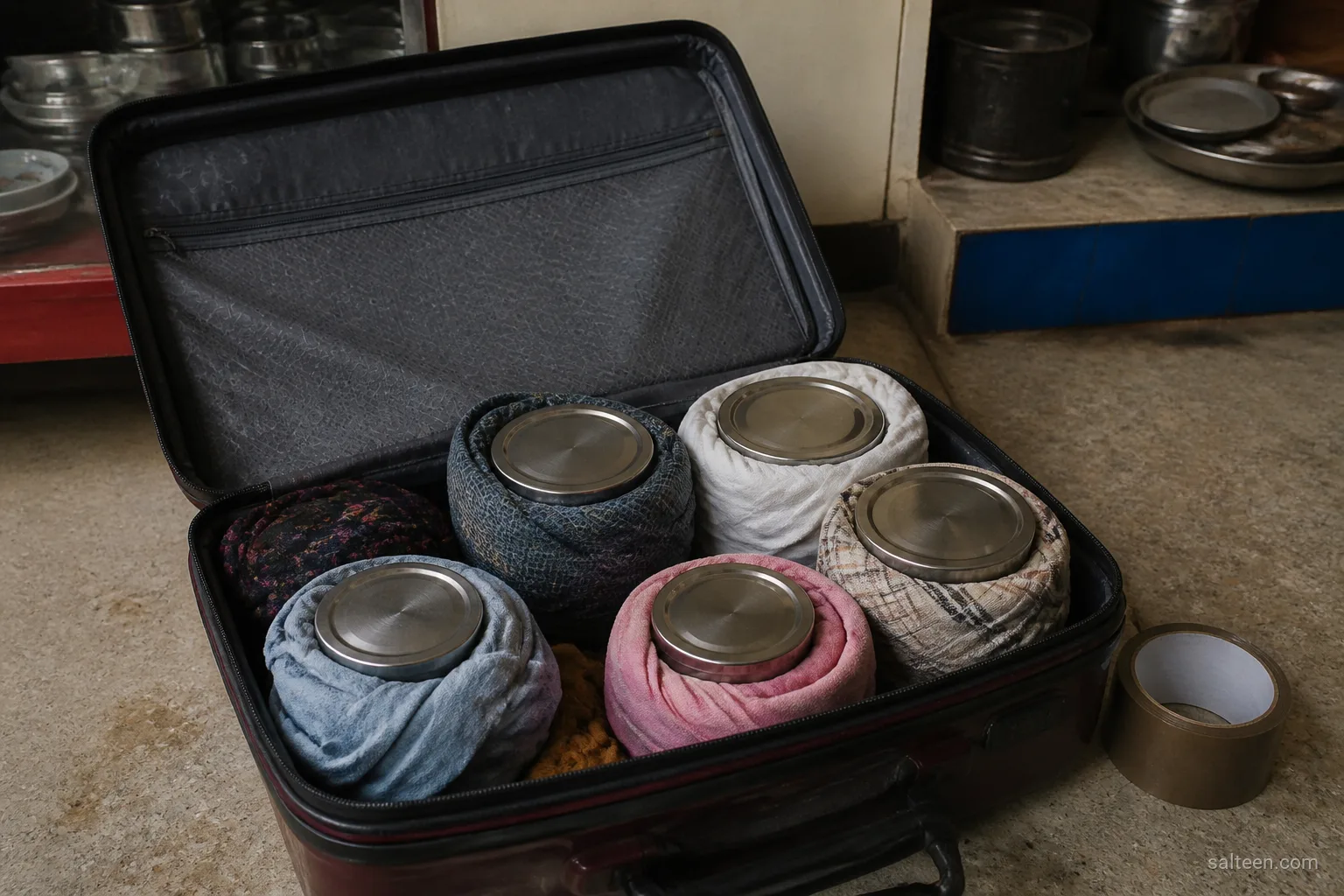
- Seal every jar and packet. Add a layer of tape or a shrink band over the lid.
- Double pack anything oily. Place each jar in a zip lock bag, then wrap it.
- Cushion the jars. Soft clothes and bubble wrap work. Keep the jars away from the box wall.
- Keep it dry. Do not pack anything that needs a fridge.
- Label the contents. List each item in plain English with the ingredients, and keep the invoice or packing list.
- Weigh it. Some services limit the quantity of certain food items, for example 5 kg for pickles and spices in one shipping guide.
- Ask the courier. Some couriers inspect the contents before sealing and approve items one by one, as the Onmanorama feature notes.
If you are travelling with the food in a suitcase and not sending it, the same rules apply on arrival. The US requires travellers to declare all agricultural food items on a customs form, even when the item is allowed, and a guide for Indian travellers notes that failing to declare a permitted item can lead to a fine.
The year end rush
December is when many NRI families fly home or fly out, and it is the season for the biggest care packages. Winter foods travel well, because they are made to keep. Atta ladoo, panjiri, mathri and dry fruit sweets are all dry and sealed easily, and we have a guide to atta ladoo and panjiri for the sweet side. A winter pickle in a well sealed jar, such as the gajar gobhi shalgam achar or an amla achar, is the item that families abroad tend to ask for first.
Order early. Parcels can slow down in the year end rush and in the festival weeks, and a jar that misses the flight is no use to anyone.
Official pages to read before you send
Always read the official rules of the country the parcel is going to. Their food import pages change, so we link to the official sites and not to a copy of their rules.
- United States: U.S. Customs and Border Protection (cbp.gov) and the U.S. Department of Agriculture’s Animal and Plant Health Inspection Service (aphis.usda.gov). Search for the pages on bringing or mailing food.
- United Kingdom: the government website (gov.uk), which has guidance on bringing food into Great Britain.
- Canada: the Canadian Food Inspection Agency (inspection.canada.ca) and the Canada Border Services Agency.
- Australia: the Department of Agriculture (agriculture.gov.au), which has a page on bringing or mailing goods into Australia.
- From the Indian side: India Post and your courier will tell you what they accept for export.
Where to go next
For a month by month view of what is made and eaten in each season, see our seasonal pantry calendar for north India. The pickles and snacks from our kitchen are in the pickle and achar collection.
Frequently asked questions
Which Indian foods can be sent abroad?
Dry, sealed, labelled foods such as snacks, hard sweets, spice powders, dry fruit and tightly sealed vegetable pickles are the ones most often accepted. Rules differ by country, so check the official page for your destination.
How do you pack food for travel?
Seal each jar, double pack anything oily, cushion the jars with soft material, keep the parcel dry and label the contents.
Can I send homemade food abroad?
Some guides say homemade dry sweets and snacks are accepted in small quantities as a personal gift. Others advise caution. Check the official rules of the destination and ask your courier.
Can I send ghee or paneer?
Dairy is the category with the most restrictions. A guide for travellers to the United States says homemade paneer and fresh yoghurt are prohibited and that packaged ghee is sometimes flagged.
Do I need to declare food in a suitcase?
For the United States, travellers are required to declare agricultural food items on arrival. For other countries, check the border agency’s page.
Sources used for this post: Onmanorama, “avoid food parcel rejection” (9 December 2025); DHL Express India, guides on sending parcels and pickles abroad; Parcel2Go help centre on non-perishable food; ShipGlobal guides on restricted items for the USA and on sending food to Canada; Indian Eagle Travel Diary on sending food to the USA; Zolve guide on carrying food from India to the USA; Happy Fares guide on carrying pickle on flights. Customs rules were not copied from any of these. For official rules see cbp.gov, aphis.usda.gov, gov.uk, inspection.canada.ca and agriculture.gov.au.