Blog
Fried in What? A Plain Guide to Oils Used in Namkeen

Reporting on a parliamentary reply from Union Minister of State for Health Prataprao Jadhav, in August 2026, says that palm oil is a standardised edible fat permitted under FSSAI regulations, and that consumers must be told when it is used. The reply was about biscuits, snacks and namkeen, and it settles a practical point: the oil in your packet has to be named.
The short answer
In short
Namkeen is fried in groundnut, sunflower, palm, cottonseed or blended oils, and which one varies by maker and region. Under FSSAI’s labelling rules the pack should name the specific oil, and not just say “edible vegetable oil”. The ingredient list is where to look.
Which oils are used
- Groundnut oil. Wikipedia names it as the pickling oil of Gujarat, and our post on groundnut oil covers its mild flavour. Veg Recipes of India says masala peanuts, one of the most popular salty snacks in India, are deep fried.
- Coconut oil. Slurrp says it gives an authentic South Indian flavour to banana chips. See banana chips.
- Palm oil. The Government says it is a standardised edible oil under FSSAI regulations. Questions in Parliament concerned its use in snacks, and the reply was that it is permitted and must be declared.
- Sunflower oil. A Consumer Affairs note describes it as used as a regular cooking medium and for deep frying.
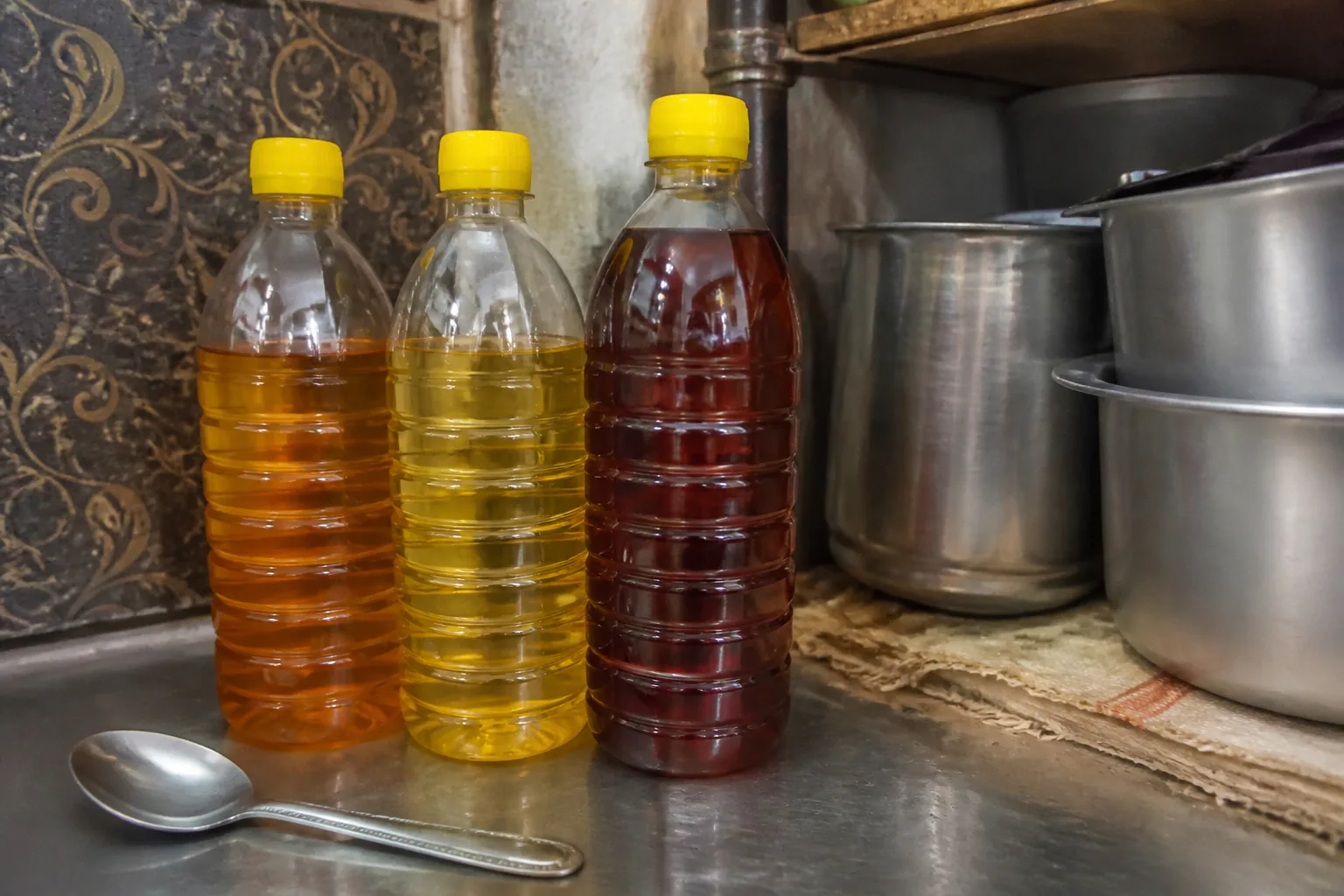
- Blends. FSSAI’s rules require that every package containing an admixture of edible oils carry a label declaration such as “Blended Edible Vegetable Oil”, below the brand name.
What the label must say
According to a Lok Sabha reply cited by the Malaysian Palm Oil Board’s news service, the Food Safety and Standards (Labelling and Display) Regulations, 2020 require food businesses to declare the specific name of the edible oil used, such as mustard oil or groundnut oil, and not a generic term like “edible vegetable oil”. FSSAI’s own FAQ says the name of the vegetable oil from which a refined oil was made must be clearly specified on the container.
How to read the oil on your snack
- Find the ingredient list, which lists ingredients by weight.
- Look for the oil’s name. It should be specific.
- If the pack says “blended”, check the proportions on the front.
- Compare two packets the same way. This guide takes no side on which oil to prefer.
Why the oil matters to the snack
The oil carries flavour and sets crispness. See how sev and bhujia are made, mathri and namak para and storing namkeen.
Frequently asked questions
Which oil is used to fry namkeen?
It varies: groundnut, sunflower, palm, cottonseed and blends are all in use. The label should name it.
How do I know what oil is in my snack?
Read the ingredient list. FSSAI’s labelling rules ask for the specific oil’s name.
Is palm oil allowed in namkeen?
The Government says it is a permitted, standardised edible oil, with the condition that it is declared.
Sources used for this post: Open Magazine, palm oil in biscuits and namkeen; Asianet News and Malaysian Palm Oil Board news, Government on palm oil; Lok Sabha answer (eparlib.sansad.in); FSSAI, FAQ on oils and fats; FoodNavigator, FSSAI oil labelling; Consumer Affairs, sunflower oil note; Veg Recipes of India, masala peanuts; Wikipedia, South Asian pickle. Verify against fssai.gov.in.