Blog
Storing Namkeen in Humid Cities: Sev, Mathri and Chips Before the Monsoon

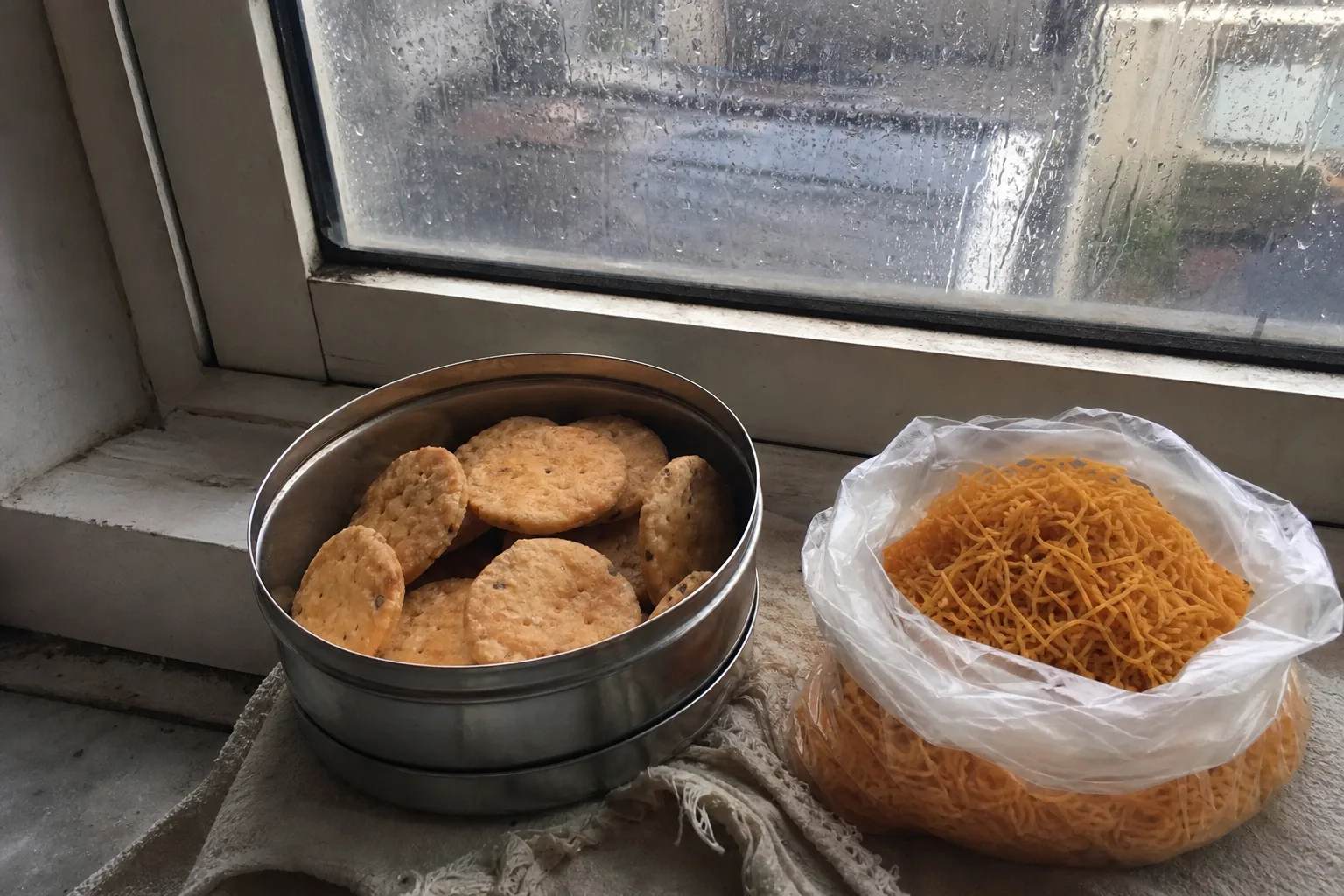
Slurrp’s monsoon storage piece names the mechanism: snacks like chips and biscuits, stored in open containers or packets, become soft and unappetising from the moisture they absorb from the air. A Thai science explainer says the same of crisp snacks generally, because they have very low moisture content, so even air with higher humidity affects them.
Namkeen is a dry snack. Before the monsoon, the job is to keep that dryness.
The short answer
In short
Namkeen goes soft because it absorbs moisture from the air. Keep it in an airtight container, open it less often, and keep different snacks in separate jars. A soft batch can be re-crisped with gentle heat and cooled.
Why it turns soft
A crisp chip or sev holds very little water. Humid air carries more, and the snack takes it up. Slurrp adds that some snacks that are crispy and crunchy in summer turn soft and chewy in the monsoon, as the damp air adds moisture to food. The time to act is the weeks before it starts, in May and June, as our post on mathri and namak para and banana chip crispness explain from the making side.
What to do
- Airtight containers. India TV News calls airtight containers ideal for keeping out moisture and humidity, and a way to stop food absorbing nearby odours. Asian Paints Beautiful Homes says glass jars with rubber linings restrict airflow.
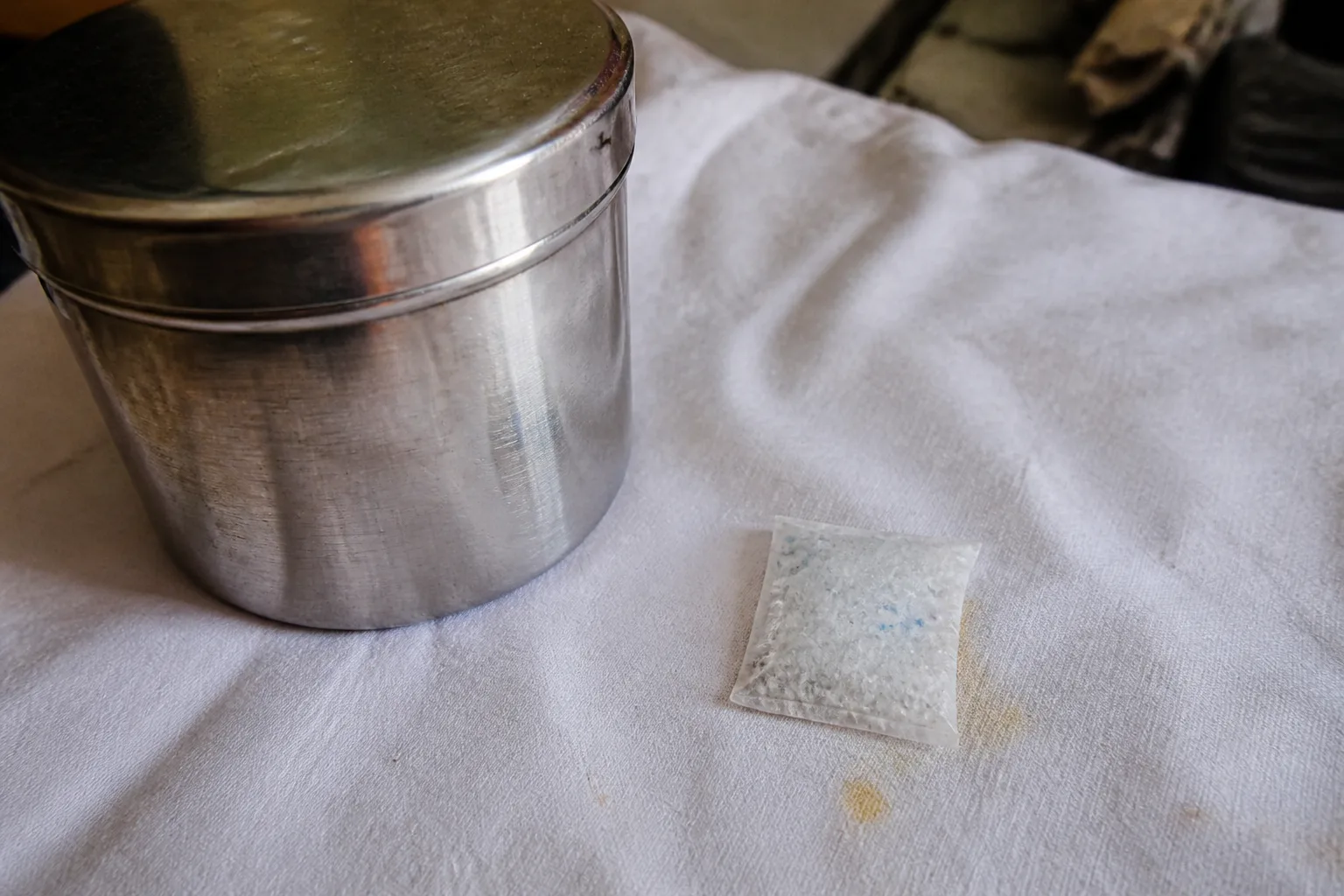
- Silica gel. Slurrp suggests chips and namkeen in airtight containers with a packet of silica gel to absorb moisture. If you use a packet, keep it out of the food, and check that it is meant for food storage.
- Separate jars. Slurrp says different snacks should always be stored in different jars.
- A small daily jar. A food blogger on allblogs keeps daily use namkeen in a smaller jar and the main stock sealed separately, because every time a big container is opened, humid air gets in. This is one cook’s habit, and it is the same idea as the small and main jars for pickle described by Slurrp.
- Dry spoon, dry hands. Republic World’s pantry advice says to always use a dry spoon for items that attract moisture, such as salt and sugar. The same applies here.
Plastic or not
The sources split. A Slurrp tip list says to avoid plastic containers for snacks, while other kitchen advice only asks for tight seals. The Better India suggests glass or stainless steel jars. A tight lid is the point, whatever the material.
When it has gone soft
Slurrp says namkeen can be re-crisped in an oven. Asian Paints Beautiful Homes says cookies and crackers that go soft can be heated for a few seconds in a microwave or on a tawa, then cooled completely, and the heat gets rid of the dampness. Use low heat for sev, since thin fried snacks colour quickly. A batch that smells stale or oily is past help.
Before the monsoon
- Move namkeen into airtight jars while the weather is still dry.
- Keep a small jar for daily use and seal the rest.
- Do not mix snacks in one jar.
- Cool re-crisped snacks fully before closing the lid.
Frequently asked questions
Why does namkeen turn soft?
It absorbs moisture from humid air.
How do you keep namkeen crisp in monsoon?
Airtight jars, small daily jars, separate jars, and a dry spoon, with silica gel as an option.
Can soft namkeen be saved?
Gentle heat in an oven or on a tawa, then cooling, can re-crisp it.
Sources used for this post: Slurrp, monsoon storage tips (several pieces); India TV News, monsoon kitchen tips; Asian Paints Beautiful Homes, monsoon proofing your kitchen; The Better India, keeping food fresh in monsoon; Republic World, pantry tips; allblogs.in, keeping namkeen crispy; Thairath, crispy snacks.