
Blog
Tiffin Snacks for Kids: Homemade-Style Crunch Without Artificial Colour

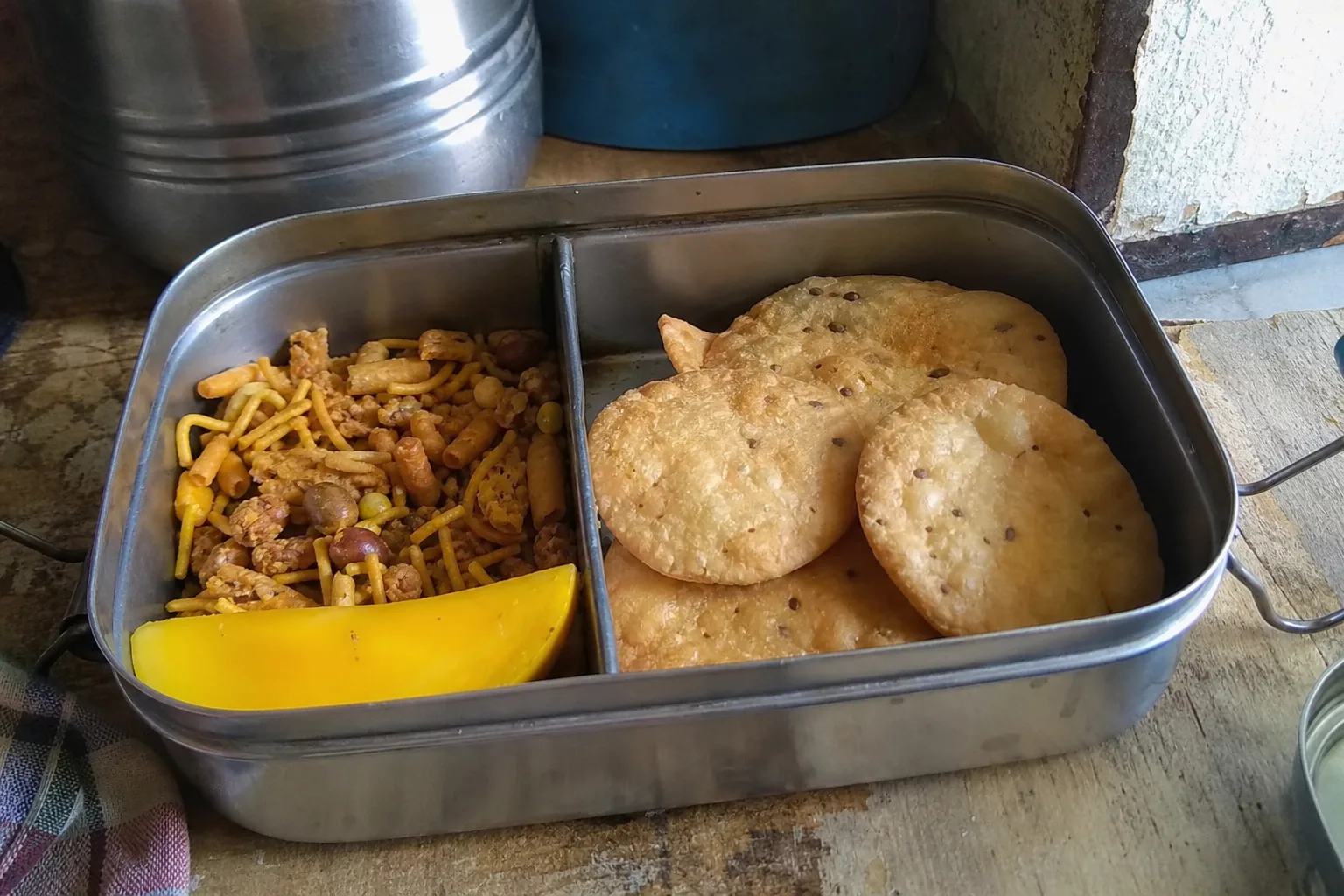
The Free Press Journal reported that Tamil Nadu’s food safety department banned the manufacture, storage, distribution and sale of coloured papads after inspections found manufacturers using artificial colours, including non-permitted synthetic dyes, to make papads look brighter. A snack can look more cheerful than it is, which is why the label matters more than the colour.
The short answer
In short
Read the ingredient list and the added colour line. FSSAI’s label guidance says to check the additives for artificial or permitted colours and flavours. A snack that gets its colour from turmeric, besan and frying needs no dye. Confirm each Salteen snack on its own label before you put it in a tiffin.
How to read a snack label for colour
FSSAI’s Eat Right India page on reading labels lists the checks: the FSSAI logo with licence number, the ingredient list, allergens, and the food additives, including artificial or permitted flavouring and colours. An FSSAI blog on choosing healthy food says to look at the nutrition panel, the ingredients, the allergen information and the added colours and flavours information, and to prefer products with fewer additives such as synthetic colour, artificial flavour and “INS” additives. The Organic Mandya guide adds that FSSAI requires ingredients to be listed in descending order of weight.
What colour should come from
Healthy Master, a snack seller’s blog, suggests choosing snacks labelled as having no artificial colour, or with colour from ingredients like beetroot or turmeric. Sev is yellow because of turmeric in the dough, as the Indian Yellow Pages listing for sev puts it: seasoned with turmeric, cayenne and ajwain, then deep fried. Our post on namkeen spices lists the usual ones.
Snacks that suit a tiffin
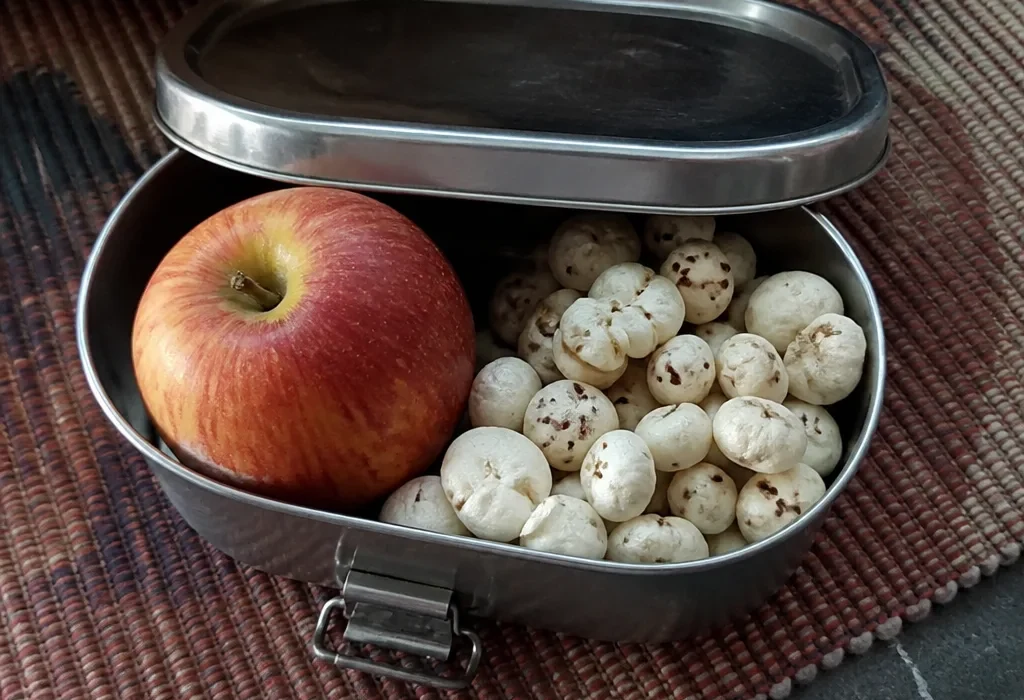
These are general ideas, not Salteen’s range. Check each pack.
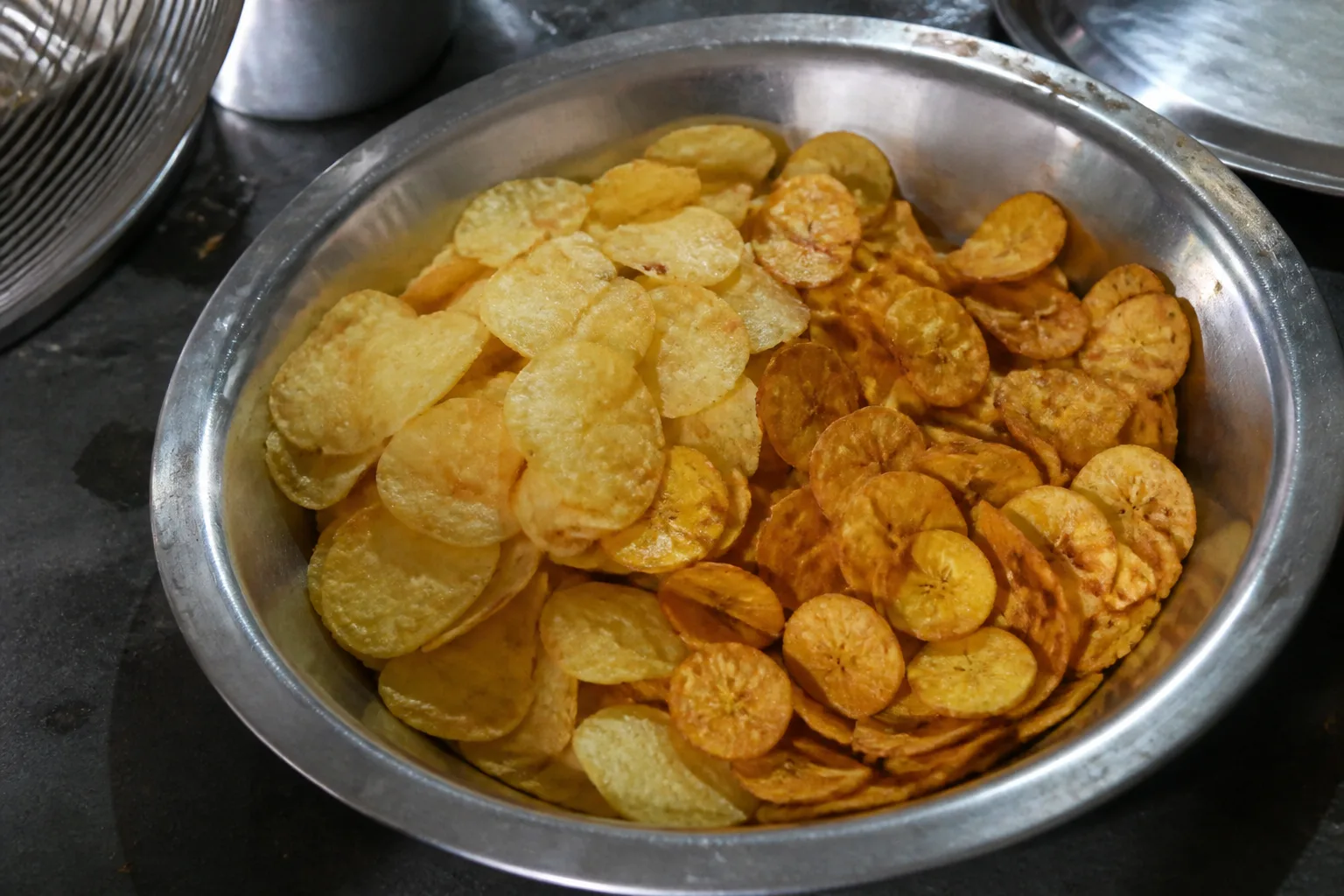
- Plain sev or bhujia. Besan, spices and oil, per the sources above. See sev and bhujia.
- Namak para. Cook with Manali describes it as a fried savoury snack of flour, spices and ghee or oil, with a flaky texture if the ghee is rubbed in well.
- Moong dal namkeen. See how it is made.
- Chakli and shankarpali. See festival snacks.
- A little achar with roti. PIRG, a US consumer group, lists pickles among lunchbox ideas for a dye free box. See tiffin ideas with achar and namkeen.
Colour, in context
Nestle India’s guide says FSSAI has rules for the food colours that may be used, so that foods are monitored. The Tamil Nadu case shows the rules are broken at times, with non-permitted dyes found in papads. That is a reason to read the label and to buy from sellers who show a licence.
Packing the box
Pack a small portion and keep the rest of the pack closed. See storing namkeen in a humid city and healthy bites: roasted, baked and air-fried for the words on a pack.
Frequently asked questions
What snacks suit a school tiffin?
Plain sev, namak para, moong dal namkeen and similar dry snacks, with colour checked on the label.
How do you read a snack label for colour?
Find the additives line, look for artificial or synthetic colour, and prefer fewer additives, as FSSAI advises.
Is yellow namkeen artificially coloured?
Not necessarily. Sev is usually yellow from turmeric. The label decides.
Sources used for this post: FSSAI Eat Right India, how to read labels; FSSAI blog, how to read food labels; Organic Mandya, reading snack labels; Free Press Journal, Tamil Nadu coloured papad ban; Healthy Master, label guide for kids’ chips; Indian Yellow Pages, sev listing; Cook with Manali, namak para; PIRG, lunchbox without food dyes; Nestle India, food colourings.