Blog
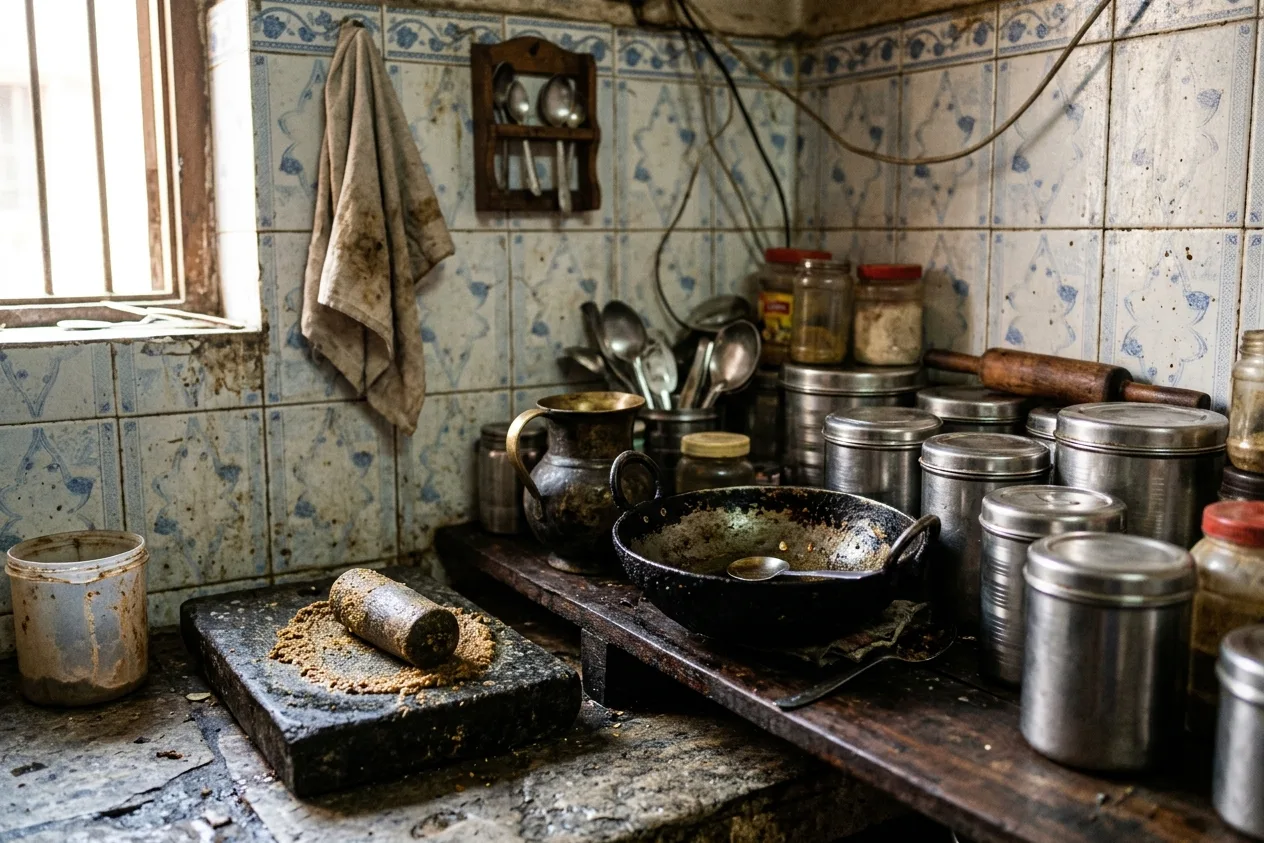
Sil-Batta, Okhli and the Iron Kadhai: Tools of a Banarasi Kitchen

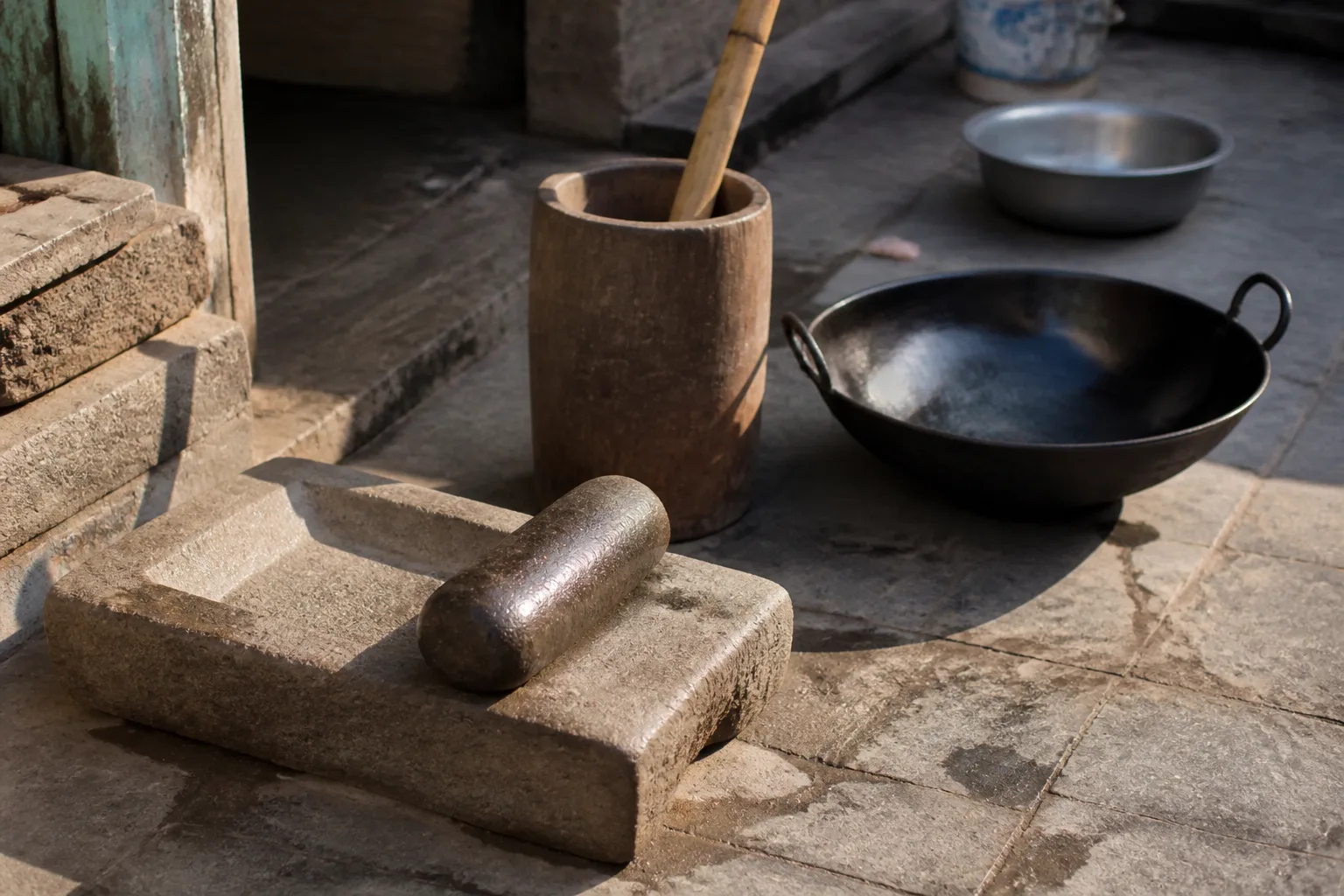
Gaatha, a craft site, opens with a line from a grandmother: “Sil batte ki chutney hi asli chutney hoti hai.” Gosumitup explains the name: in Hindi sil is the flat grinding slab and batta the cylindrical stone muller held in both hands and rocked over the ingredients.
The short answer
In short
A sil batta is a flat stone slab with a cylindrical stone, used for chutney, spice pastes and masala. A mortar and pestle (okhli and musal in many homes) pounds dry spices. An iron kadhai is the heavy pan for frying and slow cooking. People say stone grinding gives better flavour, but we found no controlled comparison.
The sil batta
Slurrp says the sil batta has been used in India for centuries to grind grains, lentils, spices and herbs, with the cylindrical stone crushing and the slab giving a stable base. Gaatha says the stones are traditionally cut from basalt, granite or sandstone, and in Rajasthan and Madhya Pradesh from red and grey sandstone. It adds that in many homes a sil batta formed part of a bride’s dowry.
The mortar and pestle
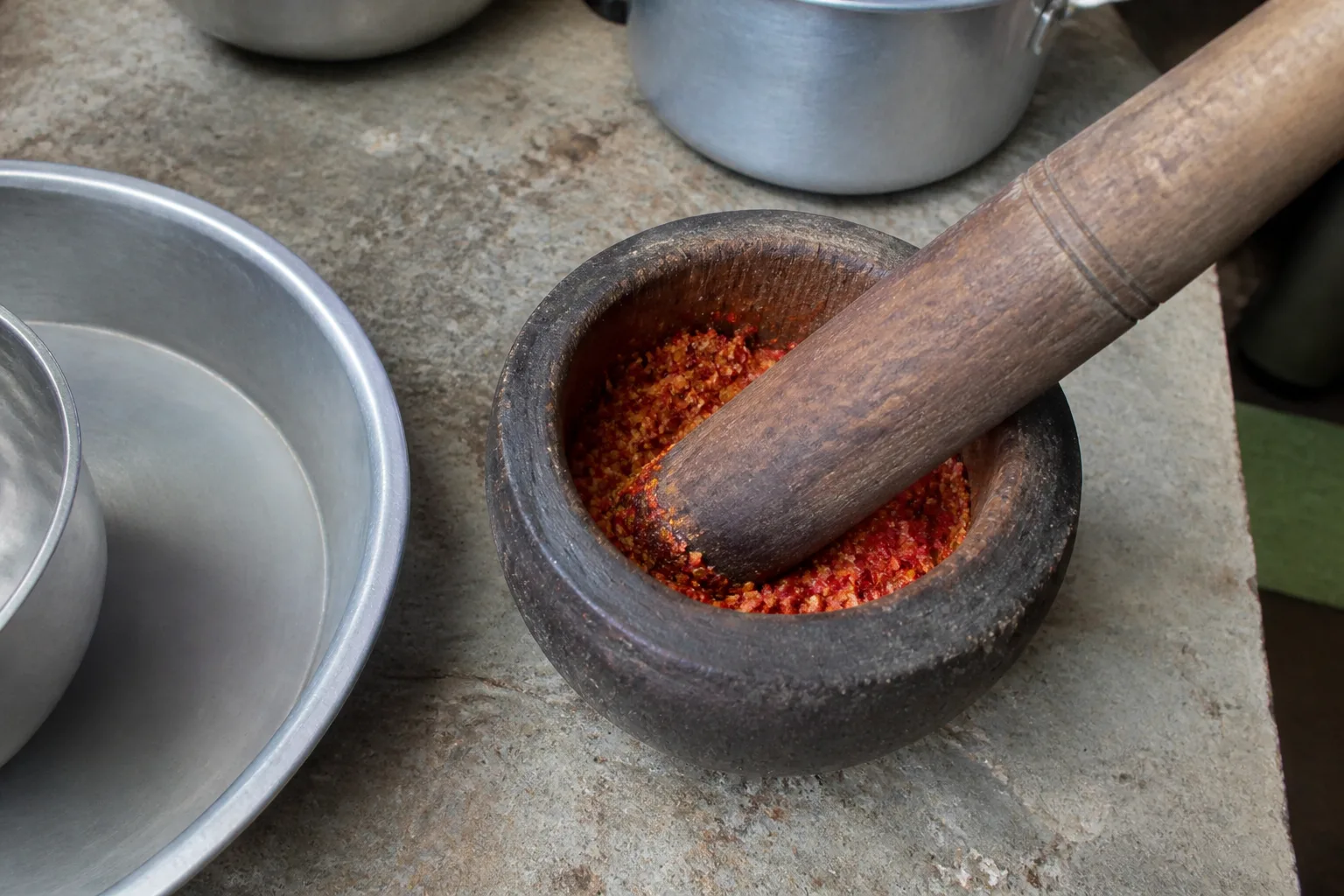
Her Circle describes the mortar as a bowl shaped stone vessel and the pestle as a heavy, blunt, club shaped object used to pound spices into powder. Slurrp says it was the tool used to crush ginger and cardamom before making adrak wali chai, and Slurrp’s list of tools also names the khal dasta. In many Hindi speaking homes the pair is called okhli and musal.
The iron kadhai
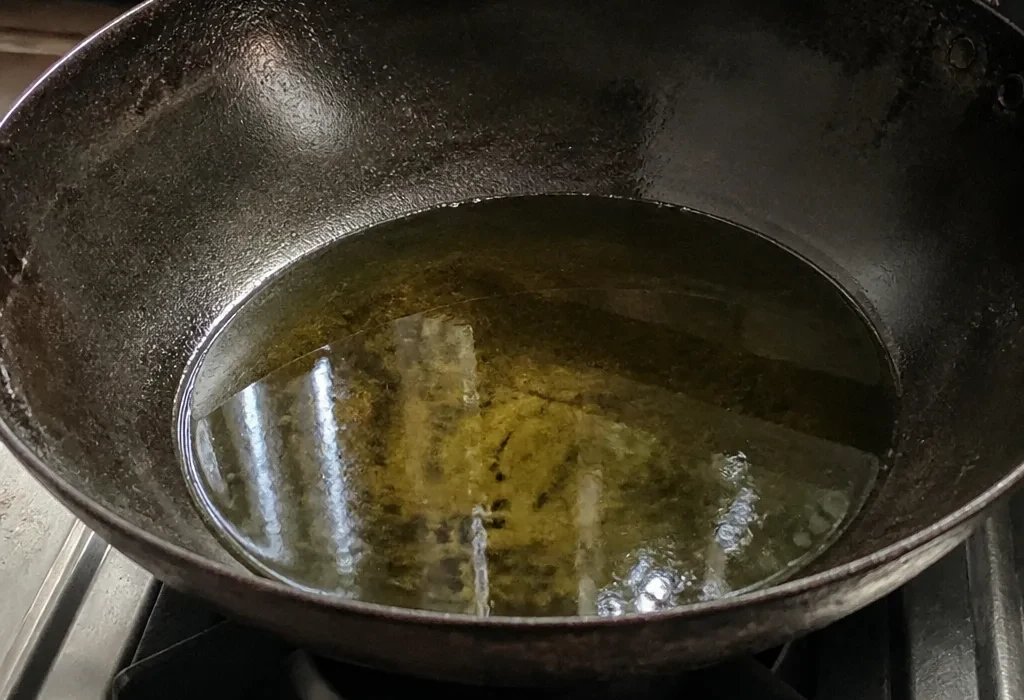
Down To Earth notes that iron, brass, copper, bronze, aluminium and stone are all materials of India’s traditional cooking vessels, and that many are still made, for example by the gadia lohar community. For what research says about iron cookware and the iron in food, see Dadi’s kitchen habits. The kadhai holds heat well and is the pan for puri, sabzi and the frying of namkeen. Our post on how sev and bhujia are made uses one.
Does stone grinding change the flavour
Opinion says yes. Ankita Gupta, a sous chef writing for a Kolkata paper, says a mixer generates a small amount of heat, while the batta keeps the natural flavour, colour and aroma of spices. Slurrp says chutney ground by hand releases essential oils more efficiently. Kali Mirch by Smita notes the argument that blades cut whole spices while the sil batta crushes them, and says she will not take a side. We found no controlled taste test, so these are cooks’ views and not measurements.
The trade off
The same sources agree on the cost. Slurrp calls the mortar and pestle slow, and InstaCuppa says a sil batta takes much longer than a chopper that finishes in under 60 seconds, though it gives a coarse, rustic texture. Many urban kitchens moved to the mixer for time. NDTV Shopping describes the shift as a quiet revolution, with wet grinders replicating the stone texture.
Using one today
For chutneys ground on the stone, see pantry chutneys without a blender. For the spices in a pickle masala, see achar masala spices, which uses coarse ground spices.
Frequently asked questions
What is a sil batta used for?
Grinding chutney, spice pastes and masala on a flat stone with a cylindrical stone.
Does stone grinding change the flavour of spices?
Cooks say yes, but we found no controlled test, so it is opinion.
What is okhli musal?
The Hindi name for a mortar and pestle, used to pound spices.
Sources used for this post: Gaatha, Sil batta: the stone that remembers; Gosumitup, sil batta; Slurrp, 5 types of kitchen grinders, traditional Indian tools and chutney with mortar and pestle; Her Circle, old school kitchen appliances; Down To Earth, home cooked food; ttef.in, sil batta (Kolkata); Kali Mirch by Smita, hari chutney; InstaCuppa, green chutney (seller); NDTV Shopping, wet grinder vs sil batta.