
Blog
Ultimate Guide to Indian Pickles (Achar): Types, Oils, Spices & Perfect Pairings

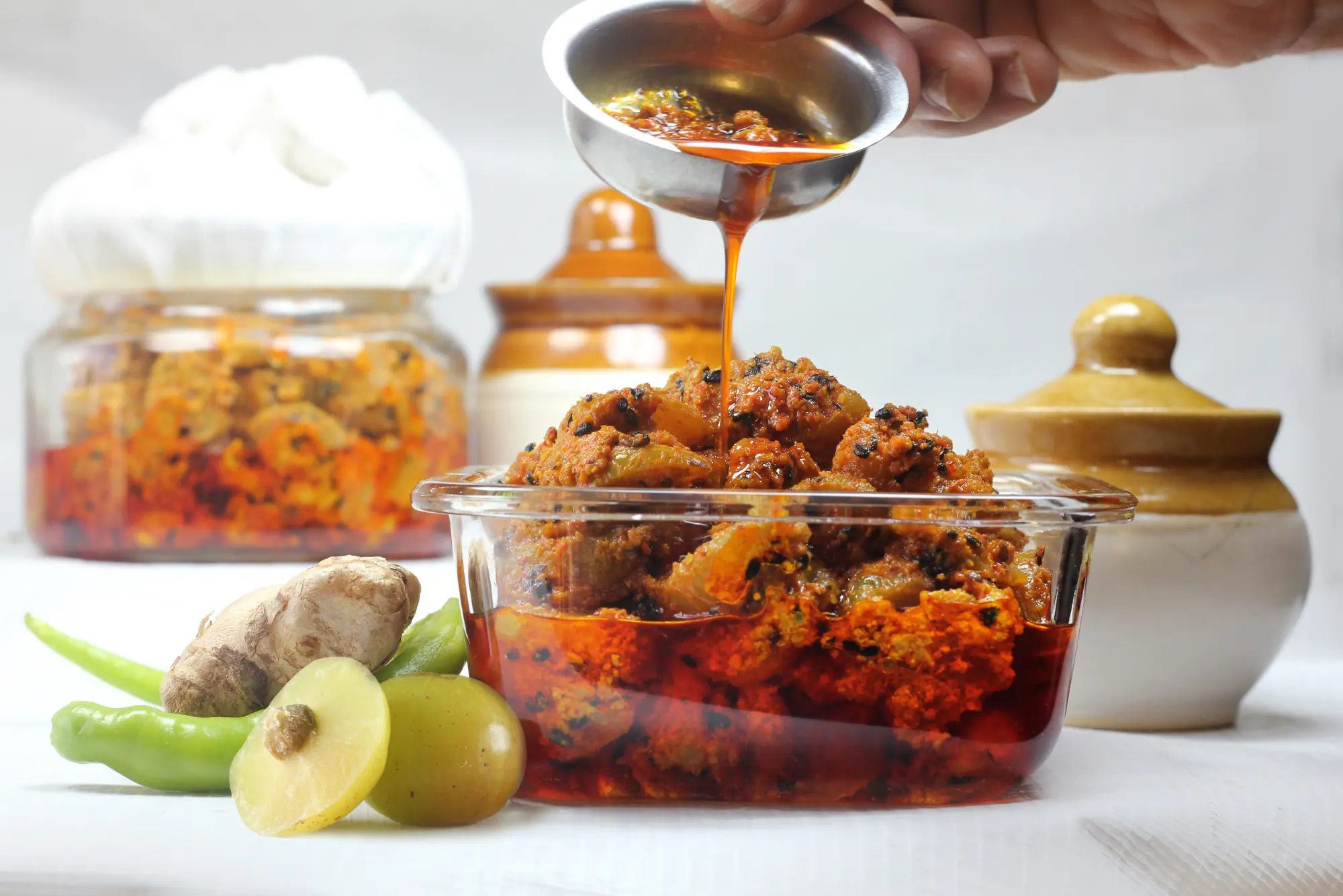
It is the taste of summer afternoons, cut mangoes on a steel plate, mustard oil warming under the sun, and elders reminding us: “Dhup sahi se lagni chahiye!”Pickles are not just condiments here — they are identity.
Every region, every home, every dadi has a recipe.
And each one tastes different.This guide explains:
- Different pickle styles across India
- Oils and spices that define flavor
- How to pair pickles with everyday meals
- How to choose pure, preservative-free achar
Regional Styles of Indian Pickles
Every region in India has its own balance of oil, spice, tang, and sun.
| Region | Popular Achar | Flavor Profile | Oil Used |
|---|---|---|---|
| Banaras (UP) | Lemon, Mango, Mixed Veg | Warm, balanced, gentle spice | Mustard Oil |
| Punjab | Carrot, Stuffed Chilli | Robust, smoky | Mustard Oil |
| Rajasthan | Ker-Sangri, Lasoda | Dry-spiced, sharp tang | Mustard/Sesame Oil |
| Gujarat | Sweet Mango (Chhunda), Gunda | Mild sweet + spice | Groundnut Oil |
| Andhra | Gongura, Red Chilli | Bold, fiery heat | Sesame Oil |
Banarasi pickles (like ours at Salteen) stand out for their balance — spice doesn’t overpower acidity and oil doesn’t drown flavor.
The Core Ingredients That Shape Achar
- Fruit/Vegetable: Mango, Lemon, Garlic, Chilli, Mixed Veg
- Spices: Methi, Saunf, Jeera, Rai, Haldi, Lal Mirch
- Oil: A natural preservative and flavor enhancer
- Salt & Sunlight: Essential for natural fermentation
There is no shortcut to real achar flavor — which is why homemade styles taste deeper and more layered than factory pickles.
The Oil Matters: Mustard vs Sesame vs Groundnut
| Oil | Taste Profile | Common Regions |
|---|---|---|
| Mustard Oil | Warm, aromatic, sharp flavor | UP, Punjab, Bihar, Bengal |
| Sesame Oil | Smooth, deep, earthy | Andhra, Tamil Nadu |
| Groundnut Oil | Mild, rounded taste | Gujarat, Maharashtra |
At Salteen, we use pure mustard oil to preserve and enhance authentic Banarasi flavor.
How Traditional Pickles Are Made
- Hand-cutting fruits and vegetables to preserve texture.
- Spices mixed by hand for layered aroma, not powdery taste.
- Sun-curing for days to infuse heat and depth.
- Slow fermentation so flavor develops naturally.
- Oil sealing to preserve without chemicals.
This is how our Didi’s in Varanasi still make every batch – the way homes have done it for generations.
Perfect Pickle Pairings for Everyday Indian Meals
| Meal | Best Pickle Match | Why |
|---|---|---|
| Dal-Chawal | Mango / Mixed Veg | Adds tang + umami |
| Aloo Paratha / Thepla | Lemon Pickle | Balances richness |
| Khichdi | Garlic / Chilli | Depth to mild flavors |
| Poha / Upma | Lemon Pickle | Bright citrus lift |
| Curd Rice | Mild Mango | Soft and soothing |
Try This: Warm roti + ghee + a pinch of our Banarasi Lemon Achar – perfect.
How to Identify Pure, Preservative-Free Pickles
- Mustard oil layer is visible on top.
- Whole spices — not spice paste or artificial seasoning.
- No vinegar, colorants, acidity regulators.
- Uneven, hand-cut vegetable pieces (sign of handmade).
- Aroma feels natural, not chemical.
If the label lists E260, E211, citric acid, or tartrazine, avoid it.
Why Salteen Pickles Taste Like Home
- Sun-cured in small batches
- Hand-mixed Banarasi spice blends
- Pure mustard oil
- No preservatives, no artificial colors
- Family recipe passed down across generations
Frequently Asked Questions
Q. How long do Salteen pickles last?
Up to 6–12 months when stored properly.
Q. Are your pickles very spicy?
Banarasi flavor is balanced — not too spicy, not too sour.
Q. Can kids and elders eat your pickles?
Yes — start with small quantities based on preference.
Q. Is mustard oil safe to eat daily?
Yes — it is a traditional Indian cooking oil used for centuries.