Blog
The Untold Story of Salteen Banaras Ka Swad : Two Sisters, Two Cities, One Flavor


The Morning Mist of Banaras
If you have ever walked the narrow lanes (galis) of Varanasi just as the sun is rising, you know that the city has a distinct aroma. It is a complex mix of the wet earth from the banks of the Ganga, the lingering smoke of incense from the temples, and the sharp, awakening scent of mustard oil heating up in iron woks.
For over 30 years, this scent was the backdrop of our childhood.
Long before Salteen – Banaras Ka Swad became a Banarasi pickle brand that delivers across India, it was simply known in our neighborhood as “Maa ke haath ka achar” (Pickle made by Mother’s hands). Our home was a small hub of culinary magic. It was a place where the seasons weren’t marked by a calendar on the wall, but by what was drying on the terrace.
Summer meant the terrace was covered in white sheets drying raw mangoes and turmeric. Winter meant the arrival of fresh red chillies and cauliflowers.
We, the two daughters of the house, grew up watching our mother command her kitchen like a queen. She didn’t use measuring cups; she used instinct. She didn’t have a food technologist; she had generations of wisdom passed down from her mother and grandmother.
For three decades, she sold her pickles and snacks locally. It wasn’t a business; it was a community service. Neighbors would line up with empty glass jars, waiting for her fresh batch of Aam ka Achar or her sun-dried Papad.
But as we grew up and moved away, we realized that this magic was too precious to stay hidden in the lanes of Banaras.
This is the story of how a small family tradition evolved into Salteen – Banaras Ka Swad.
The Spark: When Tradition Met Ambition
Life took us, the two sisters, on different paths initially. One of us stayed rooted in the heritage of Varanasi, deeply connected to the land and the process. The other moved to the bustling city of Mumbai, navigating the fast-paced world of technology and corporate strategy.
In Mumbai, life was fast, modern, and exciting. But something was missing. The food, no matter how expensive or packaged, lacked soul. The pickles tasted of vinegar and preservatives. The snacks were mass-produced, fried in cheap palm oil, and tasted like cardboard.
We realized there was a massive gap.
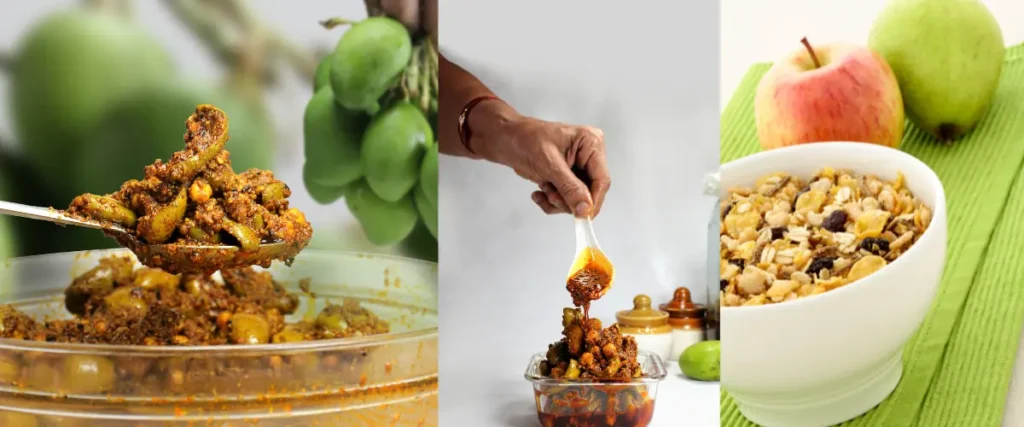
On one side, there was our mother in Varanasi, making the purest, most authentic food using ingredients from our own farm. On the other side, there were millions of people in cities like Mumbai, Delhi, and Bangalore craving that exact taste. They were searching for authentic homemade achar online in India, but often found factory-made substitutes.
That was our “Aha!” moment. We decided to join hands. We decided to bridge the distance between the ancient traditions of Varanasi and the modern needs of urban India.
And thus, Salteen was born.
A Tale of Two Cities: How We Run Salteen
Many people ask us how we manage a traditional manufacturing business while competing in a modern digital world. The answer lies in our sisterhood and our unique division of labor. We operate on a model we like to call “Roots & Wings.”
The Roots: Operations in Varanasi
Managed by the Younger Sister
The heart of Salteen beats in Varanasi. One sister stayed back to become the guardian of our quality. She oversees the entire manufacturing process, from the farm to the jar.
She is not sitting in an air-conditioned office; she is on the ground. She is the one walking through our mustard fields, checking the moisture content in the spices, and tasting every single batch of masala before it touches a mango. Her role is to ensure that as we scale up, we never lose the “homemade” touch. She manages the local workforce, the oil extraction unit, and the daily production schedules.
If the pickle tastes like your grandmother made it, it is because she ensured no shortcuts were taken in Varanasi.

The Wings: Strategy in Mumbai
Managed by the Elder Sister
While the product is made in Varanasi, the story is told from Mumbai. The other sister handles the “Wings” of the company, Marketing, Distribution, and Technology.
Operating from the commercial capital of India, she ensures that the jars reach you safely. She manages the website (salteen.com), the logistics partners, the branding, and the customer experience. She is the voice that talks to you on social media and the mind that figures out how to get a fragile glass jar from a small town in UP to a high-rise in Bangalore without breaking.
Together, we form a complete circle: Production integrity in Varanasi and Professional execution in Mumbai.
The Heartbreak: When Reality Hit Hard
Social media often makes entrepreneurship look like a fairytale. You launch a website, post a photo, and the orders flow in. But our reality was very different.
When we started Salteen, we thought having a great product was enough. We were wrong. The first year was filled with tears, panicked phone calls between Mumbai and Varanasi, and moments where we almost gave up.
The Logistics Nightmare
Living in Varanasi has its charm, but it also has its challenges. Our home is in the narrow lanes where big trucks cannot enter. When we first listed on Amazon, we were thrilled to see orders coming in from all over India. We packed the boxes with excitement. We waited for the pickup agent. He never came. Day 1 passed. Day 2 passed. The automated system marked the orders as “Shipment Delayed.” Eventually, Amazon automatically cancelled dozens of orders. Our seller rating plummeted. Customers were angry. We were helpless. We realized that the digital world of Mumbai doesn’t always align with the physical reality of Banaras.
The “Instant Delivery” Mindset Struggle
In a world of 10-minute grocery delivery, we faced a unique problem. Customers would order a jar of handmade pickle and message us the next day: “Where is my order?” We had to explain, over and over again, that we are not a warehouse storing chemical-laden food. We are a kitchen. We pack fresh. And shipping from a Tier-2 city to a metro takes 3 to 4 days. We lost many customers who didn’t want to wait. It hurt to see them cancel orders because we weren’t “fast enough.”
But we decided then and there: We will not compete on speed. We will compete on taste. We chose to educate our customers that good things, authentic things are worth the wait.
The “Salteen” Difference: It Starts in the Soil
Our recipes are not trends created in food labs. They are traditional Indian pickles made the way our grandmothers intended sun-dried, slow-cured and rich with regional spices.
In the world of food, “authentic” is a word that is abused often. But for us, it is a strict standard. Our biggest differentiator isn’t a secret recipe (though we have those too); it is our Supply Chain.
Most pickle brands are “traders.” They buy raw mangoes from a wholesale market, buy oil from a refinery, and buy spices from a distributor. They don’t know where the ingredients come from.
We do. Because we grow them.
-
The Mustard Seed
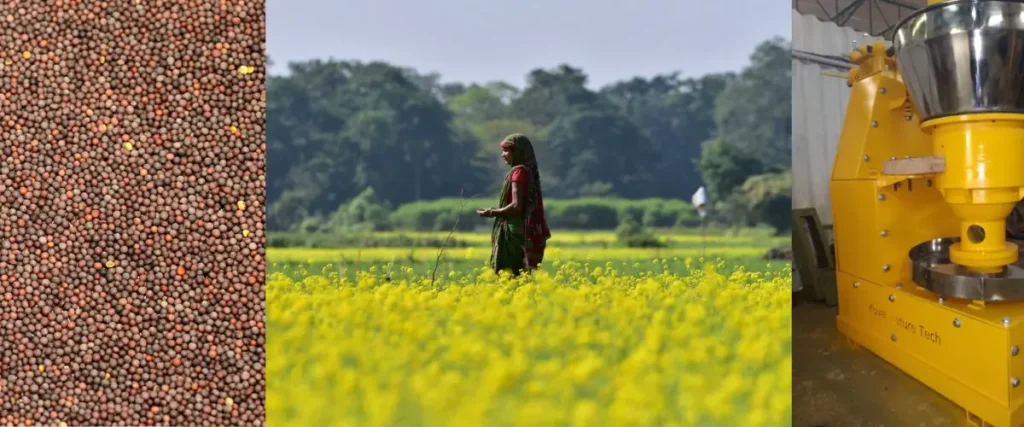
The soul of any North Indian pickle is Mustard Oil. But not all mustard is the same. We are proud to say that the mustard seeds used in Salteen pickles originate from our own family farm lands near Varanasi.
We don’t buy seeds from the open market. We grow them. We wait for the yellow flowers to bloom in the winter sun. We harvest them when the oil content is at its peak. This gives us complete control over the purity. We know that no harmful pesticides were overdosed. We know the soil was treated right.
-
Our Own Cold-Press Oil Unit
Once the seeds are harvested, we don’t send them to a factory. We have set up our own Cold-Press (Kacchi Ghani) Oil Extraction Unit.
Why does this matter? Commercial “refined” oil is extracted using heat and chemicals to get every last drop out of the seed. This kills the nutrition and the natural aroma. Our Kacchi Ghani unit presses the seeds slowly, at low temperatures. The yield is lower, but the quality is gold. The oil is pungent, aromatic, and full of natural preservatives. This is why every jar of Salteen is a true cold pressed mustard oil pickle – naturally preserved, deeply aromatic and rooted in North Indian tradition.
This is why we proudly call our products farm-to-jar pickles – where every ingredient is traced back to the soil it was grown in.
The Name: A Pinch of Salt, A Lot of Love
We are often asked about our name. It sounds modern, yet it feels familiar. The philosophy is simple: Salt is the most critical ingredient in our kitchen.
- It preserves the pickle.
- It brings out the flavor.
- It is the difference between bland and tasty.
In Hindi, salt is Namak and savory snacks are called Namkeen. We wanted a name that honored this humble yet powerful ingredient. Salteen is our tribute to salt – the ingredient that preserves, protects and binds. Just like our recipes preserve tradition, protect purity and bind generations together.
It is a modern name with ancient roots.
Simple. Honest. Essential.
Just like our food.
Empowering Women, One Jar at a Time
Salteen proudly stands as a women-led food brand in India, built not just by two sisters, but powered by dozens of skilled women from Varanasi’s surrounding villages.
When we set up our manufacturing unit in Varanasi, we made a conscious decision: we would employ local women.
We realized that in the villages surrounding Varanasi, there are hundreds of women who possess incredible culinary skills. They know how to roll the perfect round Papad. They know exactly how much sun is needed for the Vadi. But they never had a platform to earn money from this talent.
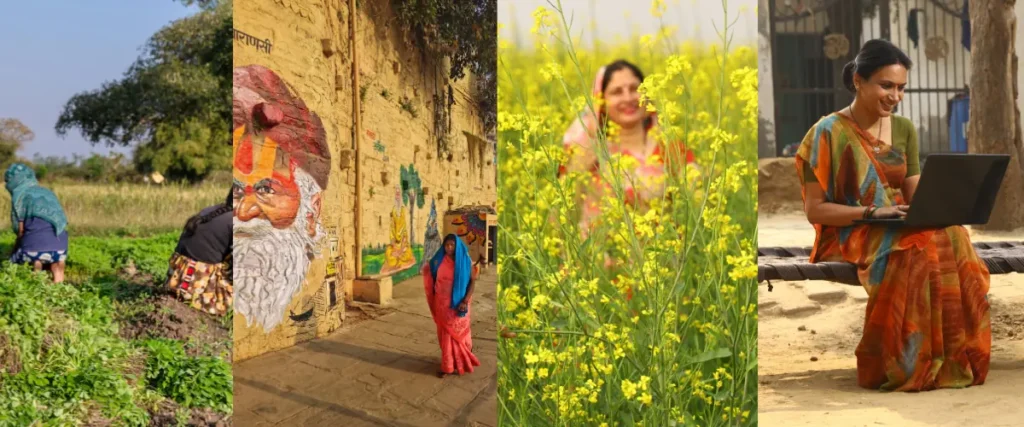
Today, the Salteen production unit is buzzing with the energy of these women. They are the backbone of our operations. They are not just employees; they are artisans. They work in a hygienic, safe environment, earning fair wages that help them support their families and educate their children.
When you open a jar of Salteen, you aren’t just tasting a pickle. You are tasting the financial independence of a woman in Varanasi. You are tasting the pride of a mother who can now send her daughter to school.
Beyond Pickles: A Full Platter of Tradition
While our heart belongs to the Banarasi Mango Pickle and the fiery Lal Mirch, our kitchen has expanded to include everything that makes an Indian tea-time special.
- Traditional Snacks: We brought back the old recipes of Namkeen that rely on spices, not just salt and sugar.
- Papads & Vadis: Sun-dried to perfection, these are the side dishes that complete a meal.
- Laddus: Because no meal in Banaras is complete without a little something sweet.
Our Promise to You
We are not a faceless corporation. We are a family. We are two sisters who missed their mother’s cooking and decided to share it with the world. We are farmers who grow their own seeds. We are creators who press their own oil.
Every time a notification pops up on our Mumbai dashboard saying “New Order,” a message goes to Varanasi. A jar is selected. It is packed with care. And it travels miles to reach you.
We invite you to try Salteen. We invite you to taste the difference that pure ingredients, a mother’s love, and a sister’s promise can make.
Welcome to the family.
Salteen Banaras Ka Swad.